If you are an early riser like me, thank you Navy, maybe the sight of various moth species fluttering about in the soft morning light or perched on the side of a building is something that has gone previously unnoticed.
I live on the outskirts of Waynesboro surrounded by farmland and woods and first noticed the abundance of moths collecting in my breezeway towards the end of May. I photographed and recorded my first moth, the Red-fringed Emerald, in iNaturalist and over 50 different species later, it has now become part of my morning routine. These morning encounters are likely due to the cooler, moist conditions that follow the night, making moths more visible as they rest or continue their search for food.
Moths, often overshadowed by their more colorful butterfly cousins, play a crucial role in our ecosystem. They are essential pollinators and serve as a vital food source for birds, bats, and other wildlife. The morning sightings in my breezeway provide a unique opportunity to appreciate these nocturnal insects in a different light.
For those interested in witnessing this morning marvel, I recommend heading out just after dawn. Bringing a camera and downloading the iNaturalist app can enhance the experience, helping to identify and record the different species spotted.
Included below are a portion of the moths I have photographed. The pictures aren’t perfect but the subjects are. Enjoy!
An additional resource listing of butterfly or moth insects that can be found in Virginia are HERE.
Rob Beaton, Newsletter and Website Committee Chair
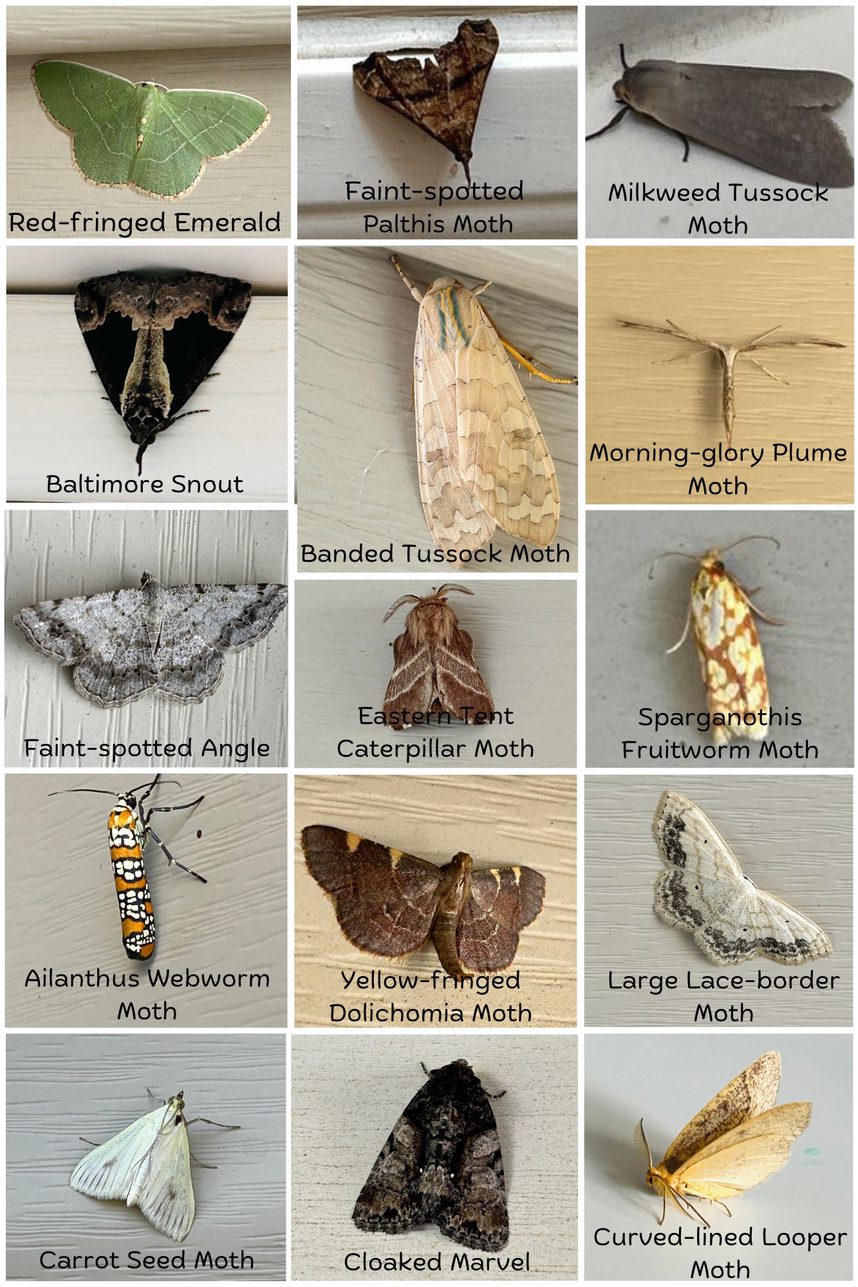
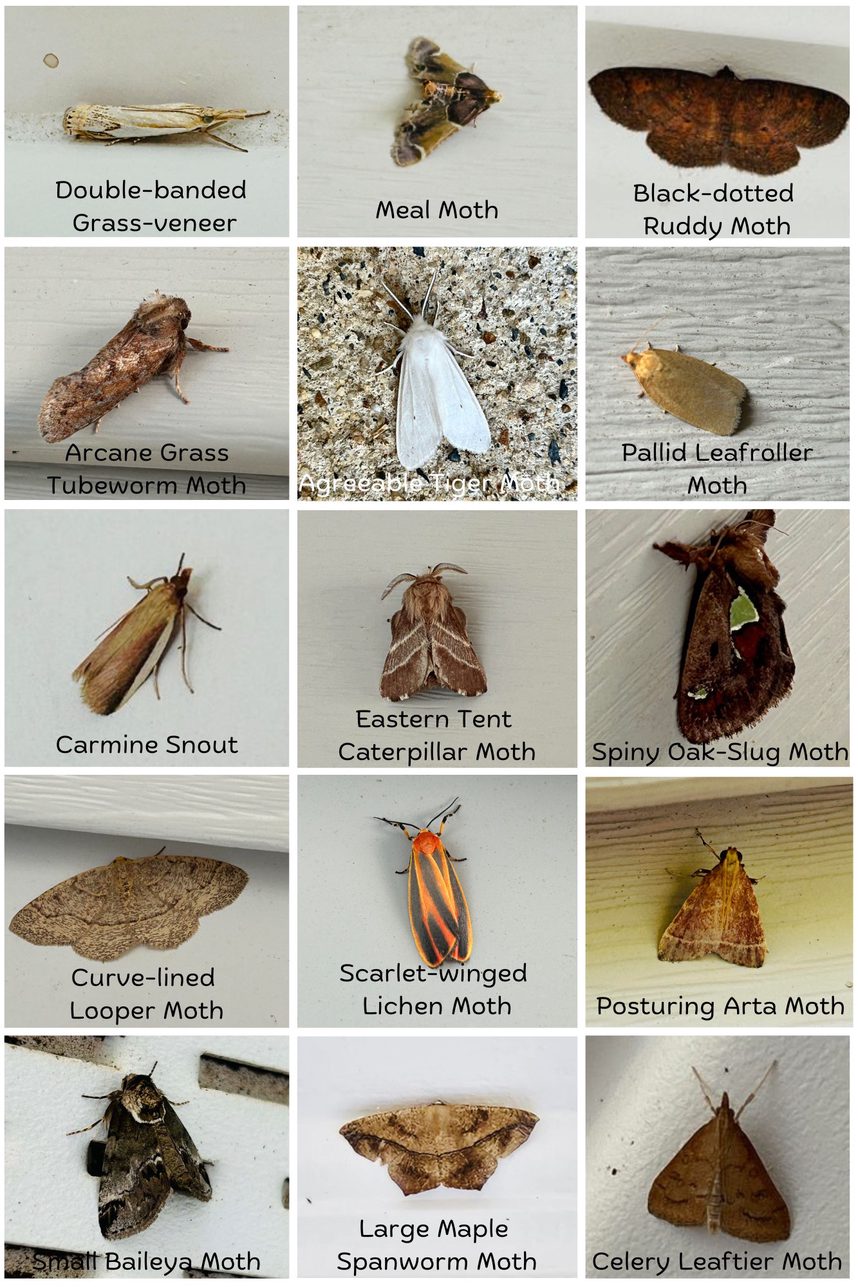

Photos by Rob Beaton.


 Virginia Master Naturalists Headwaters Chapter