Tag: nature

  • Headwaters Master Naturalists and Friends Enjoy a Local Geology Tour

    Headwaters Master Naturalists and Friends Enjoy a Local Geology Tour

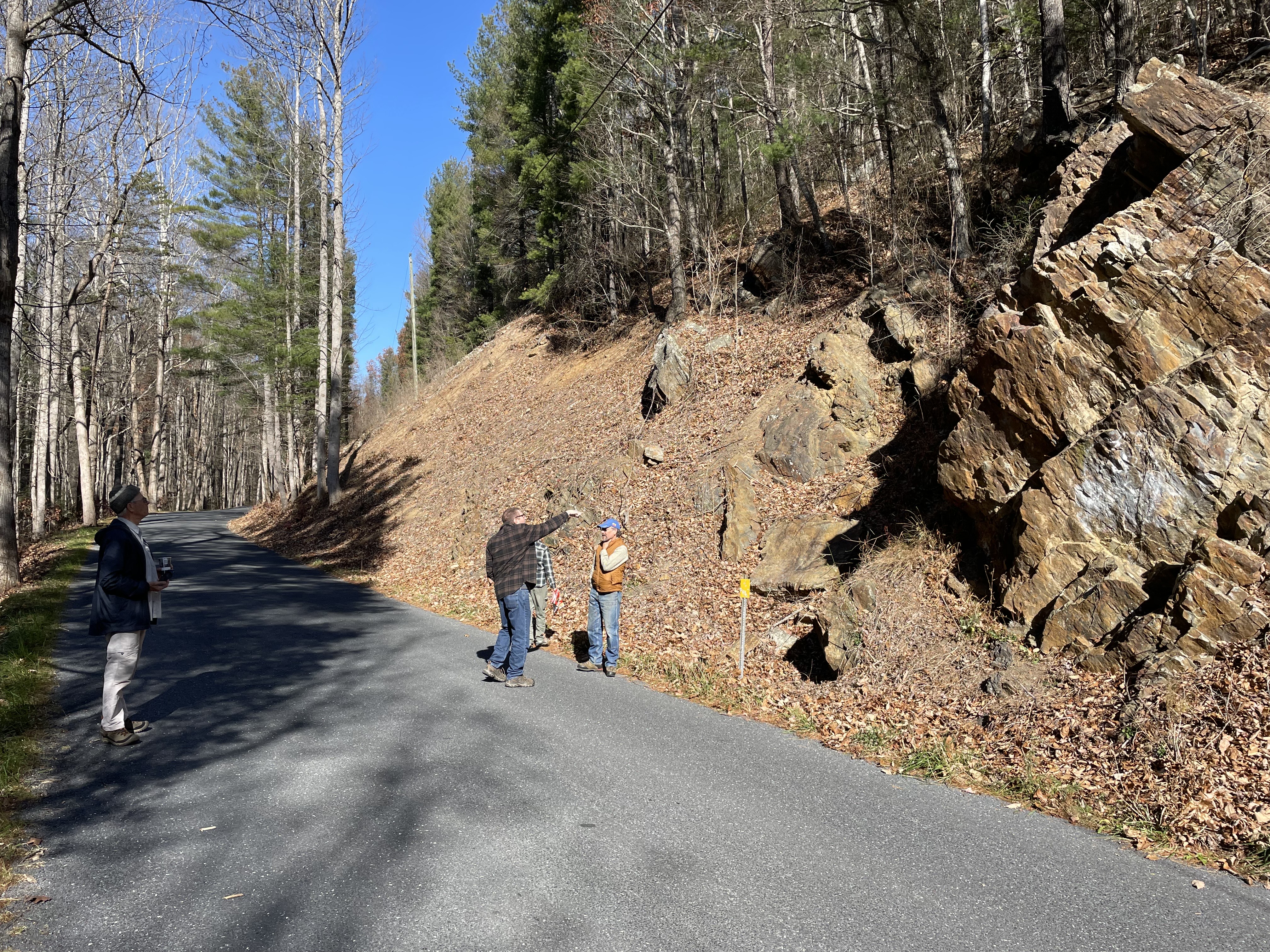
    The group looking at various beds of sandstone with a few thin coal seams in the Price formation. Photo by Malcolm.

    On Thursday, November 13, a beautiful fall day, two other HMN members and three friends joined me in Stokesville for a tour of notable rock outcrops in the Stokesville, North River Gorge, and Staunton Dam areas. The tour focused on the two most common rock formations in the North River Ranger District of the George Washington National Forest, as well as the four mountain-building events that created the high source lands to the east and the extensive erosion that shaped the Blue Ridge, Shenandoah Valley, and Allegheny regions over millions of years.

    Our first stop was at North River Gap in Stokesville, where we observed a large outcrop of the Price (Pocono) formation. This early Mississippian-aged (about 380 million years ago) sequence of sandstones, conglomerates, and dark shales is the youngest formation in the Shenandoah Mountain area. It was deposited after the Acadian Orogeny, filling a basin created by the collision of Baltica and Avalon plates. This formation originated from a broad alluvial plain and delta, with river channels indicated by quartz pebble conglomerates, and features fossil impressions of tree branches and bark. The history of Stokesville as a boom town around 1900 was linked to attempts to mine coal and later logging, which ultimately led to its decline within about a decade.

    Our second stop was just a third of a mile away at the Wild Oak Trail parking lot, where we discussed the region’s geologic history using display boards, maps, and typical rocks from Shenandoah Mountain’s three main formations. We then hiked a two-mile round trip into North River Gorge, walking along the old logging railroad grade, where I pointed out where the builders had to blast through hard sandstone. Along the trail, we observed a prominent exposure of soft shales and thin-bedded sandstone, likely formed in wetlands near a floodplain. Near the overlook, we enjoyed a broad view of North River Gorge while having lunch.

    The third stop, about five miles upriver near North River Campground, featured an outcrop of the older Late Devonian Hampshire Formation, characterized by reddish-brown sandstones, shales, and mudrock. This formation developed in a broad inland sea far from the ancient North American west coast, with features indicating small stream flows that periodically reversed, similar to landscapes we see today.

    Although we were running late, everyone chose to make one more stop near Staunton Dam, where we explored the tunnel built through Lookout Mountain in the 1920s to supply water to Staunton during a crisis. This federally protected land was selected for its clean, reliable water source, ensuring safe drinking water for generations.

    The outing provided five hours of continuing education credits for HMN members, and all participants—trail workers, a retired USFS silviculturist, and fellow naturalists—enjoyed the day, making new friends and learning about our local geology. It was a wonderful example of what Master Naturalists are all about.

    Malcolm Cameron, HMN Cohort 3

    Just above the overlook of North River Gorge, Gary Flynn and Bill Howe walking up from the sandstone outcrop. Photo by Malcolm.

    From the Lookout Mountain Trail overlook, we enjoyed lunch with views of sandstone and quartzite cliffs along North River Gorge. In the distance are Trimble Mountain (right) and Elkhorn Mountain (left). Photo by Larry Ragland.
  • Restoring Native Habitats: Invasive Plant Removal at Natural Chimneys Wildlife Trail

    Restoring Native Habitats: Invasive Plant Removal at Natural Chimneys Wildlife Trail

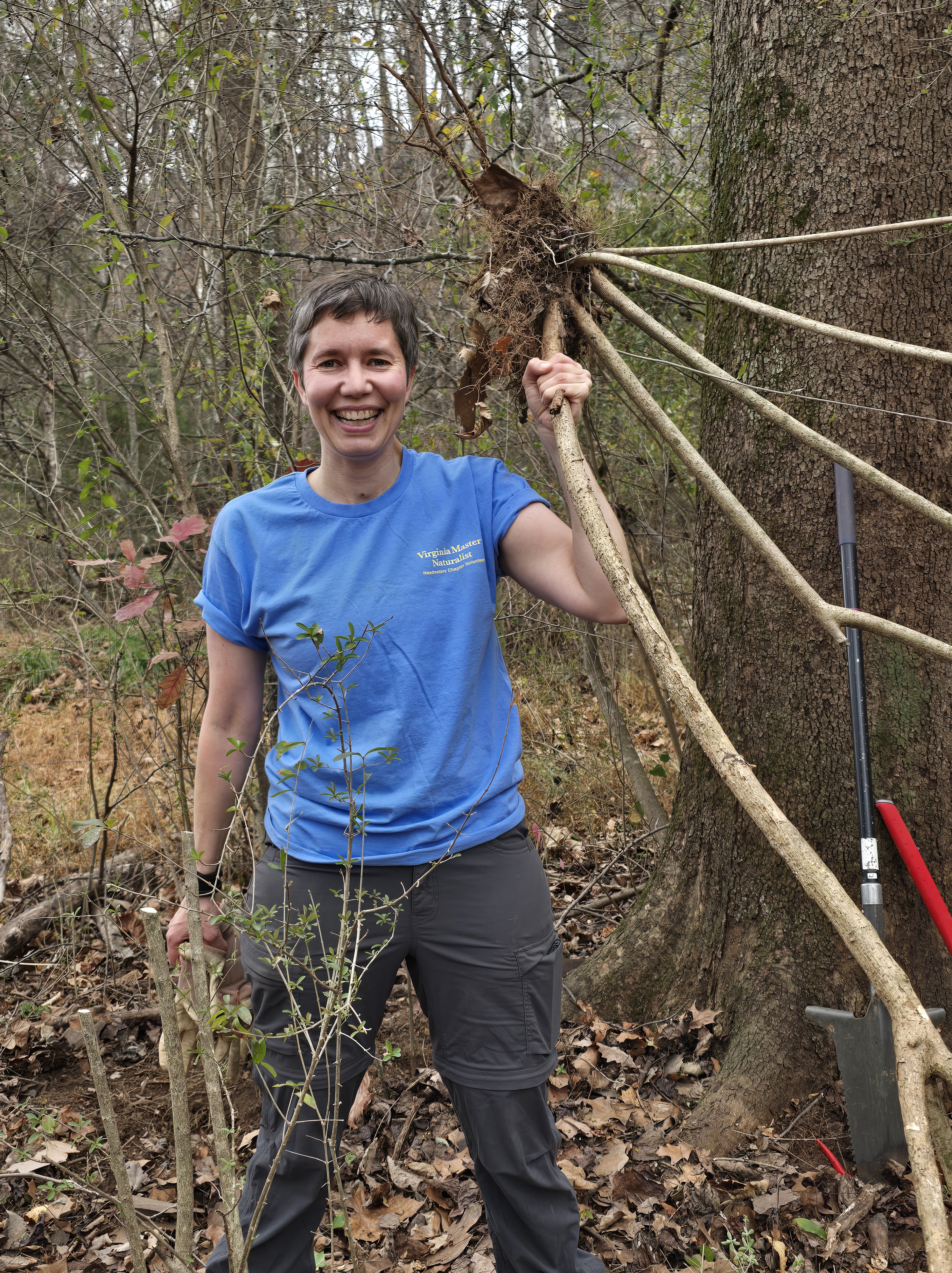
    Lora Steiner conquers an invasive. Photo by Cheryl Shull.

    Work continues on removing invasive plants from the Natural Chimneys Wildlife Trail. On November 14th, Lora Steiner, Wick Fary, Art Fovargue, and Cheryl Shull helped clear a large stand of Chinese privet from one section of the trail. There is still much work ahead, but these Headwaters Master Naturalists remain committed to restoring native habitats and promoting conservation on this important public land.

    If you’d like to join our team, please contact Cheryl Shull at cherylshull@yahoo.com.

    Cheryl Shull, Volunteer Service Projects Committee Chair

  • Nocturnal Neighbors at Shenandoah River State Park

    Thursday, June 5, from 7:30 to 9:00 p.m., experience an exciting and educational evening dedicated to our fascinating winged neighbors—bats! Held at Shenandoah River State Park in Bentonville, this event offers a unique opportunity to learn about and listen to live bats in their natural habitat.

    Erin Shibley from the Smithsonian’s National Zoo and Conservation Biology Institute will guide us through the habits, histories, lifestyles, and challenges faced by bats in our region. Using a special device compatible with smartphones, we’ll also get to hear the often-unheard sounds of these incredible creatures.

    Bring your curiosity, family, and friends to explore your local state park in a fun and engaging way. Space is limited, so registration is required.

    Event Details:

    • Date: Thursday, June 5
    • Time: 7:30 – 9:00 p.m.
    • Location: Shenandoah River State Park, Bentonville
    • Cost: Free (standard parking fees apply)

    Learn more and register at Virginia State Parks Event Page or visit Shenandoah River State Park’s Facebook page.

    Don’t miss this chance to discover the hidden world of bats—an evening of discovery and sound awaits!

  • Discover the Beauty of Biodiversity in Harrisonburg!

    Discover the Beauty of Biodiversity in Harrisonburg!

    Join the city of Harrisonburg on Saturday, March 29, from 1-4 pm at the Ice House Building downtown and explore how cultivating a pollinator-friendly yard not only enhances your surroundings but also supports crucial ecosystems. Learn from the city’s initiatives and make a positive impact on local pollinators.

    Event: Pollinators in Your Yard
    Date: Saturday, March 29th
    Time: 12:30pm – 4:30pm (Volunteers should arrive at 12:00 for setup)
    Location: The Ice House Building, Downtown Harrisonburg.

    Volunteer Opportunities
    1. Staff the HMN display table at the tabling event.
    2. Arrive around noon to help with setup, “direct traffic” and assist as needed
    during the event, and assist with cleanup. (2 volunteers needed for traffic/setup/cleanup).

    Attendees will be able to listen to informative talks on creating pollinator-friendly spaces and protecting pollinators from invasive species and pesticides. In between the talks, folks can explore education tables/interactive displays to learn the best types of plants to attract pollinators, ways to get involved with local community science projects, potential funding sources for pollinator habitat and more. Admission to the event is free.

    If you are interested in working our table at this please contact Scott at sdjost@gmail.com. This event offers volunteer and CE opportunities for HMNs!