Tag: nature

  • The Salamander Night Hike

    The Salamander Night Hike

    Slimy salamander, the only one we saw that evening. Photo by Jess Daddio.

    The salamander night hike was led by Billy Flint at JMU and provided a really great opportunity to get in the field with the leading expert on Cow Knob salamanders, which only live here on the high-elevation slopes of the Shenandoah and Great North mountains. We met at 9pm under a perfectly clear starlit sky, donned our headlamps, and took our time carefully walking among the leaf litter and talus slopes. It took about 20 minutes until someone’s headlamps reflected back off the eyes of the first salamander of the evening, a Shenandoah Mountain salamander. Once we knew what we were looking for, it became easier to spot the next salamanders, which were sometimes crawling about in the open but, more often, lay hidden in the mossy recesses of their rock homes. Part educational hike, part meditative forest walk, the outing was equal parts discussion and silence. I really enjoyed the opportunity to move quietly through the woods and to ask questions in real time. 

    Jess Daddio, Cohort 9

    Cow Knob salamander. Photo by Jess Daddio.

    Co9 naturalist-in-training Hannah Martin photographing a Shenandoah Mountain salamander. Photo by Jess Daddio.

    Co9 naturalists-in-training photographing a Shenandoah Mountain salamander. Photo by Jess Daddio.

    Cow Knob salamander. Photo by Jess Daddio.

    Shenandoah Mountain salamander. Photo by Jess Daddio.

  • Cowbane Field Trip

    Cowbane Field Trip

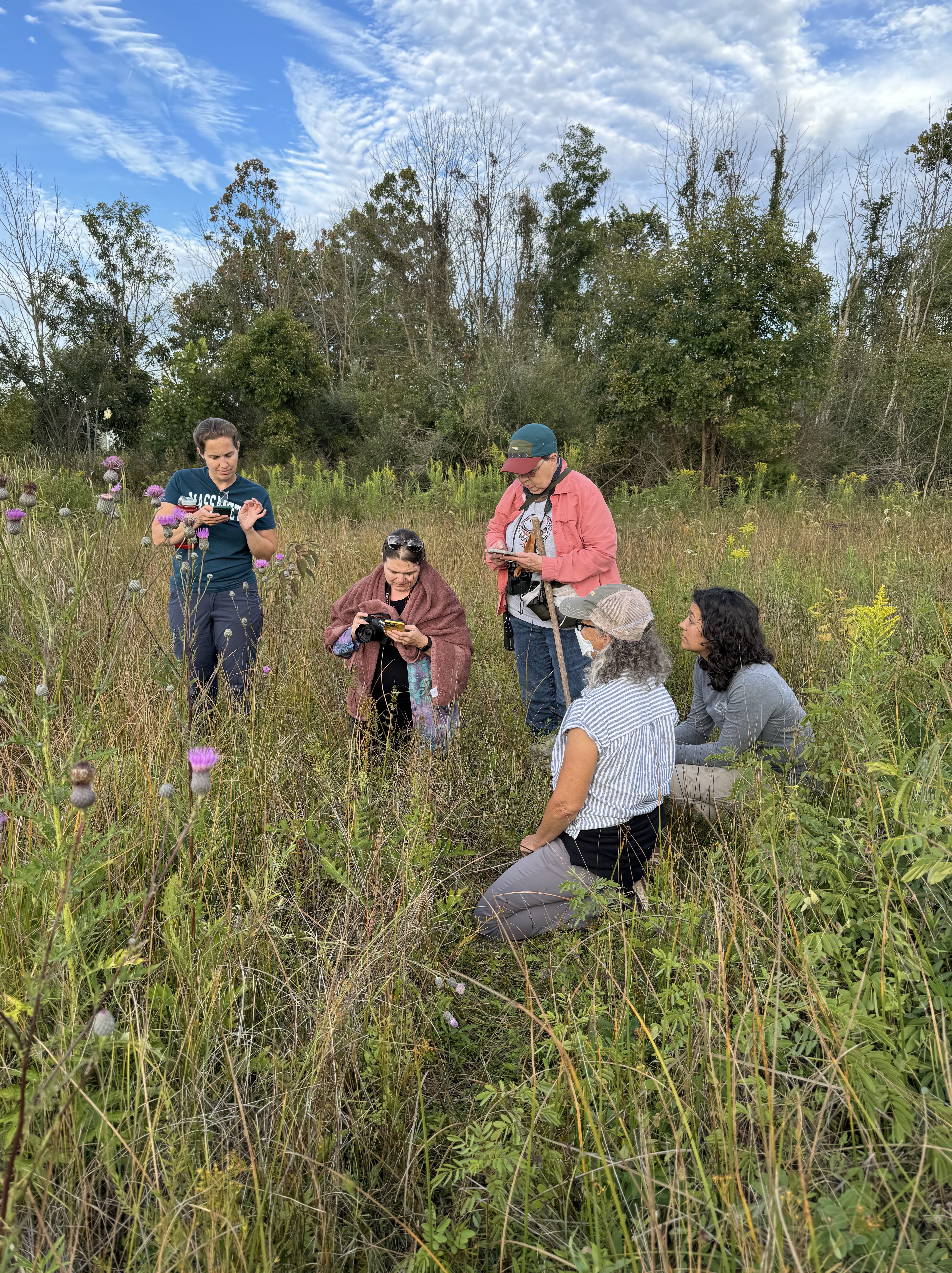
    From left, Colleen Earp, Lindsey Kilbourn, Darlene Coleman, Judy Bartlett and Emily Huertas. Photo by Lora Steiner.

    On September 4th eleven members of HMN Cohorts 8 & 9, plus two recent transfers from the Rihanna Chapter, led by Judy Bartlett and Eunice Sill, spent a beautiful evening at Cowbane Prairie Natural Area Preserve. Judy and Eunice divided us into two groups in order to practice using the Flora of Virginia smartphone app to identify species with the graphic and dichotomous keys it provides.  

    The group this writer joined began with a plant known and loved by many Virginians. On beginning our “identification” with the Graphic key we noticed that the app had a different sequence of screens for various users’ fully updated phones, for reasons we couldn’t immediately determine. (I’ve since made an inquiry through the support page at floraofvirginia.org.) In spite of this issue we worked our way through prompted selections among plant groups, county -or GPS- location, moisture & light regimes, and characteristics of leaves, stems and flowers that didn’t overly tax our collective knowledge. Within 5 minutes we were able to make a positive and confident id: Lobelia cardinalis!  

    Next we attempted to take the longer route through the dichotomous key to learn the species of a strongly scented specimen with square stems and a spike of minute lavender- tinted flowers on top. Mint, yes, but which mint? At this point it must be said that the group further dichotomized.  

    •   Group2a: Willing to distinguish between such features as inferior vs. superior ovaries or actinomorphic vs. zygomorphic calyxes. Hand lens required! The frustration of working through a multitude of couplets to a solution that is clearly incorrect recalled!!

    •   Group2b: Not as above; may express a strong preference for Seek or other apps using photo-recognition software, or be captivated by the diversity and uniqueness of the carefully protected habitat. Happy to wander over the site with like-minded folks sharing other, perhaps more general plant knowledge.

    After an hour and a half of discovery and communion we headed back through the gloaming with increased comprehension of the Flora app’s usefulness to our individual approaches to plant knowledge, and with lots of appreciation for Cowbane as a thoughtfully managed preserve of one of the rarest of eastern habitats.

    Additional pictures of beautiful Cowbane Prairie Natural Area Preserve can be found HERE

    Wick Fary, Current student Cohort 9.

  • Morning Moths

    Morning Moths

    If you are an early riser like me, thank you Navy, maybe the sight of various moth species fluttering about in the soft morning light or perched on the side of a building is something that has gone previously unnoticed.

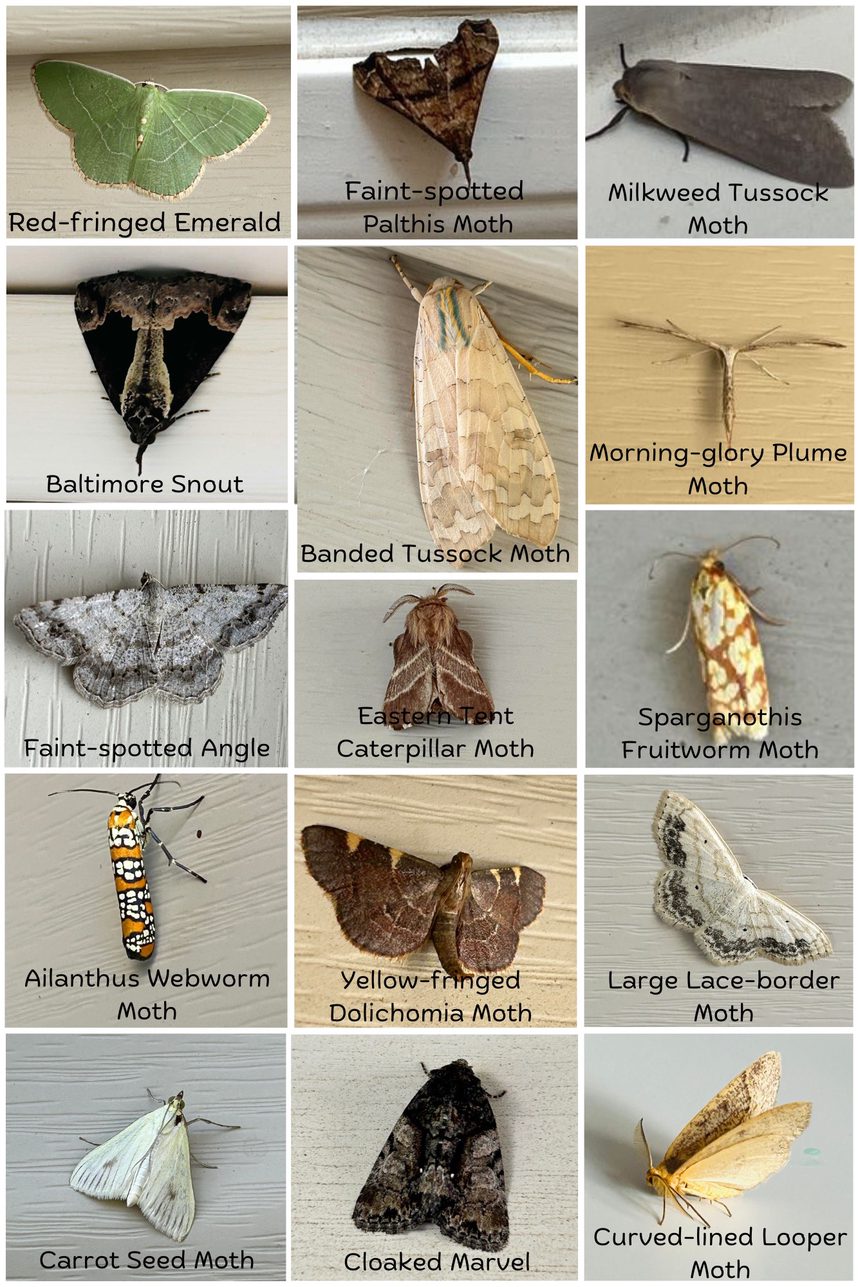
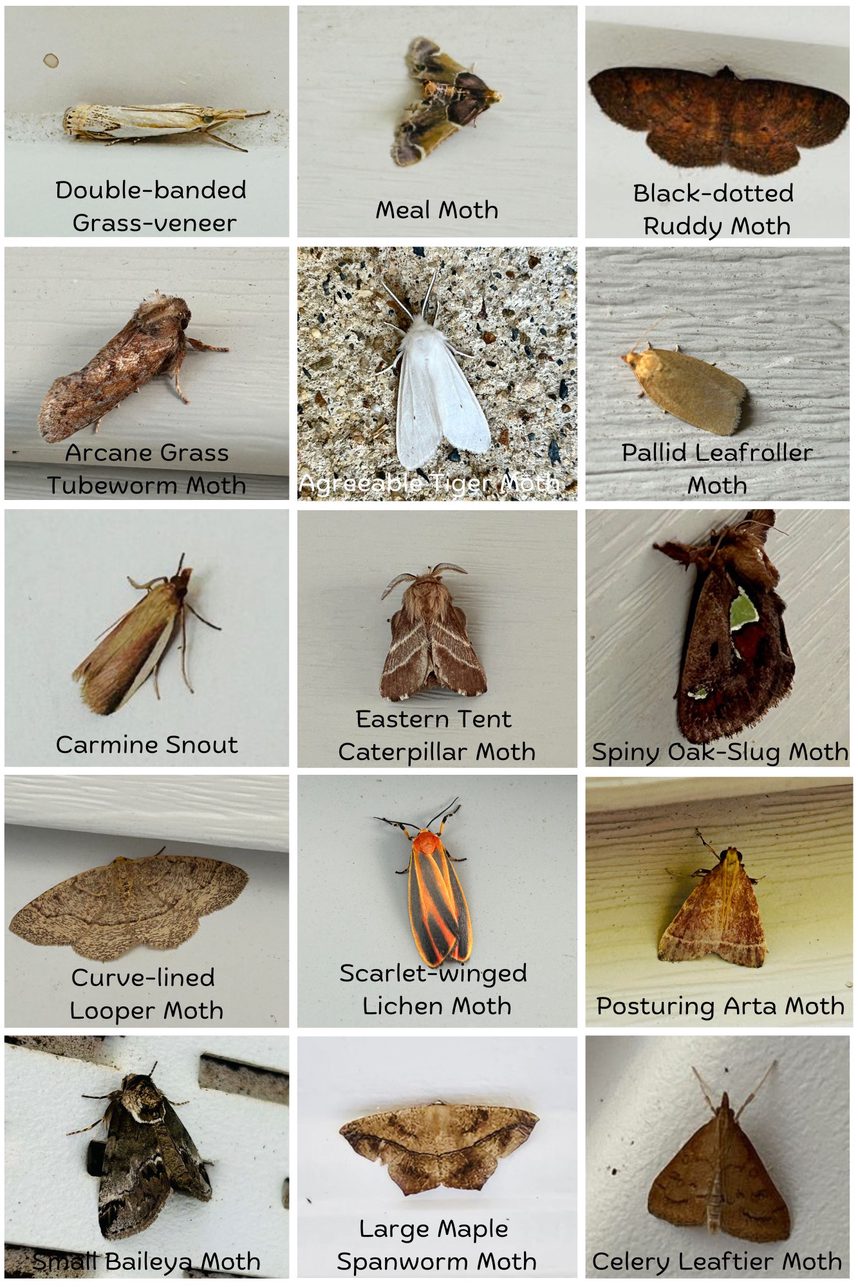
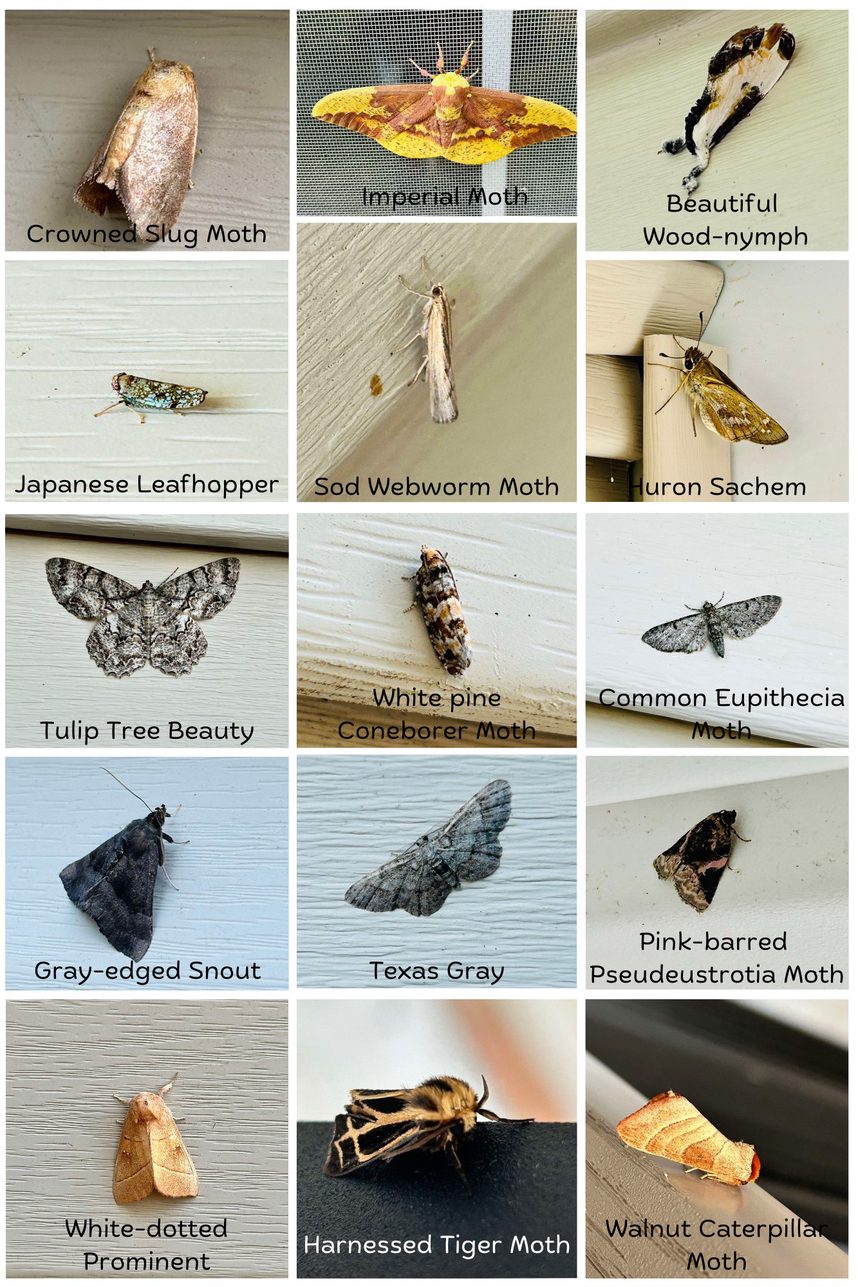
    I live on the outskirts of Waynesboro surrounded by farmland and woods and first noticed the abundance of moths collecting in my breezeway towards the end of May. I photographed and recorded my first moth, the Red-fringed Emerald, in iNaturalist and over 50 different species later, it has now become part of my morning routine. These morning encounters are likely due to the cooler, moist conditions that follow the night, making moths more visible as they rest or continue their search for food.

    Moths, often overshadowed by their more colorful butterfly cousins, play a crucial role in our ecosystem. They are essential pollinators and serve as a vital food source for birds, bats, and other wildlife. The morning sightings in my breezeway provide a unique opportunity to appreciate these nocturnal insects in a different light.

    For those interested in witnessing this morning marvel, I recommend heading out just after dawn. Bringing a camera and downloading the iNaturalist app can enhance the experience, helping to identify and record the different species spotted.

    Included below are a portion of the moths I have photographed. The pictures aren’t perfect but the subjects are. Enjoy!

    An additional resource listing of butterfly or moth insects that can be found in Virginia are HERE.

    Rob Beaton, Newsletter and Website Committee Chair

    Photos by Rob Beaton.

  • Trail Maintenance

    Trail Maintenance

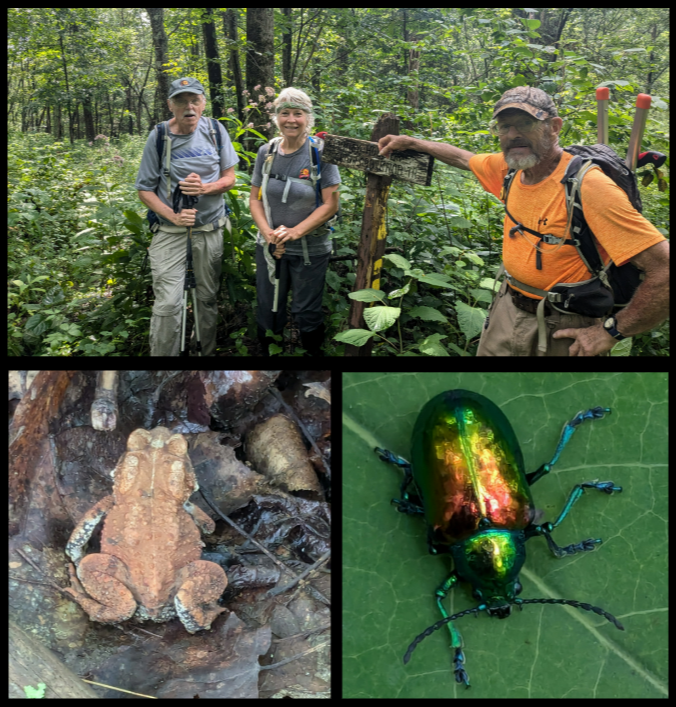
    Photos by Judy Barlett. Top from left to right, Michael Seth, Jean Stephens, and Jim Fye. Bottom left: American toad. Bottom right: Dogbane leaf beetle.

    On July 25, two Master Naturalists, Jean Stephens and Judy Bartlett, joined three other volunteers to clear a half-mile stretch of briars from the Crawford Knob Trail in the George Washington National Forest (GWNF). Under the direction of Lynn and Malcolm Cameron (another HMN!), about 40 maintainers tend to over 100 miles of trails in GWNF’s North River Ranger District; Lynn and Malcolm serve as North River’s District Managers for the Potomac Appalachian Trail Club (PATC).

    PATC member, Jim Fye, is the trail maintainer for Crawford Knob (#487, see map below), a lovely 2.5-mile trail north of Buffalo Gap. He, and many others, have spent countless hours making this tucked-away trail more accessible and enjoyable. On this recent work trip, we saw lots (and lots) of bear scat, several native flowers (e.g., tall bellflower, southern harebell, wild columbine, nodding onion, Joe-pye-weed), an American toad, and a dogbane leaf beetle.

    Segment of National Geographic Trails Illustrated map “791 Staunton, Shenandoah Mountain”

    We hiked in (and mostly up) about 3.5 miles from SR 688 (Old Parkersburg Turnpike), enjoying the sites, sounds, and each other’s company and then got to work on the briar patch that was blocking the trail. Jim and Jean shared some of the secrets of the trail, including two springs and two hidden outlooks. We had a blast! If you’re interested in doing trail maintenance, which counts towards your HMN hours, reach out to Lynn (slynncameron@gmail.com).

    Judy Barlett, Projects Committee Chair

  • Conservation Photography

    Conservation Photography

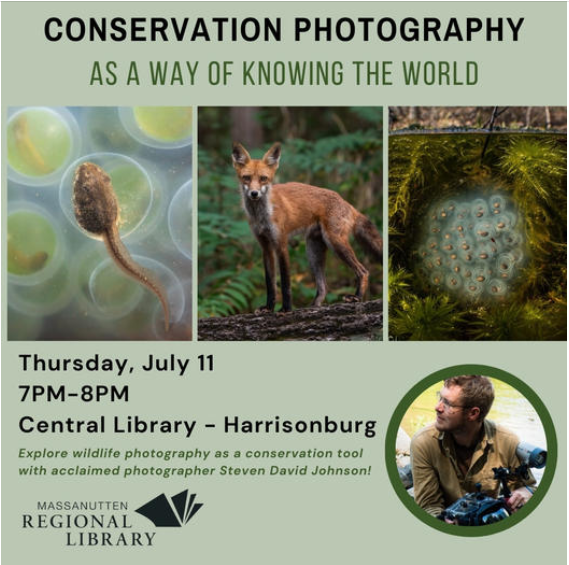
    Join us at the Harrisonburg Central Library, 174 S Main St, Harrisonburg, on July 11, from 7 to 8 pm, for an engaging event on conservation photography as a way of knowing the world. This event will feature stunning visuals and insightful discussions on how photography can highlight environmental issues and inspire conservation efforts. Don’t miss this opportunity to learn from acclaimed photographer Steven David Johnson and explore the power of photography in preserving our planet.

    Elaine Smith, CE Committee Chair