Category: Chapter Business

  • Headwaters Master Naturalists Gather for Meeting and Potluck

    Headwaters Master Naturalists Gather for Meeting and Potluck

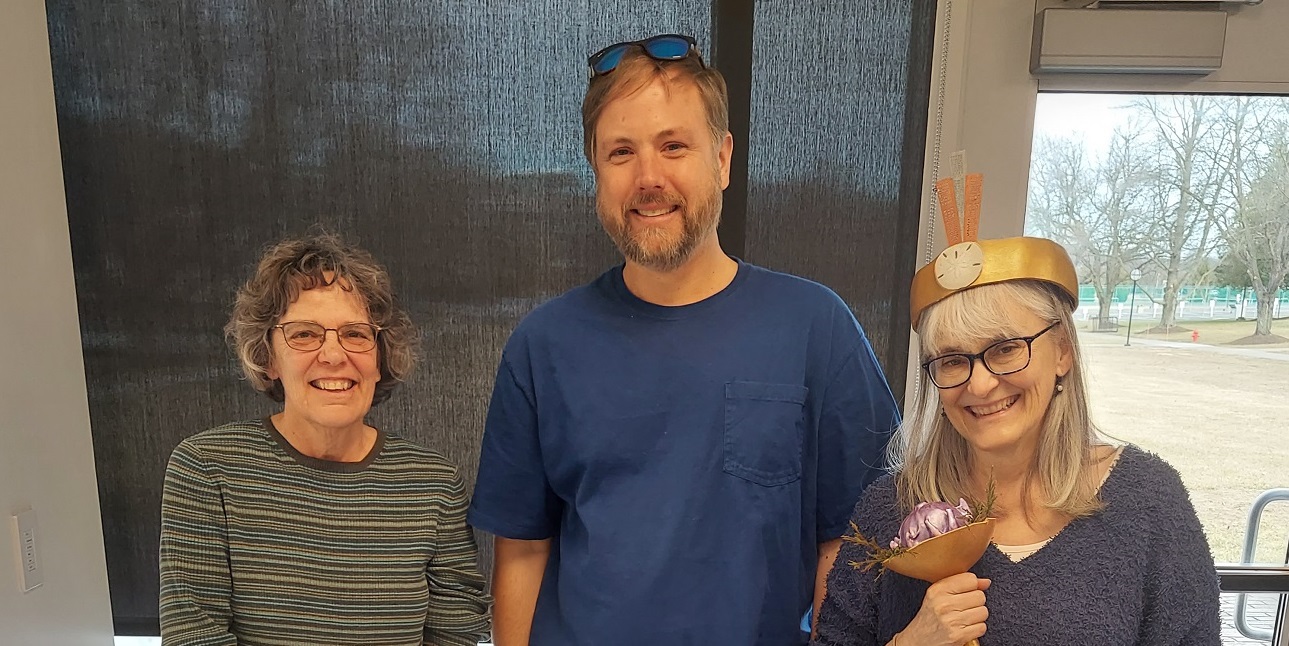
    Conversations abound as HMNs gather for our Annual Meeting on January 27, 2024. Photo by Carl Droms.

    Making Connections at our Annual Meeting 2024

    On Saturday, January 27, in the Houff Student Center at Blue Ridge Community College in Weyers Cave, the chapter came together for our much-anticipated annual meeting and potluck, transforming a routine gathering into a celebration of shared passion for nature and environmental stewardship.

    A highlight of the event was the potluck, where tables overflowed with a display of homemade dishes and each contribution mirrored the diversity of the group itself. 

    The agenda included engaging presentations by Harrisonburg’s Greenspace Manager, Jeremy Harold. Jeremy presented Harrisonburg’s Pollinator-Friendly City and Urban Forestry programs, providing an overview of their histories, current and future initiatives, best practices, lessons learned, and opportunities for citizen support and involvement. 

    New board nominations were presented by President Peggy Plass and accepted by the chapter members. Welcome to the new board and Committee Chair members:

    • Outreach Committee Chair – Kelly Kipps
    • Volunteer Service Projects Committee Chair – Judy Bartlett
    • Membership Committee Chair – Anthony Adamovich
    • Secretary – Andrea Dono
    • Continuing Education Committee Chair – Elaine Smith (re-elected)
    • Newsletter and Website Committee Chair – Rob Beaton 

    Beyond the formalities, the gathering offered a chance for members to connect on a personal level, fostering relationships that extend beyond the annual event. Friendships were forged, and a sense of community was strengthened, contributing to the resilience and cohesiveness of the Headwaters Master Naturalists.

    – Rob Beaton, Newsletter and Website Committee Chair

    Click on an image below to make it bigger, see captions and start a slide show. Photos by Carl, Adrie, Elaine and Rob.

  • Cohort 8 Finishes Basic Training

    Cohort 8 Finishes Basic Training

    Headwaters Chapter welcomed newly minted master naturalists to its ranks on Tuesday, November 14. Basic Training Committee Chair Lincoln Gray proudly passed out certificates of basic training completion at a celebratory gathering at his home, which he shares with Pam Gray, our Chapter’s Project Committee Chair.

    Embracing Nature’s Classroom: A Journey to Graduation as a Virginia Master Naturalist

    As the sun sets on another chapter of exploration and education, a group of passionate individuals proudly emerges as the newest graduates of the Virginia Master Naturalists program. These dedicated individuals have completed a rigorous training program, equipping themselves with the knowledge and skills needed to become stewards of Virginia’s rich and diverse ecosystems.

    Over the past several months, myself, along with 19 other aspiring naturalists, delved into a comprehensive curriculum that covered topics ranging from local flora and fauna to conservation practices and environmental stewardship. Guided by expert instructors and led by a seasoned naturalist, Lincoln Gray, who facilitated our weekly classes, we engaged in hands-on experiences, honing our observational skills and deepening our understanding of the delicate balance that sustains our environment.

    The graduation ceremony, a culmination of our hard work and commitment, marks the beginning of a new chapter in our journey. Armed with newfound knowledge and a passion for nature, we graduates are now poised to make a meaningful impact in our communities. Whether it’s leading guided nature walks, participating in citizen science projects, or promoting environmental education, we Virginia Master Naturalists are ready to contribute to the well-being of the natural world.

    This milestone is not just a personal achievement for us but also a celebration of community collaboration and environmental stewardship. The Virginia Master Naturalists program emphasizes the importance of fostering a connection between people and nature, recognizing that informed and engaged individuals are key to preserving the beauty and biodiversity of our local ecosystems.

    As we embark in achieving our new roles as certified naturalists, we join a network of like-minded individuals within our local chapter and across the state, creating a web of knowledge and dedication to the preservation of Virginia’s natural heritage. The impact of our work will ripple through generations, inspiring others to appreciate and protect the environment.

    To the professionals who generously shared their time and expertise, your insights have been instrumental in shaping our understanding of the intricate web of nature and the importance of conservation. Your willingness to engage with us, answer our sometimes-wacky questions, and share your passion has been nothing short of inspiring.

    To our class sponsor, Lincoln Gray aka “Trainer in training”, we are compelled to express our deepest gratitude for the invaluable guidance and unwavering support you have provided throughout our journey. Your commitment to cultivating a new generation of stewards for Virginia’s natural wonders has left an indelible mark on us. You deserve some time off and have every right to block all of our incoming emails! 😊

    In a world where the need for environmental awareness and conservation is more critical than ever, the Virginia Master Naturalists program stands as a beacon of hope. Congratulations to all of my classmates, Cohort 8, for embracing their roles as ambassadors of nature, and may their passion for the environment continue to blossom, leaving a lasting legacy for future generations.

    With sincere appreciation,
    Rob Beaton, Newly graduated Virginia Master Naturalist, Headwaters Chapter, Cohort 8

    Cohort 8 group portrait, first day of class, Tuesday, February 28, 2023. Photo by Carl Droms.

    Images below are from Cohort 8’s graduation gathering on November 14. Click on one to enlarge it and start a slide show. Photos by Carl Droms and Adrie Voors.

  • Headwaters Master Naturalists Fall Meet-Up

    Headwaters Master Naturalists Fall Meet-Up

    HMNs by the pollinator garden at Natural Chimneys Park, October 14, 2023. Photo by Peggy Plass.

    Lunch, work and play at Natural Chimneys Park

    Saturday, October 14, started out a bit rainy, but by the time HMNs met at Natural Chimneys Park for a potluck and some volunteering, the sun was peeking out on the (not quite peak) Autumn foliage.  This outing was the 2nd seasonal “meet-up” for the chapter, designed to give us time to play outside and renew our connections with each other!

    We started with our potluck lunch, highlights of which included paw-paw cookies, apple pie made from local heirloom apples, sandwiches, drinks and some of our famous Master Naturalist salads!  Ann Murray took charge of the “hosting” duties for the day, bringing beautiful wildflowers to decorate our tables, and making sure that we all had plates, cups and forks.  We spent about an hour in the event shelter at Natural Chimneys, chatting about the cool things we’ve seen in the fall (some snakes were mentioned), catching up on our lives and activities in the natural world this year. 

    After lunch we split into 2 groups—one group took on the weeding of the Pollinator Garden (which was put in by HMNs in 2015).  Kelly Rourke, Natural Chimneys Park Coordinator, and Headwaters Master Naturalist, helped to make sure that we only pulled up the things we should have.  There were some Ailanthus trying to grow there, along with a healthy patch of generic weeds.  No injuries were sustained by the weeders!

    Other HMNs elected to do a mini-bio-blitz at Natural Chimneys.  Prizes were awarded to our successful and prolific volunteers!  Sightings included birds, fungi and wildflowers which they encountered on this beautiful fall day!

    Winter meet-ups will be a bit more challenging to schedule, but watch for information on them!

    – Peggy Plass, President, October 2023

    Click on a photo to see it enlarged and find a caption. Thanks to Peggy and Carl Droms for the photos!

  • HMN Annual Meeting 2023

    HMN Annual Meeting 2023

    Past presidents Chris Bowlen and Brian Lux honor our newly elected Chapter President Peggy Plass with a crown and scepter on January 28.

    Thanks to the organizational skills of our outgoing Vice President and Programs Committee Chair Mary Gatling-Finks, last Saturday, January 28, we celebrated our 2022 accomplishments with our first in-person annual meeting in three years. Blue Ridge Community College in Weyers Cave graciously gave us use of their spacious meeting room in the Houff Student Center where we gathered for conversation, presentations, an election and a meal.

    In addition to brief reports from other board members, Projects Committee Chair Pam Gray provided a look at last year’s work as compiled for our annual report that was sent to the state office on January 10. Our numbers show good chapter member engagement in a wide variety of activities. She highlighted a few of these, then shared about a new activity she is coordinating involving community outreach to educate about Living with Black Bears. See Andrea’s notes below.

    Our annual election seated Peggy Plass as our new president, Carl Droms as treasurer, Lincoln Gray as Basic Training Committee Chair, and re-elected Adrie Voors to the Newsletter and Website Committee Chair position. Continuing in their Board of Directors’ roles from last year are Andrea Dono as Historian/Parliamentarian and acting Secretary; Jean Stephens, Membership Chair; Elaine Smith, CE Chair; and Pam Gray as Projects Committee Chair. Our Outreach and Vice President/ Program Committee Chair positions remain vacant. Contact a board member if you’re interested in filling either of these roles!

    After an abundant and delicious potluck meal, Isaac Matlock of the Clifton Institute and founding member of the recently revived Shenandoah Chapter of the Virginia Native Plant Society, provided a comprehensive look at his ambitious work in “Launching the Native Wildflower Seed Industry in Virginia,” with “Local Native Plants and Seed Collection,” and how we can help. See Andrea’s notes about this project below. Anna Maria Johnson, also instrumental in reviving the local VNPS chapter, gave us an update on her project of compiling a Ridge and Valley Plant Guide for VNPS. Our meeting concluded with a brief first meeting of our new board.

    2023 is off to a great start! Among our other activities, we’ll be welcoming 22 new members comprising Cohort VIII!

    – Adrie Voors, Cohort II, January 2023


    Thanks to Andrea Dono, Cohort V, for her skilled notetaking on the presentations below! And thanks to Andrea and Carl for their photos, also below.

    Pam Gray presents about an upcoming new bear project for HMNs.

    Department of Wildlife Resources Living with Black Bears in Virginia 

    Pam Gray, Volunteer Service Projects Committee Chair, and Shenandoah National Park Bear Patrol volunteer

    • Outreach project that helps educate the public on how to be bear-aware and how to live with bears. Focus is on residential areas. It just takes one food reward for a bear to start looking for easy rewards and breaking into homes, trash cans, bird feeders, etc.
    • 20,000 calories a day must be consumed before hibernation
    • Some bears can smell scents from 20 miles away
    • The growth of black bear population since the 90s has been significant even despite mange outbreak. We should see a boost in numbers in the SNP this year.
    • DWR wants to partner with us to train us to be educators. They offer Black Bear 101 training (which counts as CE) and teaches us the basics of bear behavior and what humans should do. This will be offered soon.
    • They would provide us with swag and informational materials.
    • The state’s black bear biologist will meet with the volunteer group for an intensive training. Then our volunteers will proactively reach out to community groups and festival organizers to begin doing outreach.
    • Pam is looking for folks to join her in launching this project for our chapter.

    More about this from Pam HERE.


    Isaac Matlock presents about native seed saving at our Annual Meeting, January 28, 2023.

    Native Seed Pilot Project and Wild Seed Collection

    Isaac Matlock, Native Seed Project Coordinator

    • He will submit a project for all chapters to consider but lives in Harrisonburg and is working with us first.
    • He is with the Clifton Institute that is a 501c3 that does education, research, and conservation based in Fauquier County.
    • Some of their work focuses on kestrels and foraging and nesting habitats, box turtles habitats, vernal pools research, and experimental grassland restoration.
    • Ecoregions are defined by abiotic and biotic patterns (geology, landforms, soils, vegetation, climate, land use, wildlife, and hydrology). Harrisonburg is in the mountains ecoregion (Alleghanies and Blue Ridge). The others in Virginia are piedmont and coast plain (swamps marshes flatwoods and river deltas). This is important as populations adapt to local sites. For example, switchgrass is influenced by the soil – the same species will look different in each of the three ecoregions.
    • Native seeds are used in meadow restorations, pollinator-friendly solar installations, roadside plantings. Many aren’t for sale commercially.
    • Small farmers (less than 5 acres) are participating in this new program.
    • Growing native seeds can be a high-value crop for farmers.
    • Target species: 18 plants including common milkweed, purpletop, narrow-leaf mountain mint – they aren’t spring ephemerals or hard to grow. The list is here.
    • Timeline for the project (in fall/winter)
      • Build database of seed collection localities
      • Develop seed collection protocol
      • Obtain permission
      • Clean and process seeds by Ernst Seed company pro-bono
      • Meet with prospects
      • Prepare plots for out-planting
      • Build greenhouse at Clifton Institute
      • Sow seeds for greenhouse in March
    • Spring /Summer
      • Grow seedlings
      • Set up demo plots
      • Meet with farmers and provide technical assistance
      • Weed
    • Probably won’t get seeds the first year.
    • They have a protocol volunteers will follow (permission, confirm positive identification, population size assessment, ensuring that plant has at least 50 in population producing seed so you can conduct a sustainable harvest, take photos).
    • There are many different types of seeds. Some examples are ballistic, fluffy, milkweed, shakers, beaks, shattering, hitchhikers
    • Seed maturity is important, you need to know when the seed is ready to collect. iNaturalist is a great resource to help you identify when a seed is ready and when it is too early or too late. Usually if you can squeeze a seed and it doesn’t break, then the timing is right. Old seeds also aren’t good to collect.
    • There are a lot of resources to help you identify plants and confirm they are native to Virginia as well as what a mature seed for each plant looks like.
    • There are specific ways to store seeds properly.
    • They hope to have access to DWR land for this project. Working on this now.
    • The national parks base their permits on research and this project is not research-based. This project probably won’t happen in national parks for this reason.
    • For now, you can use this form to get involved.

    Logo for the Ridge and Valley Native Plant Guide. Artist Elise Lintelman.

    Northern Ridge and Valley Native Plant Guide Project Update

    Anna Maria Johnson, Cohort VII


    Click on any image below to start a slide show of the photos and see captions.

  • Meet our Board: Andrea Dono

    Meet our Board: Andrea Dono

    This is the fourth installment in a series to learn more about who’s doing the work behind the scenes to keep our Chapter running along.

    Stephanie Gardner, HMN Board Historian and Parliamentarian, is conducting a series of online interviews with the members of our 2021 Board of Directors. Here we are featuring Andrea Dono, Secretary of the Board.

    Andrea Dono, HMN Secretary

    How long have you been a Virginia Master Naturalist?  Of which Headwaters Master Naturalist cohort are you a member? 

    I was in cohort 5 and started class soon after moving here in 2016. I participated in a wildflower walk that year and was hooked.

    What is your position on the HMN Board?  How long have you been serving?

    I have been serving as secretary since I joined the board in 2018. I am a trained journalist and can transcribe conversations in real time so it’s always easy for me to take very thorough minutes.

    Have you held other positions on the HMN Board?

    No. I am finishing up my second term this year and will be cycling off the board.

    What is your favorite thing about your role in the chapter?

    I really enjoy being in the know about what is going on. It helps me feel connected.

    What are your future hopes for our chapter?

    I’d love to have a few more experiences available to non-members, like what we do for our wildflower walks. I had my application in for this program after my first walk and I feel like they are a good gateway to new members. After I took my first mushroom walk with Peggy and posted about it on Facebook, I had so many friends ask me how they could do that with me next time.

    Where do you live in the Valley?  

    I am in downtown Harrisonburg.

    Are you originally from Virginia?

    I was born and raised in Brooklyn, NY, and lived a bike ride away from the beach. My family moved to Virginia when I was in high school. It wasn’t until my junior year that I went hiking for the first time in my life at Little Devil’s Steps. I moved to Harrisonburg in 2016 and wanted to get immersed in the Valley and feel a greater connection to the Earth.

    Please tell us a little about your past or present career(s).

    I am the executive director for Harrisonburg Downtown Renaissance – a nonprofit that supports small independent businesses, promotes historic preservation, and builds community. I always loved historic towns – probably as much as I enjoy the outdoors. I want to protect them and keep them from disappearing.

    What do you enjoy doing when not volunteering for VMN? 

    I spend a lot of time working with my rescue dog, George, who has become a bit of a part time job for me. I love exploring new trails, sometimes with him; learning my wildflowers; and trying to make new space for just one more house plant.

    If you were an animal, plant or fungus; what kind would you be?

    I’m into the collaborative approach to things so I am lichen.

    What are you most looking forward to in 2022?

    I just started my training modules to attempt to get a FNFSR/VASOS Benthic Macroinvertebrate certification so I can lead some benthic macroinvertebrate/water quality monitoring field days.

    October 2021