Category: Uncategorized

  • It’s Worth Putting Up with the Rest of What Summer Brings

    Master Naturalists Scott Jost, Cindy Westley, Tricia Buckley, and Bill Howe

    On a coolish, cloudy Saturday morning, August 15, the Lake Shenandoah pollinator meadow is at the height of summer bloom. Everything is refreshed from yesterday’s rain, and eight-foot-high cup plant towers over the trail, almost making a tunnel. Cindy Westley, Tricia Buckley, Bill Howe, and I, are here for our chapter’s monthly trail-trimming session.

    A man with binoculars is looking for hummingbirds. A woman photographs flowers with her phone. Later, she stops to ask what we’re doing and admits that even though she loves the pollinator meadow, the trail can feel uncomfortably closed in sometimes.

    And that’s why we’re here with our electric hedge trimmers and weed whackers, clippers, rakes, and wheelbarrow. While the plants are beautiful, summer’s abundant growth narrows the trail causing discomfort for some people who use it. Through our monthly work, we hope to make the trail more enjoyable for people who already appreciate it, and to be good pollinator meadow ambassadors for those who haven’t yet discovered its beauty.

    The pollinator trail after trimming

    This is a special place. A family comes along and Bill shows a very eager young boy how to tell poison ivy apart from the other plants. Two women tell us the pollinator meadow is “one of the best things about summer” that makes it “worth putting up with the rest of what summer brings.” Everyone we meet thanks us. Happy to do it. And we are.

    – Scott Jost

  • Butterflies at Braley Pond with John Holden

    Butterflies at Braley Pond with John Holden

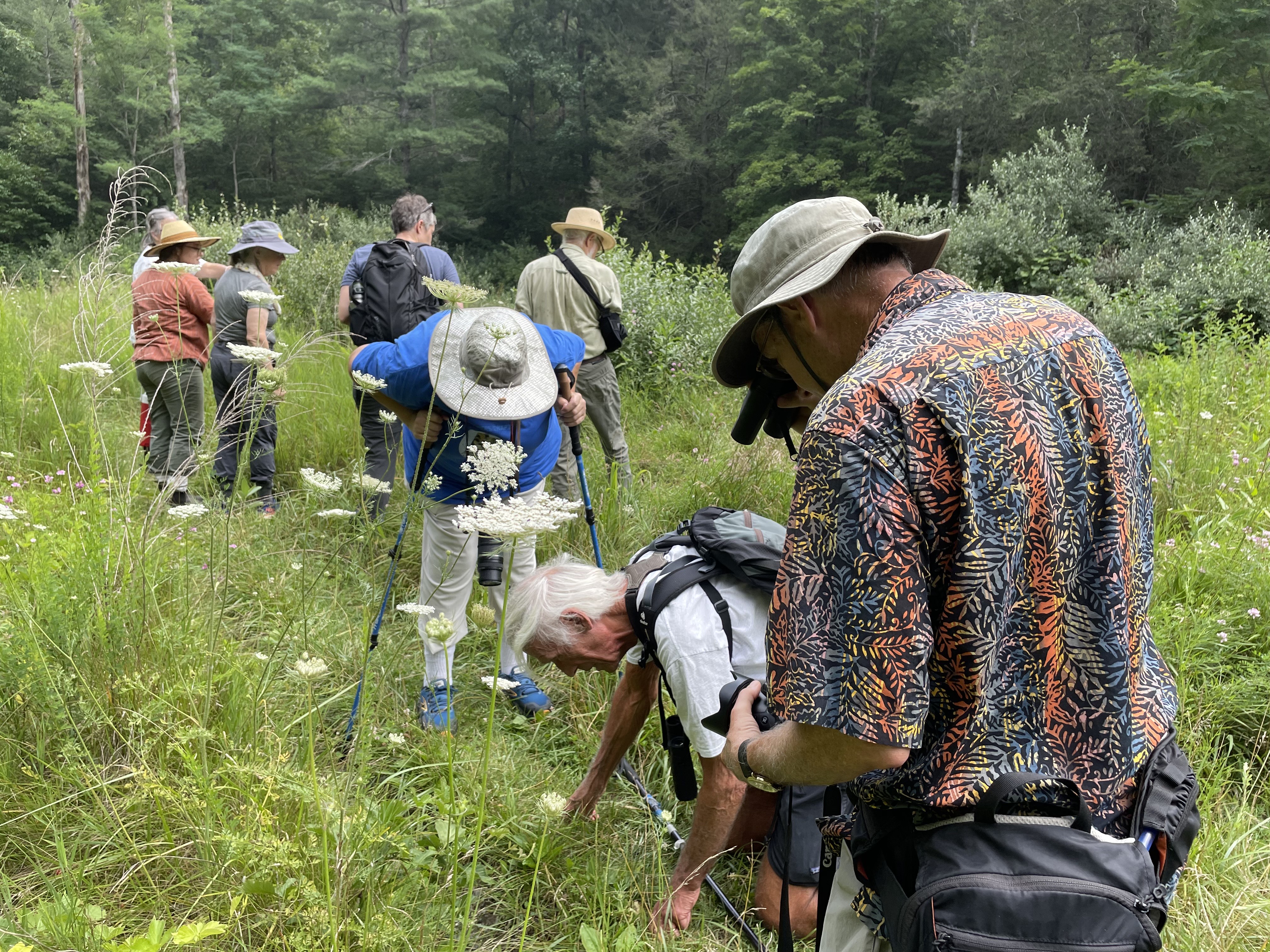
    Observing butterflies
    Observing butterflies. Photo by Malcolm Cameron.

    The morning began with John spending about 40 minutes at the picnic grounds giving us a lively lecture and summary of his knowledge about butterflies and moths as well as the preferred host plants of the often seen and rarely seen butterfly species in our part of Virginia. He had excellent enlarged photos of species we might see and some resource materials such as field guides. John highly recommended the book A Swift Guide to Butterflies of North America (second edition) by Jeffrey Glassburg. He also showed us detailed information sheets for specific species available from butterfliesandmoths.org which show things like life history, caterpillar host plants, adult foods, habitats and range in North America.

    We then proceeded on our hike around the north shore of Braley Pond and up the trail to stop at two wildlife meadows and places in between with some blooming wildflowers. The weather was a mix of clouds and sunshine, so adequate for spotting butterflies and moths, but not ideal. We saw several Silver Spotted Skippers and a Clearwing Hummingbird Moth on bergamot in first meadow, and John also found a Clearwing Hummingbird Moth in the grass which allowed him to let it perch on his thumb for us. A few species of black swallowtails also appeared on thistle blossoms.

    At the pond in the second clearing, which was created by the Forest Service, John pointed out that the site was excellent for Spotted Salamanders which could be seen in late March and April.

    The exciting find at the small pond was a type of Saddleback Caterpillar moth that was brownish orange. It stayed quite still while we photographed it.

    On the way back to Braley Pond the clouds were slowly on the increase so not as many butterflies were out. We took the trail on the opposite side of the pond from our morning route and were rewarded with the sight of some brilliant Cardinal Flowers and a great view of the pond and Shenandoah Mountain in the distance from on top of the dam. Our timing proved to be good since a thunderstorm was approaching soon after we left for home.

    I highly recommend both Braley Pond and especially taking any chance you get to go on an outing with John Holden.

    – by Malcolm Cameron

  • Macroinvertebrate “Petting Zoo”

    Macroinvertebrate “Petting Zoo”

    In May, members of the Virginia Master Naturalists and the Friends of the Middle River teamed up to offer members of the current training cohort and other certified naturalists to have a hands-on experience learning about macroinvertebrates at the Sandy Bottom Park in Bridgewater. Andrea Dono (VMN) and Pete Cooper (FoMR), both certified water monitors, lead the outing and invited participants to trytheir hand at taking samples from the river and practice sorting. About a dozen people got to learn about how to use macros for water quality monitoring. We hope that this “macros petting zoo” was a step to inspire new people to one day become certified. Special thanks to Jeanine Botkin, John Bauman, and Lindsay Kilborne for joining Andrea and Pete and assisting the group with set up and identification. Contact Andrea if you would like to join a fall session. One is not currently planned but if there is interest, we could explore hosting another session again this year.

    – Andrea Dono

  • Pollinator Gardening in Harrisonburg

    Pollinator Gardening in Harrisonburg

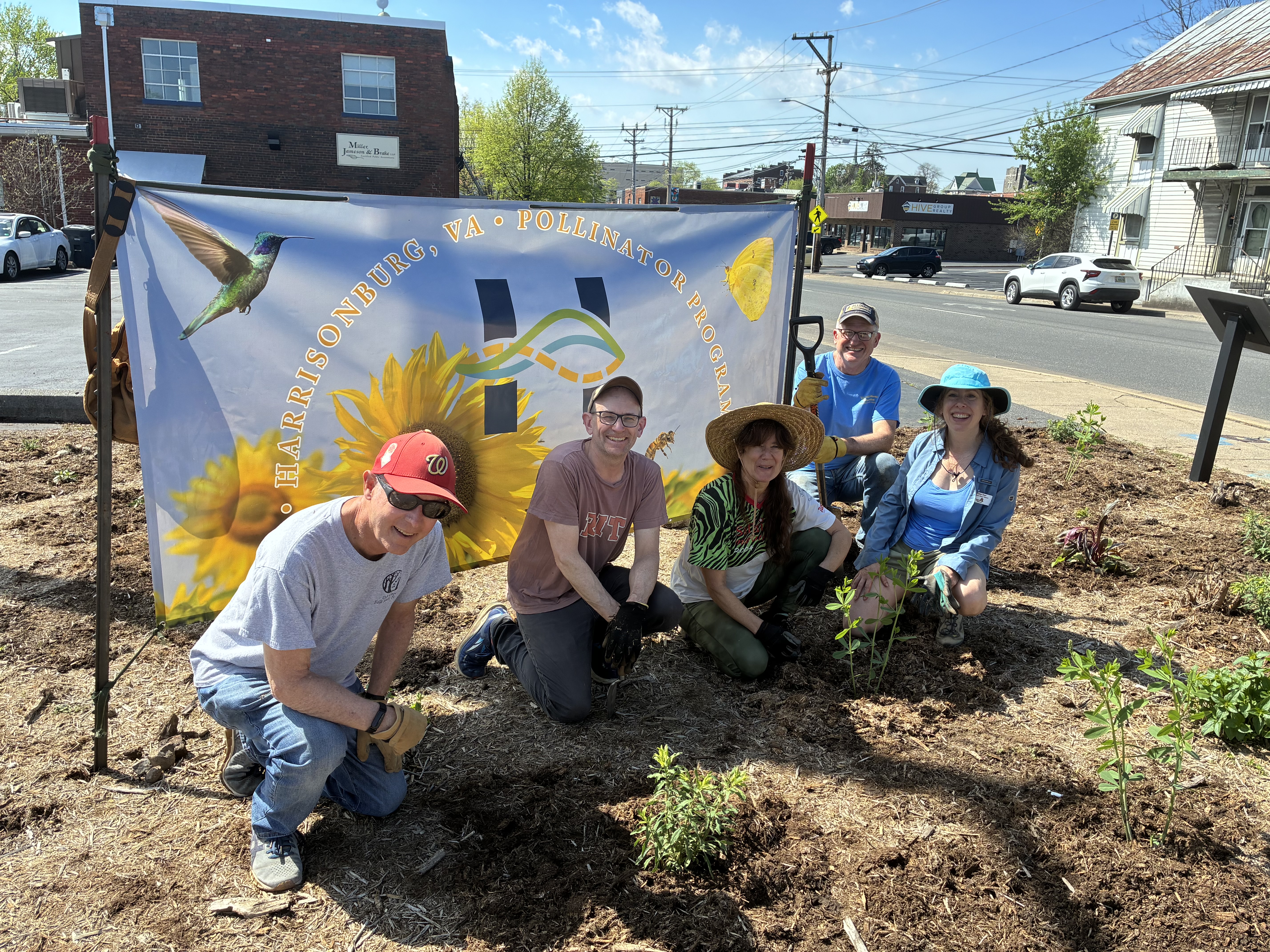
    Pictured (from left): Zack Perdue, Chip Brown, Joyce Maxwell, Scott Jost, and Andrea Dono

    On a beautiful Saturday morning, April 11, HMNs and community members installed around 30 native plants and weeded in the City of Harrisonburg pollinator garden on North Liberty Street across from the L&S Diner.

    Through this event, and more like it in the future, we hope to demonstrate public support for Harrisonburg’s Pollinator Friendly City Program and raise awareness about the importance of pollinators and pollinator habitat on public and private property.

    The next event is being planned for June, which is Pollinator Month in Harrisonburg.

    – Scott Jost, HMN Vice President

  • Benthic Macros Monitoring

    Benthic Macros Monitoring

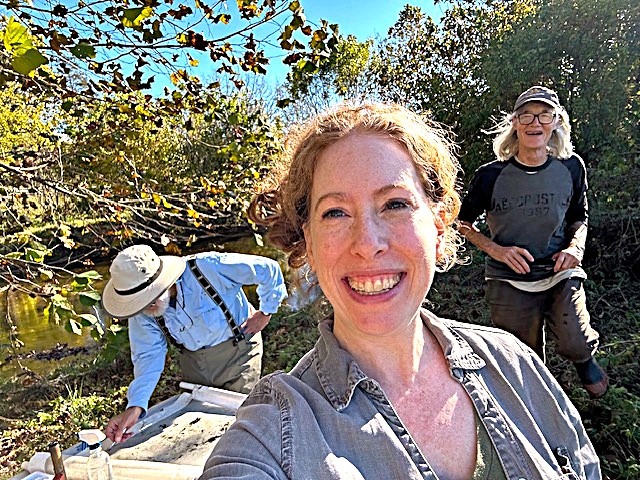
    Andrea Dono, Adrie Voors and Pete Cooper enjoying a day of monitoring along the Middle River. Photo by Andrea Dono.

    Master Naturalists and certified benthic macroinvertebrate monitors Adrie Voors and Andrea Dono joined Friends of the Middle River’s Pete Cooper to assess the water quality of the Middle River at Honeysuckle Hill. Monitors are assigned a site each fall and spring to collect longitudinal data on the water’s health. By netting macroinvertebrates and sorting the aquatic insects, they can identify organisms that require clean water to survive, helping to evaluate the river’s overall health.

    For example, mayflies and stoneflies are intolerant of pollution, while black fly larvae and scuds can tolerate lower oxygen levels and are more pollution-tolerant. Pete explained that FOMR has been “collecting and identifying aquatic macros to the family level for about 15 years, making us one of only two citizen science organizations (to the best of our knowledge) in Virginia to do so. Most others identify macros only to the order level, which provides less scientifically robust and accurate data. Until now, we have been using order-level identification, so we haven’t fully realized the potential of the data we’ve been collecting.”

    The group hopes to host a field day in the spring in Augusta County to introduce master naturalists to this activity and gauge interest in future monitoring efforts. Each time Adrie and Andrea have monitored, they have found something unique — this time, a recently molted stonefly that was white, whereas they are typically dark in color.

    Andrea Dono, HMN Secretary

    Pete sorting aquatic insects. Photo by Andrea.

    Pete sorting aquatic insects. Photo by Andrea.

    Andrea and Pete preparing to sort through the latest netting. Photo by Adrie.

    Molted Stonefly. Photo by Andrea.