Category: Nature Notes

  • Monarch Butterfly Migration

    Monarch Butterfly Migration

    Migration map of monarch butterflies, courtesy of the National Wildlife Federation. Find the original version by clicking on the image.

    Thanks to Rob Beaton, Cohort 8, for sharing about this fascinating phenomenon!

    The Eastern monarch butterfly migration is one of the most impressive natural events in the world. Every year, monarch butterflies (Danaus plexippus) undertake a long and arduous journey, traveling thousands of miles from their summer breeding grounds in the northeastern US and Canada to their wintering grounds in central Mexico. After hibernating, the monarchs mate and begin their journey north, following the same flyways and searching for milkweed to lay their eggs on. This journey is completed by the offspring of the generation that completed the journey southward and hibernate. The butterflies that make the journey north will continue the process of breeding, laying eggs, and completing the journey south and back north again. It typically takes two generations to reach the migration’s northern limit and then another two to return to Mexico. The Eastern monarchs begin their journey south in eastern Canada and the northeastern US, traveling 25 to 30 miles per day over a period of several months. They arrive at specific sites in the mountains of Central Mexico, where they form large clusters on the oyamel fir trees and hibernate until February or March. Then the amazing cycle begins again.

    To prepare for their journey, monarch butterflies accumulate energy by feeding on nectar from flowers. They then rely on environmental cues, such as changes in temperature and day length, to guide them on their journey. The exact route taken by the monarchs can vary from year to year and between generations, depending on weather patterns and wind currents.

    During their journey, the monarchs face many challenges, including extreme temperatures and weather events, habitat loss, and predation. Despite these challenges, the monarchs manage to complete their journey to their wintering grounds where they gather in large numbers and cluster together for warmth and protection.

    Conservation efforts are underway to protect the habitat of the Eastern monarch butterfly, which has been declining in recent years. These efforts include planting milkweed, which is critical for the survival of monarch butterflies, and creating areas for monarchs to breed and feed. Experts estimate that the eastern monarch butterfly population size has been reduced by more than 80% since the 1990s. This decline is likely due to a combination of factors such as habitat loss, climate change, pesticide use, and disease. By supporting conservation efforts, we can help ensure that future generations will have the opportunity to witness the incredible journey of these majestic insects.

    Sources:

    https://www.worldwildlife.org/stories/the-great-monarch-migration

    https://www.fs.usda.gov/wildflowers/pollinators/Monarch_Butterfly/migration/index.shtml

    https://www.fws.gov/savethemonarch/

    https://msutoday.msu.edu/news/2021/eastern-monarch-butterfly-disappearing

    Graphic credit: https://monarchs.nwf.org/

    – Rob Beaton, Cohort 8, August 2023

  • Tick Vigilance

    Tick Vigilance

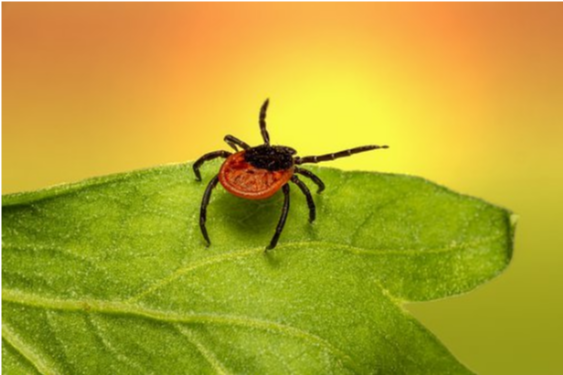
    Deer Tick, Lone Star Tick, American Dog tick, and Brown Dog tick.

    Ticks are active year-round in Virginia

    As Virginia Master Naturalists, it is important to know that every season is tick season in Virginia, and winter weather doesn’t necessarily determine how bad the spring and summer tick seasons will be. April through September are generally considered prime tick months but May is National Lyme Disease Awareness Month, designated for spreading the word on preventing and identifying this tick-borne illness.

    Ticks are a common external parasite that live on mammals and birds, and sometimes reptiles and amphibians. In the Shenandoah Valley and Blue Ridge Mountains, there are four species of “hard ticks” that can transmit diseases to humans and animals. According to the National Park Service, the four species are the Black Legged or Deer tick (Ixodes scapularis), Lone Star tick (Amblyomma americanum), American Dog tick (Dermacentor variabilis), and Brown Dog tick (Rhipicephalus sanguineus), with Deer ticks being the predominant species in the area.

    The Deer tick is encountered predominately in deciduous forest as well as tall grasslands and shrubs bordering forest edges. As the name suggests, these ticks are often found on deer and are known to drop off in other areas. However, they are not limited to just deer, and they can hitch rides on all kinds of warm-blooded mammals.

    Tick bites can be prevented by taking the following measures:

    1.  Wear protective clothing that covers your skin, such as long pants and sleeves. This can help prevent ticks from latching onto your skin.

    2.  Use insect repellent containing DEET directly onto your skin (including socks/shoes) to repel ticks. It is recommended to use a product with 20% to 30% DEET.

    3. Use products containing Permethrin. Permethrin is an effective insecticide in the pyrethroid family that is commonly used for tick control. It is used in a number of ways to control insects and can be applied to clothing and gear to prevent tick bites. Permethrin is a powerful, rapidly acting insecticide that kills ticks and insects that come in contact with treated clothes. It is typically applied to clothing, not skin, and can remain protective through several washings. Permethrin-treated clothing and gear is also commercially available from several manufacturers such as Insect Shield. According to a study conducted by the University of Rhode Island in 2011, treating shoes and socks with Permethrin can reduce the likelihood of a tick bite by 73.6 times.

    4.  Avoid wooded and brushy areas with high grass and leaf litter. Walk in the center of trails.

    5.  After spending time outdoors, check your clothing and body for ticks. Ticks may be carried into your home on clothing, and should be removed as soon as possible.

    Graphic credit: https://www.vdh.virginia.gov/content/uploads/sites/12/2019/08/Tick-borne-Disease-in-Virginia-Flyer-8.5-x-11-format-for-website-.pdf

    Ticks are common in Virginia, and it is important to be able to identify the signs of tick bites. According to the Virginia Department of Health, 70-90% of people who contract Lyme Disease develop a circular or oval rash called erythema migrans (EM) at the site of the tick bite. To qualify as EM, the rash must be at least two inches in diameter. However, it is important to note that some tick species can cause local inflammation and redness around the bite that could be mistaken for EM. Other symptoms of tick-borne illnesses include fever/chills, headache, fatigue, muscle aches, joint pain, and rash. If you suspect that you have been bitten by a tick, it is important to monitor your symptoms and seek medical attention if necessary.

    It’s important to note that even if you take preventive measures, check yourself for ticks if you spend a lot of time outdoors. Know the risks associated with tick species in our area.

    Sources:

    1.  Tick Identification Chart – Virginia Department of Health. https://www.vdh.virginia.gov/content/uploads/sites/12/2016/10/Brochure.pdf

    4.  It’s Tick Season! Tips on Preventing Tick Bites – Virginia Department of Health. https://www.vdh.virginia.gov/blog/2022/06/27/tick-season-preventing-tick-bites

    3.  Tick Bites: Symptoms, Treatments, Pictures, and Prevention – Healthline. https://www.healthline.com/health/tick-bites

    5. http://npic.orst.edu/factsheets/PermGen.html

    6. https://www.insectshield.com/

    Photo credits for top photo: https://www.nps.gov/shen/learn/nature/ticks.htm and https://en.wikipedia.org/wiki/Rhipicephalus

    Rob Beaton, Cohort VIII, April 2023


    For a deeper dive into this subject, check out this VMN CE webinar from 2019: Virginia Ticks and Tick-borne Diseases

  • Rare MacGillivray’s Warbler at Lake Shenandoah

    Rare MacGillivray’s Warbler at Lake Shenandoah

    MacGillivray’s Warbler, Lake Shenandoah Pollinator Trail | Photo Credit: Diane Lepkowski

    Rare MacGillivray’s Warbler graces DWR’s Lake Shenandoah Pollinator Trail!

    We think of pollinator plantings as hosting, well, pollinators: bees, butterflies, moths, and other insects. Some birds, such as hummingbirds, do of course serve as pollinators though we generally don’t connect pollinator plantings with birds. But wait!

    By late fall, with their elegant flowering days in the seasonal rear-view mirror, the Lake’s pollinator beds were a mass of dry, brown, shoulder-high remains. While perhaps not very attractive to the unknowing eye, a birds-eye-view (from a different angle than above!) tells an ENTIRELY different story! In fall and winter, these plants offer cover and much-need food (seeds and some insects) to sparrows, finches and more.   

    By late November, the plantings hosted our expected wintering birds including White-throated, Song, Swamp, and Field Sparrows; American Goldfinches; and House Finches. But on November 27, a sharp-eyed birder spotted a colorful bird – bright yellow below, greenish above, gray hood, and with the distinctive bold, white eye-arcs that suggested the extremely rare and MOST unexpected MacGillivray’s Warbler!   

    The MacGillivray’s Warbler is a western species; it breeds through the Rocky Mountains and other western mountain ranges and winters in Central and South America. A skulker, it typically forages on the ground and low in dense growth, seeking insects, and is difficult to find in plain view. On November 28, the bird was relocated and photographed, confirming its ID. News of the rarity spread quickly, and birders from all corners of Virginia and beyond traveled to find the bird, many making multiple trips until finally seeing it.   

    The pollinator plantings hosted a couple of other rarities during this time, including an American Tree Sparrow and late-migrating Cape May Warblers. But this was the FIRST EVER record of a MacGillivray’s Warbler in western Virginia and only the third accepted record in the State. The warbler was last reported on December 21, winter’s first day. The winter storm and single-digit temperatures that followed may have been difficult for the little guy; we hope that he found his way south!

    – Diane Lepkowski, Cohort VII, December 2022

    Lake Shenandoah is becoming quite the hot spot. … eBird (indicates) the lake is the most diverse birding spot in the valley.

    Jason Hallacher, District Fisheries Biologist, VA Department of Wildlife Resources

    eBird has an option to print a checklist for every hotspot. The eBird Field Checklist for Lake Shenandoah as of the end of 2022 is HERE.


    Photo at right shows now Chapter advisor Jason Hallacher leading our Cohort VI training class along the pollinator trail in October 2018. Lisa Klein wrote about it HERE. Photo by Sandy Greene, Cohort I.

    Lake Shenandoah is one of many local sites on The Virginia Bird and Wildlife Trail which are monitored by members of our Chapter.

    More about Lake Shenandoah from the Department of Wildlife Resources’ website HERE and HERE.

  • Stop the sale of invasive plants

    Stop the sale of invasive plants


    HMN David Forrer, Cohort VI, on a collaborative effort to curb invasive plants in Virginia:

    All of us HMNs are painfully aware of the many invasive plants that are taking over landscapes and forests around us. In addition to the stiltgrass, garlic mustard, and other invasives we see and do battle with in the forest, I spend a couple hours every week, along with half a dozen other volunteers, removing invasive plants at the Edith J. Carrier Arboretum. There are times when I feel that we may never work ourselves out of a job because of all the invasives that are planted around the arboretum. In the national forests, I’d pretty much given up hope.

    However, I was recently given a ray of hope. Several weeks ago, I attended a virtual presentation (via the Lewis Ginter Botanical Garden talk series) about invasive plants by Beth Mizell, with the group PRISM (Partnership for Regional Invasive Species Management). During the presentation, Beth informed us of a Virginia House of Delegates Resolution that could result in curtailing the sale of invasive plants. But they need our input. Here is her response to my request for more details:

    HMNs Betty Forrest, Chris Bowlen and Jerry Hopkins, along with Bea Woody, pulled wavyleaf grass from the Shenandoah National Park in June 2014. More here about that work.

    HJ 527 is a VA House Resolution mandating the formation of a work group representing conservation groups, private landowners, and the nursery industry. The work group is led by the Department of Conservation and Recreation and Department of Agriculture and Consumer Services to develop specific recommendations aimed at reducing invasive plants for sale in Virginia. You can read the resolution language at the website below:
    https://lis.virginia.gov/cgi-bin/legp604.exe?212+ful+HJ527ER

    It is too soon to tell what the specific work group recommendations will be and if these recommendations will be taken up by the legislative bodies in Virginia. Public comment is an important part of this process either in person at the meetings or by email. You may send any comments to the workgroup agency leads, Nathan Burrell and Larry Nichols, at the following email addresses.
    larry.nichols [at] vdacs.virginia.gov
    nathan.burrell [at] dcr.virginia.gov

    Not only does the work group need to hear how invasive plants impact you, they need to hear specific recommendations from the public about getting invasive plants banned and promoting native plants. Here are some suggestions:

    • Amend the noxious weed law to clarify or remove commercial viability, so more plants can be classified as noxious weeds and banned for sale in VA and work with those impacted to phase out invasive plants popularly used in landscaping
    • Form a statewide biodiversity task force
    • Fully fund the Virginia Invasive Species Management Plan
    • Fund Dept Conservation and Recreation to update Virginia Invasive Plant List on a regular basis with a defined science-based process
    • Prohibit state agencies from selling or planting anything on the Virginia Invasive Plant List; use native plants wherever possible

    You can also recommend that the state set aside funds to assist private landowners with invasive eradication efforts.

    Best,
    Beth Mizell, Blue Ridge PRISM
    info [at] blueridgeprism.org | http://www.blueridgeprism.org

    David Forrer, Cohort VI, November 2021


    Note that the meetings for the work group led by DCR and the Department of Agriculture and Consumer Services are concluding by November 30, 2021, but the report will likely not get submitted until early 2022. Meanwhile, letting policymakers know your views is impactful.


    The photo at the top of this post shows HMNs Burt Blessing and Dave Forrer on the right with fellow arboretum volunteers Karen Craun and Craig Chandler on the left. The truck bed is full of invasive stiltgrass they have removed. More about their work HERE. Photo courtesy of the Edith J Carrier Arboretum.


    DCR’s Virginia Invasive Plant Species List is HERE.

  • Ticks…in Winter??

    Ticks…in Winter??

    After contracting Lyme Disease last summer, and then finding another attached deer tick a month after recovering (and after hearing that Sandy’s daughter is dealing with a tick-borne illness), I’ve become pretty paranoid about ticks. I was wondering whether there’s any risk of tick bites in the winter and googled it. I found this article, which might be of interest to our members.
    Stay well! – Dave Forrer

    Are Ticks a Threat in Winter?

    Article in the Washington Post Jan. 13, 2020. From Consumer Reports:

    “With winter upon us, you might have decided to store your insect repellent in the back of the closet until spring. Well, you might want to dig it back out, because some species of ticks can be active during winter. In general, the species of ticks that transmit diseases to humans in the United States tend to become inactive during the winter. The combination of cold weather and shorter days triggers a kind of hibernation, known as diapause, says Ellen Stromdahl, a retired entomologist from the tick-borne disease laboratory of the U.S. Army Public Health Center at the Aberdeen Proving Ground in Maryland.

    There are two important exceptions to this rule, however: the black-legged tick (also known as a deer tick) and its cousin that lives on the West Coast, the western black-legged tick. These are the two ticks that transmit Lyme disease in the United States, and they ‘are likely to be active when we get a little warm-up spell in the winter,’ Stromdahl says. The reason is that some of the adult black-legged ticks may not have found a meal before the end of the fall. Because the female adults need to feed to lay eggs in the spring, those that haven’t found a meal don’t go fully dormant during the winter. Instead, they can become active whenever the temperature rises above freezing (to about 35 degrees) and when there’s no snow on the ground, says James Burtis, a postdoctoral associate in the Department of Entomology at Cornell University in Ithaca, N.Y., who has studied the wintertime biology of black-legged ticks. And black-legged ticks may carry not only Lyme disease but also a ‘whole laundry list’ of other pathogens, Stromdahl says, including anaplasmosis, babesiosis, and the deadly Powassan virus.”

    From Dave Forrer