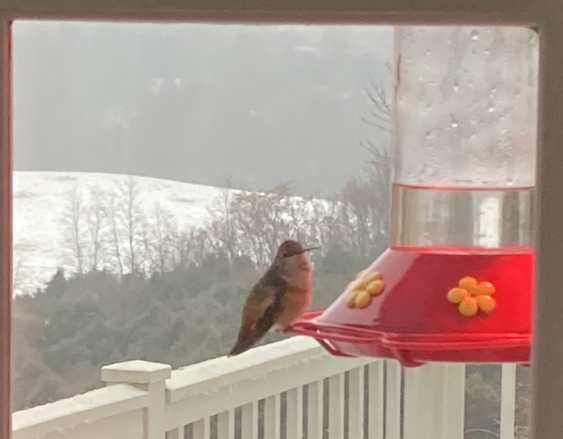
Rufous hummingbird. Photo courtesy of Carol Taylor.
A friend had an interesting experience with a Rufous hummingbird. I asked them to write about it and include some pictures. – Jason Hallacher, HMN Advisor
Maybe laziness can occasionally have its rewards? Our hummingbird feeder was frequented by bees after the departure of the Ruby-throated hummingbirds in October, so we decided to leave it hanging there for a while. Then I just didn’t notice it anymore. . . . .
Until November 17 when it took center stage. Out of the blue, there was a hummingbird drinking heartily. I scarcely believed my eyes Within minutes I replenished the thoroughly scoured feeder with fresh sugar water and the bird returned immediately. Aware of the approaching cold, we bought a couple of heat lamps to warm the feeders.
With the help of Allen Larner, who keeps the records at the Augusta Bird Club, we decided it was a male Rufous hummingbird, a rare winter visitor in Augusta County. The hummingbird became a constant delight and on December 8 we had a licensed bander from Delaware give him a leg band #J45254.
He also made the following observations:
Weight: 3.98 grams including about 1 gram of fat Wing length 47.25 mm; Tail length 26 mm; Bill length 17.52 mm Grooving on bill 80% (indicating the bird was born this year)
Amazingly, on November 13 another hummingbird joined the scene and stayed for a couple of days, but after considerable zooming and posturing, the first one chased him (her?) off. Christmas Day was memorable for its frigid temperatures necessitating bringing the feeders inside from time to time to thaw them.
The Rufous is still with us on December 29 In such crazed times, this tiny being has brought us so much joy. It feels like a harbinger of good things to come in 2021! It may also suggest that keeping feeders up through at least the beginning of winter could save a life.
The DWR stocked trout program puts about 800,000 catchable-sized trout into 400 miles of streams. Photo by Meghan Marchetti/DWR
Chapter advisor Jason Hallacher passed along this article. Not only does it have good information but also this will help in case volunteers are approached by anglers and have questions about trout stocking.
DWR Trout Stocking Explained By Steve Reeser/DWR
If you asked 10 different anglers what they would like to see in the Department of Wildlife Resources’ (DWR) stocked trout program, you would most likely get a wide variety of answers. There is no such thing as an “average” trout angler in Virginia since every angler has different priorities and techniques, so there is also no single “right” answer to stocking trout that will make every angler happy.
Stocking hatchery-reared trout into a stream or small impoundment is completely artificial and therefore can be manipulated in many ways. Where and when trout are stocked, the size and number of fish stocked, and how and when anglers are informed of trout stocking are management options that DWR utilizes in its stocked trout program. DWR has been responsive to the requests of Virginia’s stocked trout anglers. Over the past three decades, DWR has made changes to the general put-and-take program and initiated several other specific programs to meet the social and demographic needs of the stocked trout angling community.
Catchable Trout (Designated Stocked Trout Waters) The catchable trout stocking program is the most popular component of DWR’s program and accounts for approximately 80 percent of trout angling effort in Virginia. Roughly 1.2 million catchable-size trout (600,000 pounds) are stocked into 135 streams and 32 ponds and lakes (totaling 204 different stream sections and impoundments). All catchable-size stocked trout are at least 7″ in length when stocked. However, DWR attempts to produce fish with an average length of 10 ½” (0.45 lb.) for stocking these waters.
Stocked catchable-size trout support General Put-and-Take, Delayed Harvest, Urban, Fee Area, and Trout Heritage fisheries. These waters are considered “Designated Stocked Trout Waters” and listed in the annual Trout Stocking Plan. Fishing in Designated Stocked Trout Waters requires a trout license from October 1 through June 15.
General Put-and-Take Waters Put-and-take stocked trout fishing—where anglers are free to “take” trout from waters into which trout have been stocked, or “put”—draws the most interest and attention from anglers because of the availability of catchable-size trout, liberal gear restrictions, and ease of capture. Eighty-nine percent of the waters stocked with catchable-size trout currently fall under the put-and-take category.
Delayed Harvest Waters The delayed harvest program was launched in 1989 with the intent to incorporate aspects of both catch-and-release and put-and-take trout fishing. Streams in this program are generally large and provide good trout habitat. However, water temperature often limits trout survival through the summer months. Catchable-size trout are stocked typically once in fall, winter, and spring. From October 1 through the following May 31, only artificial lures may be used and all fish must be released unharmed. From June 1 through September 30, general trout regulations are in effect, and trout may be harvested. A trout license is required to fish these waters from October 1 through June 15. There are currently 14 streams in the delayed harvest program.
Urban Waters In 1993, DWR initiated its Urban Fishing Program at three ponds in urban and suburban areas. These prototypes evolved into seven permanent sites across the Commonwealth: Cook Lake (Alexandria), Locust Shade Park Lake (Prince William), Dorey Park Lake (Henrico), Shields Lake (Richmond), Lake Biggins (Newport News), Northwest River Park Lake (Chesapeake), and the newest, Old Cossey Pond (Fredericksburg).
The sites share common components—they are small ponds managed by their localities (Parks and Recreation departments) and lie within the “urban crescent,” which extends south from the Washington, D.C., metro area through Richmond, then east to Virginia Beach.
The goal for this program is to bring angling to densely populated areas and give urban residents an opportunity they may not otherwise have. Currently, all urban fishing program sites are stocked with catchable rainbow and brown trout five times per season (November – April). Urban waters that can accommodate catfish are also stocked with large channel catfish during warmer months when water temperatures are too high for trout.
The Urban Trout Program generated heavy fishing participation, estimated at 12,500 angling hours per acre annually in the mid-2000s with 36 acres of water in the program. The average catch rate was around 0.5 fish per hour, which, for these fisheries, is considered high relative to national catch estimates due to intense fishing pressure. The Urban Trout Program may serve to attract new anglers, as past surveys indicated that 5 percent of users had fished for less than one year, and 19 percent had fished for less than five years. Juvenile usage comprised 15-20 percent of the total, with much of the remainder made up of senior citizens.
Fee-Fishing Areas The fee fishing, or “pay-as-you-go” trout program, began in 1964 when the Clinch Mountain Fee Fishing Area opened. Today, DWR manages three fee-fishing areas located in western Virginia: Clinch Mountain, Crooked Creek, and the Douthat Lake Fee Fishing Areas. The primary goal of the fee-fishing program was to provide inexpensive trout fishing opportunities for vacationers, both resident and non-resident. Today, these areas also provide anglers an opportunity to experience a more traditional “opening day” as well as to fish for frequently stocked trout throughout the season.
During the fee season, anglers may fish one of the fee areas with a basic freshwater fishing license and a daily fishing permit ($8), which is required of all anglers over the age of 12. Revenue generated from the daily permit sales is used to offset the cost of trout production and stocking at the fee areas. Outside of the fee season, these areas revert to designated stocked trout waters, and a trout license is required instead of a daily permit. See more details at virginiawildlife.gov/fishing/trout/fee-fishing-areas/
Popular with anglers, the program provides a quality experience for catchable stocked trout, particularly through the summer after stocking has ceased on the generally designated trout waters.
Trout Heritage Day/Pre-Announced Stockings Trout Heritage Day began in 2001 to provide a similar experience to the opening day of trout season for anglers who enjoyed the excitement and social aspect. Twenty selected Trout Heritage waters are stocked prior to or on the first Saturday in April to create an announced stocking event. These streams and impoundments are closed to fishing the Friday prior to the first Saturday in April for stocking and reopen to fishing the following day at 9:00 a.m. The stocking for Heritage Day counts as one of the standard allocated stockings for that water.
Surveys of stocked trout anglers in recent years indicated that many anglers wanted to see more trout stockings announced ahead of time, like Trout Heritage Day. The stocking dates for 12 individual spring-time stockings on 12 different waters are now published by the Department two to three months in advance.
Fingerling Stocking The fingerling stocking program is designed to take advantage of the natural potential of deep reservoirs, coldwater tailwaters, and spring-fed streams to produce quality trout fishing opportunities where wild trout fisheries are not possible due to the lack of natural reproduction. Because summer water temperatures are usually a limiting factor to trout survival, under this program a stream or reservoir must provide suitable, year-round water temperatures, have good habitat, and be productive enough to provide adequate food for good growth.
DWR utilizes brook, rainbow, and brown trout in the fingerling program. The species utilized depends upon habitat conditions of the receiving water and specific management objectives. Suitable waters are stocked once annually with fingerling or sub-catchable (smaller than the legal size limit of 7″) trout, and often length limits and angler gear restrictions are imposed to protect these sub-legal size fish until they reach harvestable size. During this time, trout lose most of their hatchery characteristics, both in appearance and behavior, and create a fishery that approaches a wild one in terms of fishing experience. Some of Virginia’s most exciting trout fishing opportunities can be found within the fingerling-stocking program. By stocking small fish once a year, a high-quality fishery can be developed at a fraction of the cost of the more common put-and-take program.
Some stream sections that receive fingerling trout are located entirely on private lands, and DWR manages these fisheries in cooperation with the private landowners using a permit system. A free permit is required to fish these streams and can be obtained from DWR’s website. In 2019, approximately 10,000 permits were issued for the three streams in this program (Mossy Creek, Buffalo Creek, and South River).
Youth-Only Stocked Trout Waters & Children’s’ Fishing Events Wildlife Resources stocks catchable-size trout in seven different waters (lakes and streams) that are reserved for under-16 youth only from April 1 through June 15. The objective of this program is to provide a place for young anglers to fish for trout without having to “compete” with adult anglers.
DWR also provides stocked trout for popular children-only fishing events, in which thousands of children participate. Events must occur on DWR-designated stocked trout waters (both streams and impoundments) during the stocking season (October 1 – May 31). The stocking for the event counts as one of the standard allocated stockings for that particular water. DWR only provides trout for one event per water body per year and stocks trout for approximately 30 children’s fishing events each year.
Wild Trout Resources More than 3,500 miles of coldwater streams contain wild trout populations in Virginia. Wild trout are an indicator of healthy watersheds and contribute to our quality of life. The agency’s most recent statewide angler survey (2016) revealed that 16.5 percent of Virginia anglers (⁓60,000) fished for wild trout.
DWR manages wild trout resources located on national forest lands, state-owned lands, and private property within the Commonwealth. Wild trout populations located within the Shenandoah National Park are managed by the National Park Service through consultation with DWR.
Wild brook trout currently occupy more than 614 individual streams (2,000+ miles) across the Blue Ridge and Alleghany Plateau regions of western and southwestern Virginia. There are currently 163 streams (about 700 miles) harboring wild rainbow trout populations and 92 streams (about 600 miles) containing wild brown trout. The more than 700 individual streams that harbor wild trout in Virginia offer a wide range of fishing opportunities. These may range from small streams less than 10 feet wide with low densities of trout that rarely exceed 7” in length to highly productive waters with high numbers of trout, with some capable of growing up to citation size. The majority of wild trout streams are managed with general statewide regulations (7” minimum size limit; six trout per day creel limit; no gear restrictions).
However, several of Virginia’s better wild trout fisheries are managed using special fishing regulations. These include catch-and-release, higher minimum size limits, or gear restrictions. All wild trout streams located within Shenandoah National Park are managed under special regulations. So if you are looking for a diversity of wild trout fishing experiences, Virginia has a lot to offer!
Find Out More Looking for where to go trout fishing? DWR’s interactive trout fishing map of Virginia can help. Utilize the “Layers” tool in the top right corner to specify the species of trout, and use the Basemap Gallery in the top right corner to choose a topographic or street map background. The map is searchable, and you can zoom in and out.
Fish alone, with family members, or others that you live with and are isolating with during the Governor’s “stay at home” order.
Do not fish if you feel sick or think you might be sick.
Stay at home when you are sick, except to get medical care.
Wash your hands regularly with soap and water for 20 seconds or using alcohol-based sanitizer even while afield or afloat.
Do not share equipment with anyone and wash your equipment when you’re done.
Stay at least 6 feet away from other anglers you encounter and try to avoid crowded access points.
Do not float in a raft, drift boat, johnboat, or canoe with friends that you are not isolated with during the “stay at home” order. If you choose to float, please do so with individuals that you live with and are isolated with.
Try to fish near home as much as possible and avoid traveling long distances.
This article appeared in the September/October 2020 issue of Virginia Wildlife. Subscribe today and don’t miss more great wildlife stories and news about how DWR is working for Virginia’s wildlife.
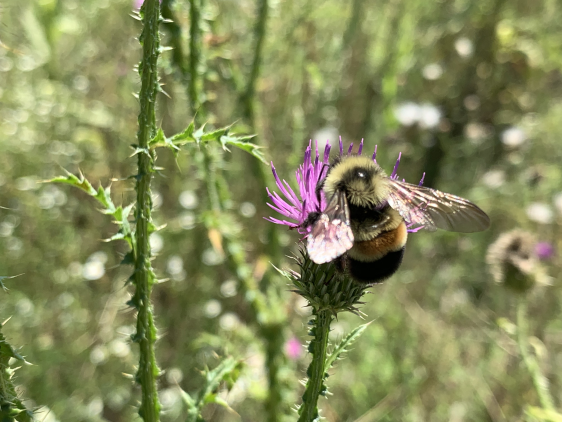
On August 5, Region 4 DWR staff (Dept. of Wildlife Resources) and a DCR field zoologist (Dept. of Conservation and Recreation) conducted a Bumble bee survey on the Highland WMA (Wildlife Management Area).
While surveying a proposed Restore the Wild Pollinator fields, the DWR staff and DCR zoologist spotted 11 Rusty Patched Bumble bees (Bombus affinis) over a three day period. The fields that the Rusty Patched Bumble bees were spotted in are managed with prescribed fire to foster native wildflowers. Other species spotted included the Common Eastern Bumble bee, the Two Spotted Bumble bee, and the Brown Belted Bumble bee.
Regarding the Rusty Patched Bumble bee, it is very rare and considered endangered. The following is its Conservation Status:
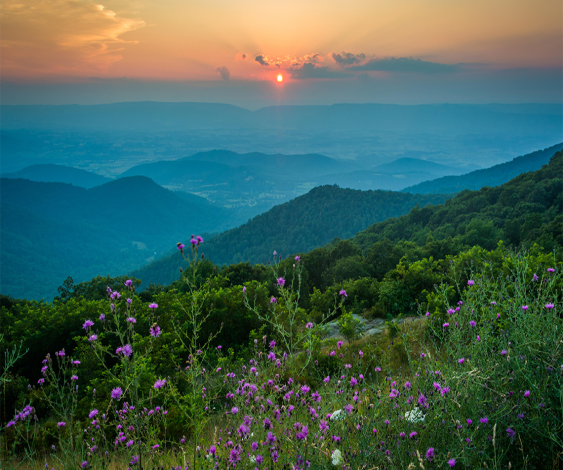
The September 2020 newsletter focuses on the Shenandoah National Park, and this piece covers the online places you can go, which are many! Please explore!
Phase Three: What You Need to Know This page of the Shenandoah National Park site gives you all the information you need to know about parking, campgrounds, Visitor Centers, Concession Services, Picnic Grounds, hiking, and what to do to stay safe.
History & Culture From here, you can learn about the amazing history of this area and the cultures that impacted and were impacted by the Blue Ridge and Shenandoah Valley. You can link from this page to learn about the variety of People, Places, Stories, Perspectives on the history, and Collections.
Collections On the Collections page, you can link to see many historical photo galleries. A few examples of photo galleries to enjoy are the CCC, Early Log Construction, Early Park, FDR, Former Mountain Residents, and Early Trail Construction. What a great way to take a trip back in time!
Nature There is so much nature to enjoy in the SNP! Tens of thousands of animals, from large to tiny. So many unique elements of nature–varied geology and many ecosystems; water that supports aquatic animals; some endangered; flora and fauna from morels to White Oaks to the rare purple fringeless orchid.
Animals From this page, you can find abundant information about all the animals in the SNP. There are links where you can find detailed information and pics on over 50 mammal species, 190 bird species, over 40 fish species, 20 reptile and amphibian species, and countless insects, spiders, and other invertebrates.
Wildlife Safety Too many people go hiking without knowing the basics of safety. As Master Naturalists not only do we have more training than many but also we are expected to have more training. However, many times that training may focus on First Aid, what to do when you get lost, how to manage a group, etc. This area of the SNP’s site is for wildlife safety, which is always good to know or refresh yourself on.
Photos & Multimedia This page is the launching page for many great areas, which are listed below.
Interactive Features The Interactive Features area offers short films and web-based interactives exploring issues about the SNP. For example, there is a virtual field trip about the air quality of the SNP and a docuvideo of the CCC (Civilian Conservation Corps).
Flickr Albums SNP Flickr Albums are full of albums of photos. The difference between these photos and the photos in the Collections area is that the Flickr page contains more current photos in general and the Collections page has more historical photos.
Photo Gallery Honestly, I’m not sure what the difference is from this Photo Gallery and the Collections and Flickr Albums. There are some duplicate photos in this Gallery from the Collections and Flickr Albums and a few new ones. But overall, it doesn’t have as many photos as the other photo pages.
Videos Most of these videos are informative, focusing on the history of, the climate around, or first-timers to the SNP.
Webcams If you work from home, work mostly at a computer, or just like to what’s going on in other places, check out this page for SNP’s webcams. For example, check out several Big Meadows webcams, which are at a high elevation, pointed at a beautiful meadow, and frequently visited by many animals.
Virtual Ranger Programs The Virtual Ranger Programs are videos of interesting and informative topics–not just for kids! For example, learn about fireflies and how we are affecting them. Videos are continually uploaded so check back often!
Virtual Tours This page offers different virtual tours: exhibits and historic buildings of the SNP.
Historian/Parliamentarian Stephanie Gardner would like to remind everyone that the HMN photo albums are growing. The newly expanded virtual photo albums can be found on Headwaters’ password-protected Virginia Master Naturalists Volunteer Management System. The Photo Albums link is the last link on the left side of the page.
Photographs in the online albums are pulled from our chapter newsletters through the years. The images are a fun walk down memory lane during this time of social distancing!