Category: Fantastic Finds

  • Fantastic Finds from My Corner

    Fantastic Finds from My Corner

    by Elizabeth Pass, Cohort VI
    for the August 2023 issue of Headwaters Highlights

    We enter August sweltering through the hottest days in history. Dog days, indeed!

    Something to Read

    Here are a couple of reads about our history and how interconnected we are with our climate, flora, and fauna. They point out the delicate balance and what effects can occur when that balance is disrupted.


    Otherlands: A Journey Through Earth’s Extinct Worlds, Thomas Halliday 

    Otherlands  examines the history of Earth, specifically 16 fossil sites, “…as it used to exist, the changes that have occurred during its history, and the ways that life has found to adapt―or not.”


    Gone: Stories of Extinction, Michael Blencowe

    Blencowe takes a different approach, with each chapter revealing a different extinct animal from across the globe. His book tells the amazing stories of the following animals, how they were discovered, their lives, and how they became extinct:

    • Great Auk. A majestic flightless seabird of the North Atlantic and the ‘original penguin.’
    • Spectacled Cormorant. The ‘ludicrous bird’ from the remote islands of the Bering Sea. 
    • Steller’s Sea Cow. An incredible ten-ton dugong with skin as furrowed as oak bark. 
    • Upland Moa. The improbable birds and the one-time rulers of New Zealand. 
    • Huia. The unique bird with two beaks and twelve precious tail feathers. 
    • South Island Kōkako. The ‘orange-wattled crow,’ New Zealand’s elusive Grey Ghost. 
    • Xerces Blue. The gossamer-winged butterfly of the San Francisco sand dunes. 
    • Pinta Island Tortoise. The slow-moving, long-lived giant of the Galápagos Islands. 
    • Dodo. The superstar of extinction. 
    • Schomburgk’s Deer. A mysterious deer from the wide floodplains of central Thailand. 
    • Ivell’s Sea Anemone. A see-through sea creature known only from southern England.  

    In case the heat and readings about the Earth’s extinctions leave you feeling despondent, here’s another great read.

    An Immense World, Ed Yong

    Yong, an award-winning science writer, shows us how animals perceive the world and how that relates to us. His comments on language and its limits are particularly insightful:

    …there are many places where our language leaves us in the lurch. Like with vision, we don’t have a word for detecting light but not having a conscious experience of it…. And the problem is even worse when you think about senses like smell, where most Western cultures, at least, have a very impoverished vocabulary…. There’s none of the words that we would use to describe tastes or sounds, none of that sort of rich lexicon, and that’s a problem.

    Ed Yong from An Immense World

    Something to Do

    Photo from The Happiness Project by Gretchen Rubin

    Taking Yong’s comments into account, Gretchen Rubin, in her book, Life in Five Senses, offers an exercise to pay more attention to the world around us and expand the language around our senses. Also, we can become more aware of our precious environment. She created a journal, to support the advice from her book, that offers a quick and daily way to become more aware of our surroundings and senses.  

    Each day has you do the following:

    “Pick a subject for this month’s five-senses portrait. You can choose a person, a pet, a place, a city, yourself, or any other subject you can think of. Identify the sights, sounds, smells, and touch of all the things and experiences you associate with the subject you choose.”

    You next put the Date for each day, the Subject you chose for the month (“When I think of….”), and then create a bullet list for each Sense (“I think of seeing…”, “I think of smelling…”, I think of tasting…”, I think of hearing…”, I think of touching…”).

    I’ve created a variation that doesn’t have you focus on one subject for a month. Instead, create a journal so that you record what you notice for each of your senses that day. List the Date, then each Sense with room to write a quick observation. Then, at the bottom of the Senses list, create a Summary Observation, like so:

    Date:

    What I most noticed with my senses:

    • Sight
    • Smell
    • Taste
    • Sound
    • Touch

    Summary Observation:

    – Elizabeth Pass, Cohort VI, for the August 2023 edition of Headwaters Highlights
  • Fantastic Finds from My Corner

    Fantastic Finds from My Corner

    by Elizabeth Pass, Cohort VI
    for the July 2023 issue of Headwaters Highlights

    July reminds many of lazy days sitting on porches, patios, and anywhere there’s shade and a breeze, drinking something cold while watching flora and fauna go about their industrious work. Some of you will gather with friends and/or family for the holiday. Some of you will take a vacation, and many will continue your explorations into our beautiful natural areas.

    Whether you’re active or whiling away the days this month, I have a suggestion that may make your time more sense-sational.

    As you gather with your friends and or family, or as you walk/hike, focus on your senses. Share with each other, or focus around you and answer/notice the following:

    Visual: What’s an image from nature in your past that brings you joy? Or, as you are out and about in nature, what do you see that brings you joy?

    Before I moved to Virginia, I had never seen a firefly. Imagine my surprise, confusion, and then delight when I went outside one night and saw fireflies for the first time! Fireflies are now one of my favorite parts of summertime—each night when I watch them, I feel that I’m witnessing a private magic show nature is giving just for me!

    Photo by Rajesh Rajput. Unsplash.com

    Scent: What’s a scent from nature in your past that brings you joy? Or, as you are out and about in nature, what do you smell that brings you joy?

    My brother is a wonderful gardener, and when he moved to north Austin/Lake Travis, he set about landscaping his new home. Along his walkway to the front door, he planted lavender so that it eventually became a lavender hedge. When I visited him, I asked him about it and he said that he planted the lavender there so that as he or others came to or left the front door, they would brush against the lavender, releasing that beautiful lavender smell. He was so right! Every time we went anywhere during my visit, leaving or coming I got that wonderful lavender aroma. What a fabulous idea!

    Photo by MireXa. Pixabay.com

    Sound: What’s a sound from nature in your past that brings you joy? Or, as you are out and about in nature, what do you hear that brings you joy?

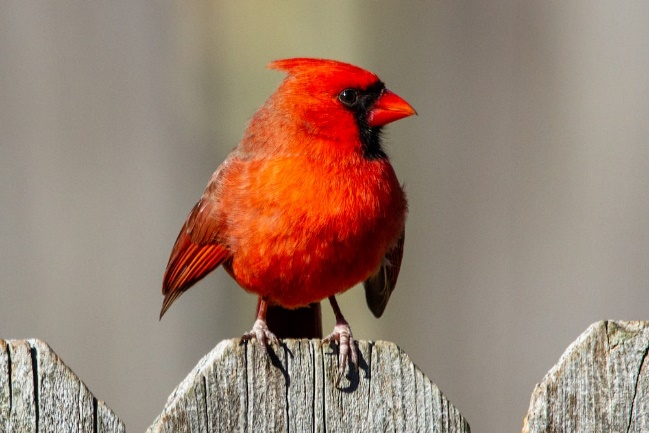
     A sound that brings me joy is one I get to hear most every day. For me, a silver lining of COVID and having to work from home much more is that now I listen to the trilling of the Northern Cardinal as I sit on the couch with my laptop and work. Next to the couch are large windows with trees outside, so all day birds flit in and out and squirrels run up and down them. But the sounds the Northern Cardinal makes are loud and distinctive and keep me happy as I plug away at my work. I’ve included a sound file to The Cornell Lab of Ornithology’s Macaulay Library so you can hear the sound if you’d like.

    Photo by Joshua J. Cotten. Unsplash.com

    Texture: What’s a texture from nature in your past that brings you joy? Or, as you are out and about in nature, what do you feel that brings you joy?

    A texture I’ll never forget is a once-in-a-lifetime moment when I was a young teenager. My family would spend several weeks at our cabin in northern New Mexico, and as I was passionate about all the animals there, I would spend hours on our porch getting the chipmunks, squirrels, and birds used to me until I could hand-feed the chipmunks and squirrels and get the hummingbirds to sit on my finger to drink from the feeder. Once, a female ruby-throated hummingbird was sitting on my index finger while she drank, and I reached up my thumb and pet her breast several times. Her feathers were so soft; I almost couldn’t feel them. What an amazing moment I’ll never forget!

    “Female Ruby Throated Hummingbird summer neighbor” by NE Pennsylvania Nature Lover. Flickr.com Creative Commons.

    Taste: What’s a taste from nature in your past that brings you joy? Or, as you are out and about in nature, is there a taste that brings you joy? Be careful with this one!

    At my family home, there was a honeysuckle vine on the fence by the gate to the backyard (we had a Japanese honeysuckle vine (Lonicera japonica), one of the edible honeysuckle flowers). One of the best memories of summer was that vine blooming. My brother and I would each take a flower, hold the top of the flower with one hand, pinch the bottom of the flower with our other hand, and gently pull out the stamen so we could capture the sweetest nectar. We were firm believers that the yellow flowers were much sweeter than the white ones and were forever testing our theory!   

    “Japanese Honeysuckle 02, Patapsco Valley State Park” by David Heise. Flickr.com Creative Commons.

    – Elizabeth Pass, Cohort VI, for the July 2023 edition of Headwaters Highlights

  • Fantastic Finds from My Corner

    Fantastic Finds from My Corner

    by Elizabeth Pass, Cohort VI
    for the June 2023 issue of Headwaters Highlights

    Happy June and welcome in summer!

    In my ramblings around the internet, I found a fascinating site you may be interested in. I know it’s become a rabbit hole for me!

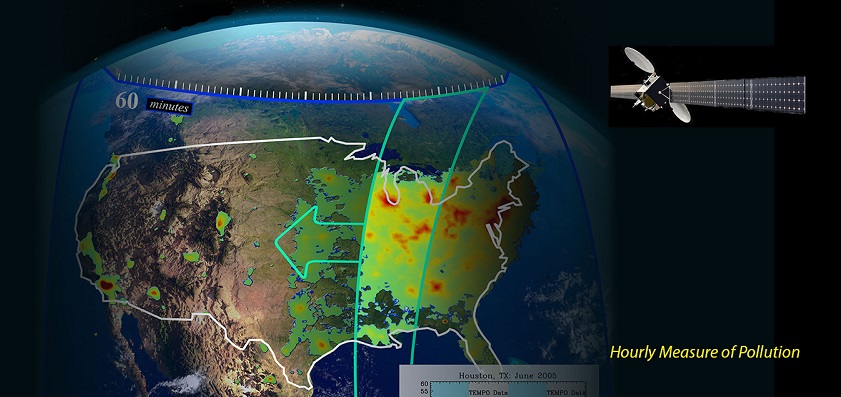
    TEMPO (Tropospheric Emissions: Monitoring of Pollution) is a UV-visible spectrometer instrument, the first space-based instrument to monitor air pollutants hourly during the day across North America. A Smithsonian Astrophysical Observatory (SAO)/NASA venture, TEMPO will “…collect high-resolution measurements of ozone, nitrogen dioxide, and other pollutants….” Under the link TEMPO Project, Data, there are a couple of options/links to view the recent data from TEMPO. Be sure to check it out and see how the Valley is doing! If you are interested in keeping up with the TEMPO Project, be sure to join the TEMPO Early Adopters Community Mailing List. You will need to get a NASA Earthdata account to sign up for the newsletter.

    Image from the TEMPO website accessed May 2023

    Even better, because you got a NASA Earthdata account to sign up for the TEMPO Early Adopters Community Mailing newsletter, you get access to all of NASA’s collection of Earth science data. The areas you can spend hours and hours in rabbit holes are many:

    • Atmosphere
    • Biosphere
    • Cryosphere
    • Human Dimensions
    • Land Surface
    • Ocean
    • Solid Earth
    • Sun-Earth Interactions
    • Terrestrial Hydrosphere

    I’ve also found some fiction and non-fiction reading you may enjoy as we settle into summer.

    Fiction

    Demon Copperfield, Barbara Kingsolver, 2022 – If you enjoyed David Copperfield by Charles Dickens or never had a chance to read it, you will most likely enjoy this novel, winner of the 2023 Pulitzer Prize for Fiction. That’s because Dickens’s novel is the inspiration for Demon Copperfield, set in the southern Appalachia mountains and about a boy being raised by a single, poor, teen-aged mom.

    The Lost Journals of Sacajewea: A Novel, Debra Magpie Earling, 2023 – Finally, the story of Sacajewea from an Indigenous woman’s point of view. This multi-awarded novel imagines Sacajewea’s story, giving her voice to her own history. Powerful and beautifully written.

    Non-Fiction

    Flight Paths: How a Passionate and Quirky Group of Pioneering Scientists Solved the Mystery of Bird Migration, Rebecca Heisman, 2023

    Read the fascinating story of the scientists who discovered the secrets to bird migration and how they did it.

    Below the Edge of Darkness: A Memoir of Exploring Light and Life in the Deep Sea, Edith Widder, Ph.D., 2021

    This stunning memoir is all at once many things: the telling of an amazing life story, the discoveries of frontier exploration in the deep ocean, the illustrations of never-told marine behaviors and animals, and the revelations of communication through marine bioluminescence.  

    – Elizabeth Pass, Cohort VI, for the June 202edition of Headwaters Highlights

  • Fantastic Finds from My Corner

    Fantastic Finds from My Corner

    by Elizabeth Pass, Cohort VI
    for the April 2023 issue of Headwaters Highlights

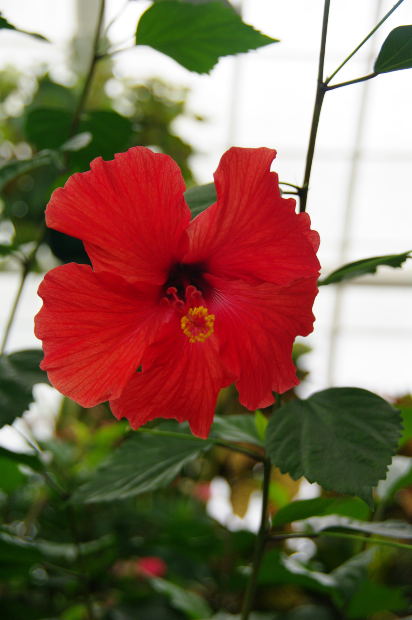
    As Spring comes into full bloom, I think of my recently passed aunt who lived in Albuquerque. Every morning from early spring to late fall she would sit with her coffee on the back patio in the same chair, which was next to a potted hibiscus plant. She would sit for several hours, not reading, writing, or doing anything but sitting and slowly drinking her coffee.

    When I was visiting my aunt and uncle one summer, I noticed this repeated activity of hers and asked about it. She told me that every morning she watched her hibiscus plant open. Hibiscus flowers open and close with the sun every day (nyctinasty). She loved how beautiful the flower was, and was amazed that it opened at such a speed that she could watch the flower unfold. For her, it was as if she got to watch the miracle of life every morning.

    I thought about it and realized that I also did a similar activity every day. Since COVID, I’ve worked more at home. I would work in the same place every day: on a couch with my laptop next to a large window. As I sit and work on my laptop, I look out the window and see my neighbor’s second-floor backyard roof, downspout, and beyond that, large evergreen trees. Every day throughout the day as I work, I look out the window and watch squirrels run around the roof, drink out of the downspout, and chase each other through the trees.

    Like my aunt, being able to connect with nature at the same time and same place gives me a sense of grounding and a feeling of awesomeness in this great web of life.

    I encourage you to look at the daily activities you consistently repeat, for example, drinking coffee/tea, reading the news, meditating, or walking your dog. Find an activity you know you will do daily (or almost daily) that will put you where you see the same view of nature or puts you in the same natural environment. You may already do this daily activity within this view of nature (as I do), but the idea is to become aware (as I did after watching and talking to my aunt), to live in its presence each day while you do your activity. I hope you find an activity coupled with nature and begin to see the rewards of connecting the two. Welcome in Spring!

    – Elizabeth Pass, Cohort VI, for the April 202edition of Headwaters Highlights

  • Fantastic Finds from My Corner

    Fantastic Finds from My Corner

    by Elizabeth Pass, Cohort VI
    for the February 2023 issue of Headwaters Highlights
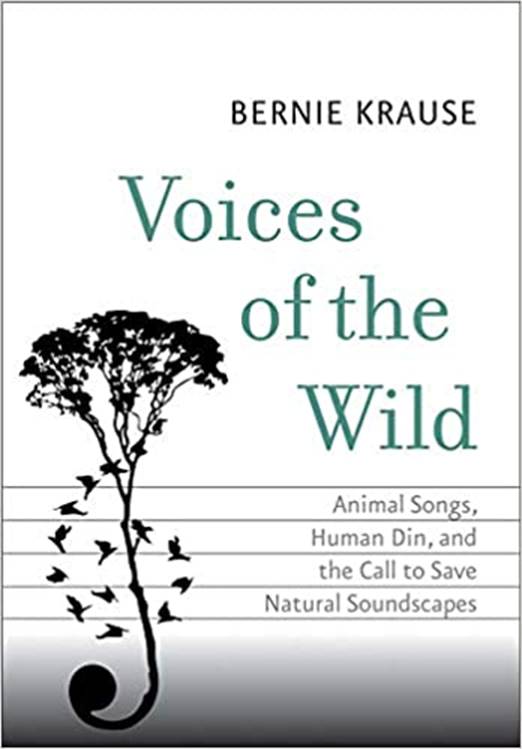
    February is for love. Not only for romantic love but for all types of love. An important expression of love is to listen, which we do far too little of and is impeded by the barrage of created human noises that daily assaults us. 

    My finds for February are all about listening.

    Ways to Listen to Nature: Podcasts, Websites, Books, and More!

    A fantastic article by Bernie Krause in Anthropocene magazine not only describes Krause’s initial trek into a forest to record its sounds in 1968 but also provides many wonderful resources. The article also links to a TedTalk by Krause, “The voice of the natural world.”

    In 1968, Krause founded Wild Sanctuary, an organization dedicated to the recording and archiving of natural soundscapes. This website has so much to explore! The Audio Archive currently has over 4,500 hours of wild soundscapes and more than 15,000 identified life forms. Half of the soundscapes are from habitats that no longer exist, are too radically altered from human endeavor, or have gone silent. There are Sound Design and Audio Art, Workshops, Installations, and many Books and other Media. For example, The Great Animal Orchestra and Voices of the Wild: Animal Songs, Human Din, and the Call to Save Natural Soundscapesare two popular books.

    In a podcast interview with Karen Bakker, she discusses the fields of bioacoustics and ecoacoustics and the amazing discoveries within them. She also discusses her book, The Sounds of Life: How Digital Technology Is Bringing Us Closer to the Worlds of Animals and Plants.

    Express a little love this month and listen!

    – Elizabeth Pass, Cohort VI, for the February 202edition of Headwaters Highlights