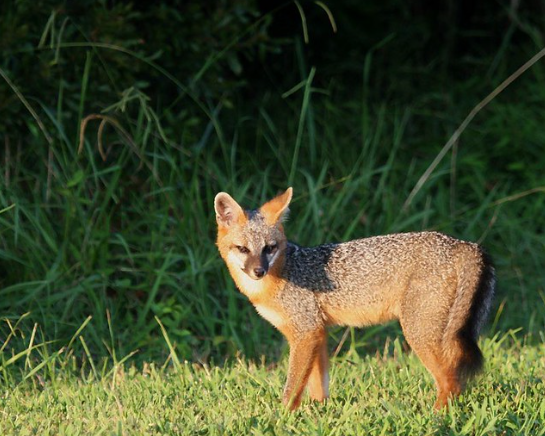
Gray fox at Back Bay National Wildlife Refuge in Virginia. Photo credit: USFWS
Virginia Tech researchers are embarking on an exciting project focused on the elusive gray fox, and they need your help. Gray foxes play a vital role in maintaining ecological balance, and understanding their behavior is crucial for their conservation.
Gray fox populations across North America have been declining over the last two decades. There are no published studies on gray fox population status in Virginia, but researchers, biologists, naturalists, hunters, and trappers from the state have noted, anecdotally, a decline in sightings, vocalizations, and camera trap photos over the last decade.
The Virginia Department of Wildlife Resources is funding the Virginia Gray Fox Project, which is being conducted by Dr. Marcella Kelly and Ph.D. student Victoria Monette of Virginia Tech. The primary goal of this project is to map the current distribution of gray fox across the state of Virginia and to assess the evidence for decline using past, historical camera trapping from around the state.
If you are interested in participating or learning more about Virginia Tech’s Gray Fox Project, reach out to the research team HERE!
Jason McGarvey – Jason is Virginia Outdoors Foundation’s communications manager.
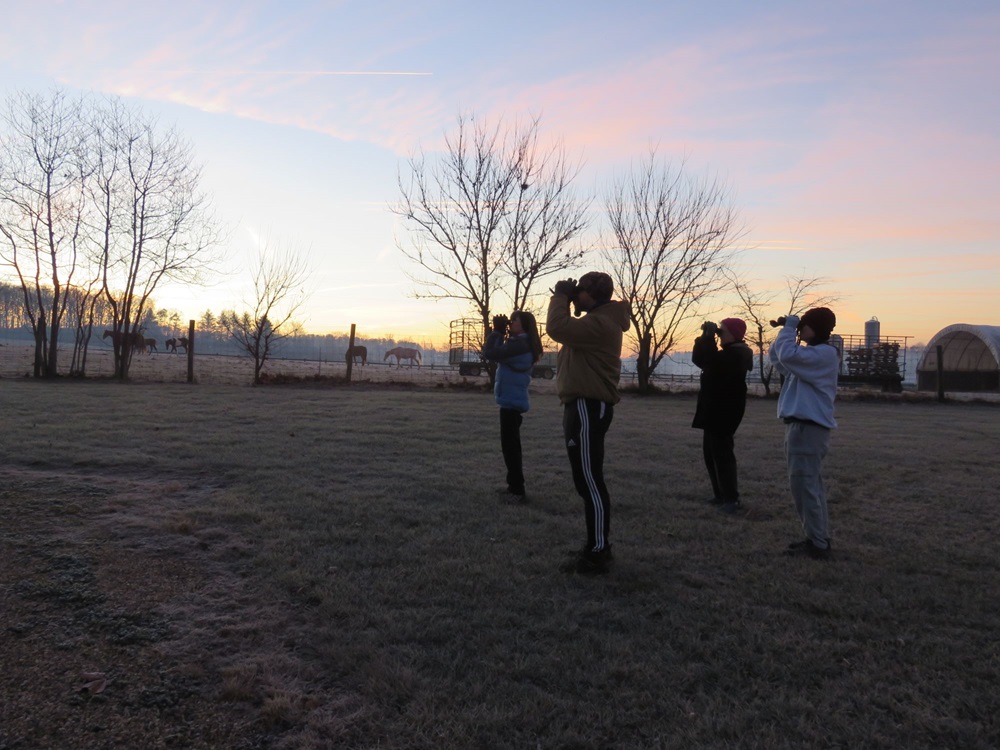
Kathy Byers, Cohort IV, leads a group of birders on the 2023 Christmas Bird Count. Photo by Art Fovargue.
Rockingham County Circle
On December 16, 2023, the Rockingham Bird Club held its Christmas Bird Count (CBC). This was the 70th count held in Rockingham County and the 124th year of counts nationwide. For a more general summary of Audubon’s CBC, see the article by Rob Beaton in the December 2023 HMN newsletter. This article recounts my participation this year. My wife and I were assigned the Union Springs sub-sector of area 6 of the count circle.
Aiming to start the count at sunrise, we drove to Ottobine Elementary School where we were greeted by 23° F temperature and wood stove smoke trapped by an atmospheric inversion layer. Our first fun bird sighting was a Cooper’s Hawk in a tree by the school playground. We had walked right past the tree, but then an Eastern Bluebird flew over and alerted us to the hawk’s presence with his chattering call. Thank you.
A Red-shouldered Hawk warms itself in the early morning sun. Photo by Art Fovargue.
At our first stop along Waggys Creek Road, we found a Red-shouldered Hawk perched in a tree soaking up the early rays of sunshine warmth. I was jealous. Driving various roads between Briery Branch and Lilly, we would occasionally pull off to search for our avian friends. These spots would be where we felt favorable habitat existed, which sadly are getting harder to find. Although not exactly natural habitat, we would also stop near houses with bird feeders, which we knew about from past CBCs .
We saw many other birds enjoying the sun; from the 50 Cedar Waxwings high in various trees to the 74 Rock Pigeons perched on silo tops. We had a thermos of hot chocolate. By the time we finished our section, a bit after noon, we had recorded 35 species and a total count of 411 individual birds. This data will get compiled with numbers from the rest of the circle before being turned over to Audubon. If you would like to see the final tallies, check out the January or February Rockingham Bird Club newsletter, or the Audubon CBC website.
Anthony Adamovich, a member of the Headwaters Chapter living in Luray, invited me to help with a December 14 presentation on the Geminid meteor shower led by Megan Goin and Samantha House, rangers at Shenandoah River State Park. The park is situated between Luray and Front Royal, overlooking bends of the South Fork. I had scouted out the location in the daytime a few days before and was struck by the beauty of a park that I had hitherto not been aware of. There were Common Mergansers in the river and a multitude of Eastern Bluebirds.
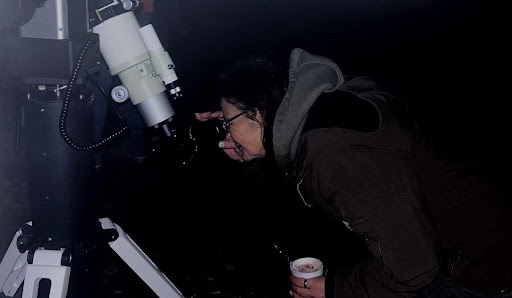
It was a chilly night, yet the rangers estimated a total attendance of about 60, some from as far away as Arlington. We enjoyed a completely clear and windless night. The meteors made up in brightness what they lacked in numbers. I set up two telescopes, a conventional 4″ refractor and a computerized scope that takes photographs in real time. Most of the children and many adults had never looked through a telescope nor seen the Milky Way in a really good night sky. Samantha gave a presentation on the Geminid shower, and its origin in debris trailing from the active asteroid Phaethon. She explained that the optimal time for viewing these showers is in the early A.M. hours, when our location on Earth has rotated to be on the leading edge of its orbit. This is of course not practical for adults who must get up for work nor for their school-age children.
We are hoping to offer similar events next year on favorable nights.The park is well-located for those living to the north who wish to behold a proper night sky. I think this is one of the best ways to get people to care about preserving our dark skies.
– Zack Perdue, Cohort VII, December 2023
Photos by Zack. On the right is an image of the Great Nebula in Orion and on the left is an image of the Pleiades. “The haziness around the Pleiades isn’t an artifact, but is the dust cloud out of which the young (only 100 million year-old) stars formed.”– Zack
Headwaters Master Naturalists Elaine Smith and Bill Howe logging trees at the EJC Arboretum. Photo by Ali Sloop.
2023 Progress Update from Ali
This year, Headwaters Master Naturalists have been hard at work surveying and identifying trees at James Madison University (JMU) with Facilities Management and Edith J. Carrier Arboretum staff and interns. Over the last seven months, eleven master naturalists have spent a combined total of 115 hours working in the shade of campus trees and woods.
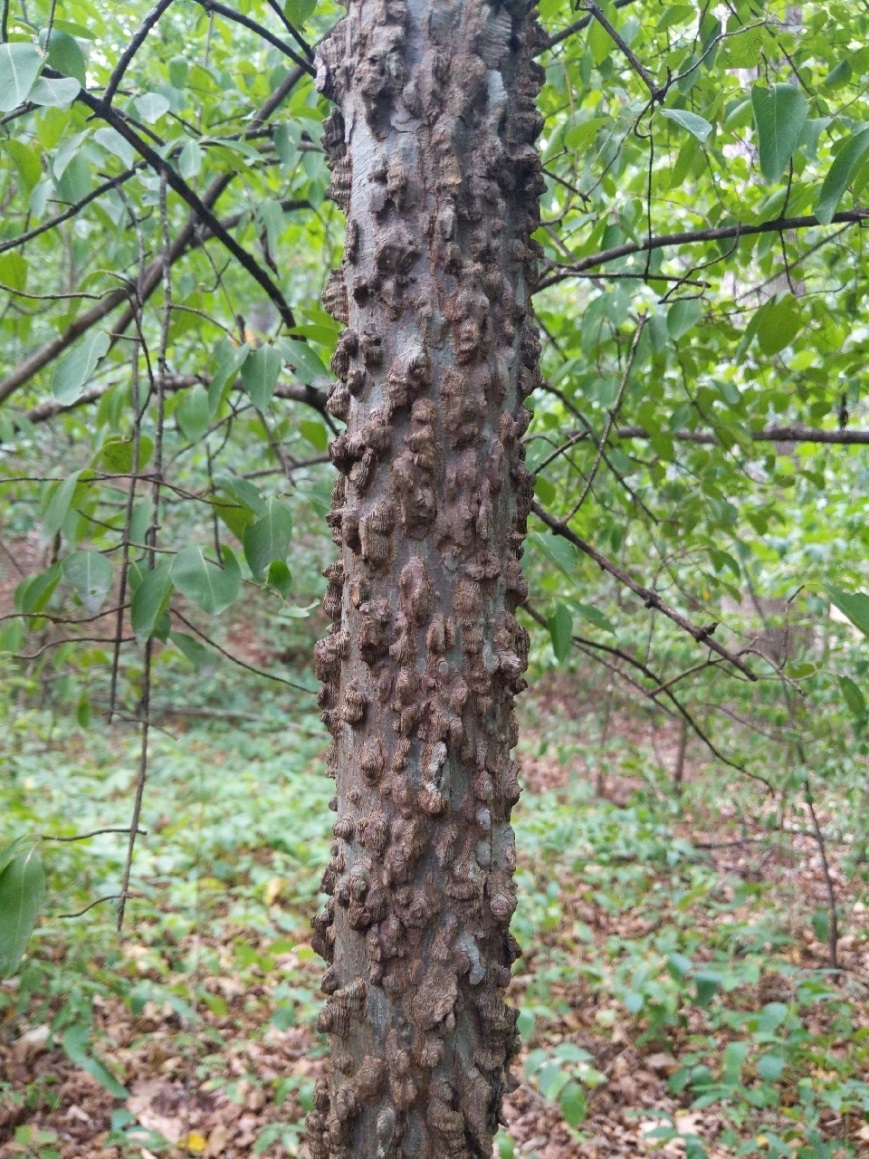
Work included identifying trees to species, collecting data on each tree’s health and maintenance needs, and assisting the EJC Arboretum as staff begin the process of logging trees there. Over 125 of the specimen trees in the arboretum have been logged into the tree inventory map. Master naturalists that were a part of the EJC Arboretum tree inventory team surveyed over 1,000 trees in the woods and gardens this year!! A specimen tree at the arboretum could be one that is planted singularly as a focus of attention. It could be noteworthy because of its size, age, species, flower, bark, form or rarity. What is most often the case, the specimen trees at the arboretum are used for educational purposes during guided tours and where tree labels are placed to introduce visitors to different species of trees. Logging these trees into the online inventory will allow a larger audience to access and learn more about these unique trees and their woodland home at the EJC Arboretum.
At the start of the 2023 tree inventory field season there were 3,356 trees on main campus areas needing identification and additional tree health data entered and with the help of these master naturalists, we have identified 2,729 of those trees, leaving a total of 627 trees to identify on main campus areas! A HUGE heartfelt thank you from JMU staff to the following master naturalists for their contributions to the JMU Tree Inventory Project, both on main campus and at the EJC Arboretum: Anthony Adamovich, Anna Finch, Ann Murray, Bill Howe, Cindy Westley, Dave Forrer, Elaine Smith, Eunice Sill, Jim Johnson, Nancy Davis and Peggy Plass.
– Ali Sloop, JMU Stormwater Compliance Specialist, November 2023
Click on an image below to enlarge it and find a caption. Thanks to Ali for these photos!
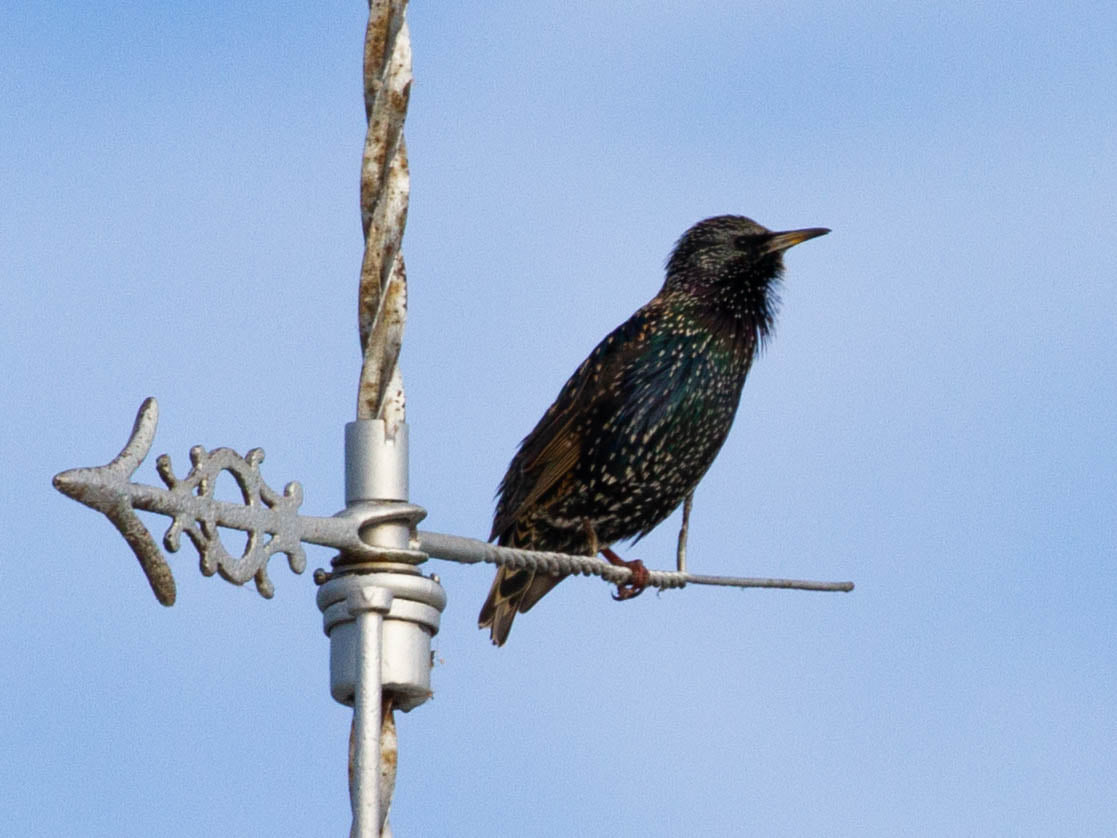
A starling displays its winter plumage at Lake Shenandoah, December 2021. Photo by Diane Lepkowski.
Audubon’s 124th Christmas Bird Count will be held from Dec 14, 2023, to January 5, 2024!
The Audubon Christmas Bird Count (CBC) is an annual event conducted by the National Audubon Society and other birding organizations across the Americas. Frank Chapman and 26 other conservationists initiated the Christmas Bird Count as a way of promoting conservation by counting, rather than hunting, birds on Christmas Day of 1900. It typically takes place from mid-December to early January. The CBC is one of the longest-running citizen science projects, dating back to 1900.
During the CBC, birdwatchers, both novice and experienced, gather to count and identify bird species within designated 15-mile diameter circles. These circles remain constant from year to year, allowing for a long-term data collection. The primary goal is to provide a snapshot of bird populations and distribution during the winter months.
Key features of the Audubon Christmas Bird Count include:
Community involvement: The CBC engages bird enthusiast, local communities, and families in a collaborative effort to document bird species in specified areas.
Scientific Research: The data collected contributes to scientific research, helping scientists monitor bird population trends, track migration patterns, and assess the health of bird species over time.
Conservation Impact: The information gathered through the CBC aids in making informed decisions. It highlights areas where conservation efforts are needed and helps prioritize initiatives to protect bird habitats.
Educational Opportunities: The CBC serves as an educational platform, offering birdwatching enthusiast and the general public the chance to learn more about birds, their behaviors, and their role in ecosystems.
Global Participation: While originating in North America, the CBC has expanded globally, with similar bird counts occurring in other parts of the world during the same timeframe.
By participating in or supporting the Audubon Christmas Bird Count, individuals contribute valuable data to ongoing ornithological studies and contribute to the broader understanding and conservation of bird species.
To join one of our four local bird count circles for this year’s 124th annual Christmas Bird Count, contact one or more of the circle compilers:
Augusta County
Compiler: Allen Larner Email: lanersky [at] mindspring.com Count Date: Sunday, December 17, 2023
The Waynesboro Count includes territory in Augusta and Nelson Counties and spans sections of the Shenandoah Valley, Blue Ridge Mountains, and Rockfish Valley.
Anyone who likes to hike in the winter can be virtually guaranteed a stretch of the Appalachian Trail as long as the Blue Ridge Parkway has not been closed due to inclement weather. Birds may be scarcer on the ridgetop than in the valleys, but it can still make for a most enjoyable day. – from the Christmas Bird Count circles Map
Rockingham County
Compiler: William “Bill” Benish Email: wcbenish [at] gmail.com Count Date: Saturday, December 16, 2023
“We are fortunate to again have excellent field party leaders lined up. Some parties are full, and a few leaders may need assistance. My hope is that we can accommodate everyone who signs up expressing interest in joining. As we continue to match leaders with as many participants as possible, please contact me if you want to be on a list in case any spaces remain or become open. Some years we’ve had to postpone due to the weather, which can change availability for people around holiday times.
If you live within the boundary of our circle, please let me know if you may be able to contribute by watching birds at your home. There is always room for Feeder Watchers. It is important for you to contact me in advance in order for us to incorporate your count data.” – Bill Benish, Rockingham County circle compiler
Big Flat Mountain
Compiler: George Barlow Email: gbarlow [at] tnc.org
Historically, the count has primarily been a walking count. Many years have had only walking miles, no miles by auto. It is desired that this be continued for consistency’s sake and in the spirit of mountain birding. Road access is very limited, but walking routes from road and trail access points can be worked out. Please contact the compiler for this. The area is predominately forested. Being a mountainous area, it is generally cold, often windy, and birds can be few in number and diversity. From the outset, the count was intended to draw a comparison between birdlife in the mountains and that of surrounding lower elevations. – from the Christmas Bird Count circles Map