Category: Resources

  • Take a Walk Down HMN Memory Lane

    Take a Walk Down HMN Memory Lane

    MemoryLane600

    Photo: from https://www.idiomsandslang.com/a-trip-down-memory-lane/


    Historian/Parliamentarian Stephanie Gardner would like to remind everyone that the HMN photo albums are growing. The newly expanded virtual photo albums can be found on Headwaters’ password-protected Virginia Master Naturalists Volunteer Management System. The Photo Albums link is the last link on the left side of the page.

    Photographs in the online albums are pulled from our chapter newsletters through the years. The images are a fun walk down memory lane during this time of social distancing!

  • Same Great Department–New Name!

    Same Great Department–New Name!

    DWRLogo600


    Starting July 1, 2020, the Department of Game and Inland Fisheries is now the Department of Wildlife Resources or Virginia DWR. Why the name change? In general, it is to reflect more accurately the wide range of their activities and responsibilities.

    Check out the Virginia DWR website for a complete explanation and other great information from DWR.

  • Get Into Nature…Safely!  Activities You Can Do While Self-Isolating to Stay in Touch with Nature

    Get Into Nature…Safely! Activities You Can Do While Self-Isolating to Stay in Touch with Nature

    Covid600

    Photo: from United Nations

    Backyard Activities – good for kids and adults!
    Go on a Scavenger Hunt
    Some examples of possible scavenger hunts include:

    • Find 5 different shaped leaves
    • Find 5 different shades of green or brown
    • Find 5 different odors
    • Find 5 different textures
    • Find 5 different types of animals or evidence of animals like a spider web or a bird nest

    Make Leaf and Bark Rubbings
    Learn about Animal Behavior
    Go Cloud Watching
    Learn About Life Underwater – if you have access to a stream or body of water
    Make Observations Using Your Senses (with the exception of taste):

    • Hearing: Children can sit outside and listen to the types of sounds they hear, man-made and natural sounds. Describe the volume and pitch of the different sounds they hear.
    • Touch: Touching different rocks, mulch, bark or leaves, children can document the different textures they are able to find. Avoid touching poisonous plants.
    • Sight: Kids can use their eyesight to engage in a variety of counting activities, including counting the number of clouds, trees, rocks or bugs they see during a given time frame.
    • Smell: If you break apart a leaf, the fluids inside reveal different odors. Children can describe the odors of various types of leaves, as well as the distinctive smells of things like grass, dirt, and mud.

    Have a picnic in the backyard, driveway, or in the garage (the garage is especially fun if it is raining)
    Play I Spy
    Camp out in the backyard
    Make art with sidewalk chalk
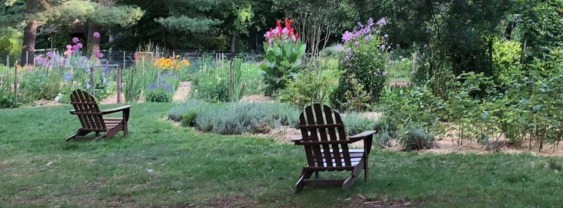
    Plant an herb garden, flowers, or other types of plant

    https://ced.ncsu.edu/news/2020/03/19/backyard-activities-can-provide-educational-respite-from-cabin-fever-during-coronavirus-covid-19-outbreak-says-associate-professor-sarah-carrier/

    https://mycentralfloridafamily.com/activities-to-enjoy-at-home/

  • April 2020 Books to Read

    April 2020 Books to Read

    In light of Covid-19 and the necessary disruptions with canceled events, we are provided recommended books, videos, and films focusing on nature and the environment.

    April 2020’s recommended books come from Chris Bowlen. Thank you, Chris!

    orion

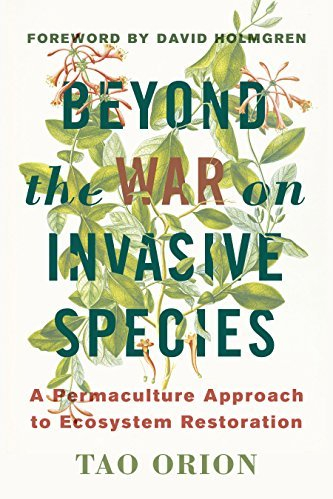
    Beyond the WAR on Invasive Species by Tao Orion. Chelsea Green Publishing, 2015. Non-fiction.

    This is a very well researched and documented easy-to-read book. The author uses a permaculture approach to dealing with invasive species (animals as well as plants) instead of the chemical obliteration approach, which seems to have become the acceptable way. She goes into detail about what is the problem with the herbicide/pesticide model. She covers problem species across the US with thoughtful alternatives to business as usual.

    Tallamy

    Nature’s Best Hope by Doug Tallamy. Timber Press, 2020. Non-Fiction.

    This is Doug Tallamy’s second book about the steep decline in wildlife, especially insect populations, because of the common practice of planting grass and non-native plants on privately owned land (also known as our backyards and front yards). He provides a clear and easy path to transforming any sized yard space into an effective wildlife habitat. The first printing of this book sold out; the second printing will be available soon but is available in ebook format.

    Owens
    Where the Crawdads Sing by Delia Owens. G. P. Putnam’s Sons, 2018. Fiction.

    This was just a fun page-turner. The time period for this novel starts in the 1950s and is the coming-of-age story of a young girl growing up under stressful conditions in North Carolina’s coastal marsh area. Her salvation is the time she spends watching and learning from the natural world around her. Forward to 1969, and there is a murder to be solved. The evidence is sketchy and the Marsh Girl is implicated.

  • Warner & Kaine Bill To Protect Wilderness in Bath County Passes Senate

    Warner & Kaine Bill To Protect Wilderness in Bath County Passes Senate


    RoughMtn600

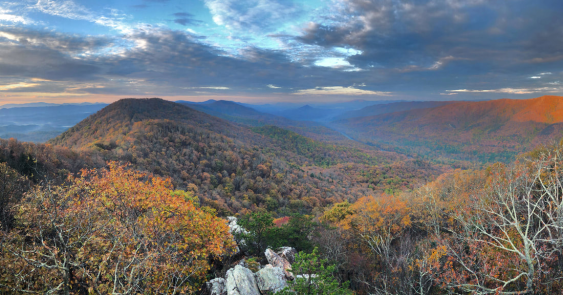
    Photo: by The Pew Charitable Trusts
    Rich Hole & Rough Moutain

    Press release from Senator Tim Kaine’s Office

    January 7, 2020

    WASHINGTON, D.C. – Today, U.S. Senators Tim Kaine and Mark R. Warner applauded Senate passage of the Virginia Wilderness Additions Act, a bill they introduced to add a total of 5,600 acres to two existing wilderness areas within the George Washington National Forest in Bath County: the Rough Mountain Wilderness area and the Rich Hole Wilderness area. A wilderness designation is the highest level of protection for public land under federal law. These additions were recommended by the U.S. Forest Service in 2014 and endorsed by members of the GW National Forest Stakeholder Collaborative, a group of forest users that has worked together for seven years to agree on acceptable locations in the GW for wilderness, timber harvest, trails, and other uses.

    “We’re proud that the Senate passed our bill to protect wilderness in Bath County. The George Washington National Forest is a critical part of Virginia’s environment and economy. This legislation would help ensure Virginians can enjoy more of its wildlife, scenery, and trails for generations to come. We’re so thankful to the folks from the U.S. Forest Service, conservationists, and leaders in Bath County for their collaborative efforts to make this happen. We’ll keep working together to get this bill signed into law,” said the Senators.

    “Senate passage of the Virginia Wilderness Additions Act affirms our belief that working in a collaborative manner with diverse interests groups including the timber industry, wildlife managers, and recreation interests creates an atmosphere where dialogue promotes trust and compromise. It is this spirit of cooperation that the Stakeholder Collaborative agreed to a plan that balances the need for managed young forest, recreation, and uninterrupted wilderness,” said Mark Miller, Executive Director, Virginia Wilderness Committee.

    “I have supported an increase in active management of the GW National Forest while working with a diverse group of people that share a common interest in our public lands.  Where previously we may have advocated for different uses of the forest, we now look for ways to accomplish all of our goals.  I support the proposed Wilderness additions in this bill by understanding that the GW is large enough to provide a variety of forest conditions, through differing management techniques, as identified in the Forest Plan.  It is possible to simultaneously increase timber harvests, improve wildlife habitat, and create forest age diversity while setting aside remote areas that are valuable for recreation and certain species of wildlife.  This proposal reinforces several year’s-worth of work and demonstrates the ability to accomplish this balance,” said John Hancock, member and a previous President of the Virginia Forestry Association.

    For more information about The Virginia Wilderness Additions Act – Lower Cowpasture Project

    WildernessMap600