Category: Chapter Member Events

  • Headwaters Master Naturalists Visit Project Owlnet Research Station to Support Owl Migration Tracking

    Headwaters Master Naturalists Visit Project Owlnet Research Station to Support Owl Migration Tracking

    Elaine Smith and Peggy Plass enjoying the presentation. Photo by Cheryl Shull.

    On Friday, November 14, four members of the Headwaters Master Naturalists visited Project Owlnet’s local research station at Highland Retreat Camp. This station is one of many located throughout Canada and the United States that work to track owl migration.

    Bird banding is a widely used method for collecting data on avian species, involving attaching a small plastic or metal band to a bird’s leg, which allows for individual identification during future observations at different times and locations.

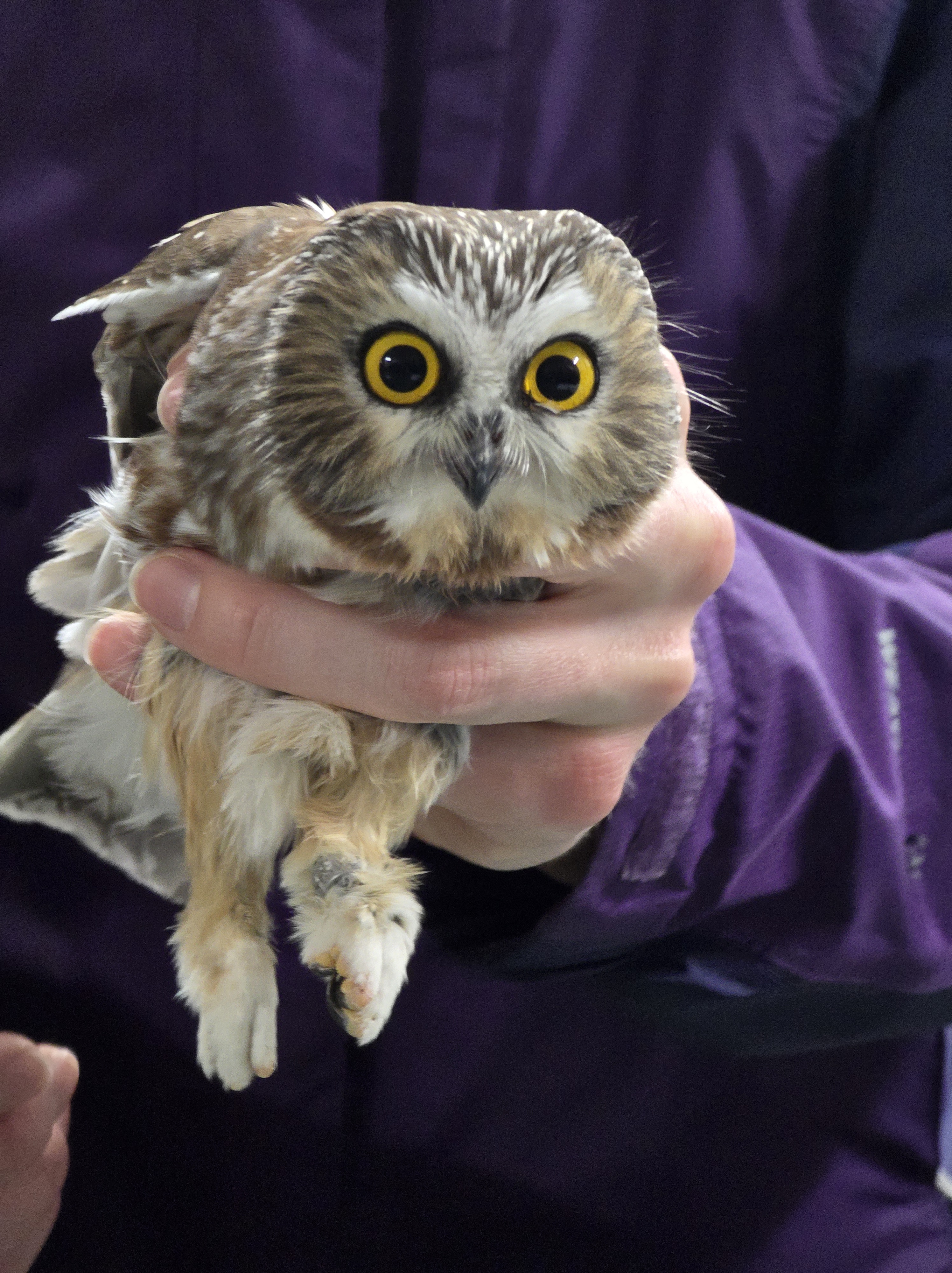
    Ben Spory leads a dedicated team of volunteers several times a week from mid-October through November to retrieve Northern Saw-Whet Owls from a mist net located on the ridge above the station. The owls are then weighed, measured, and banded as needed. Researchers determine the birds’ ages by placing them under a black light with their wings outstretched. Young birds show a pigment in their wings that glows pink under the light, while birds older than four years no longer display this pigment.

    Ben and the other researchers provided an informative and inspiring presentation. There was also discussion about the possibility of Master Naturalist involvement next year as volunteers for the program.

    For more information about the Northern Saw-whet Owl, a good source is the Cornell Lab of Ornithology at https://www.allaboutbirds.org/guide/Northern_Saw-whet_Owl/id.

    Cheryl Shull, Volunteer Service Projects Committee Chair

    A Northern Saw-wet Owl lies upside down as it receives a band during the careful bird-banding process. Photo by Cheryl Shull.

    Researchers use black light to age Northern Saw-wet Owls by checking for a pink glow in their wings, which indicates youth. Photo by Cheryl Shull.

    Researchers use black light to age Northern Saw-wet Owls by checking for a pink glow in their wings, which indicates youth. Photo by Cheryl Shull.
  • Headwaters Master Naturalists and Friends Enjoy a Local Geology Tour

    Headwaters Master Naturalists and Friends Enjoy a Local Geology Tour

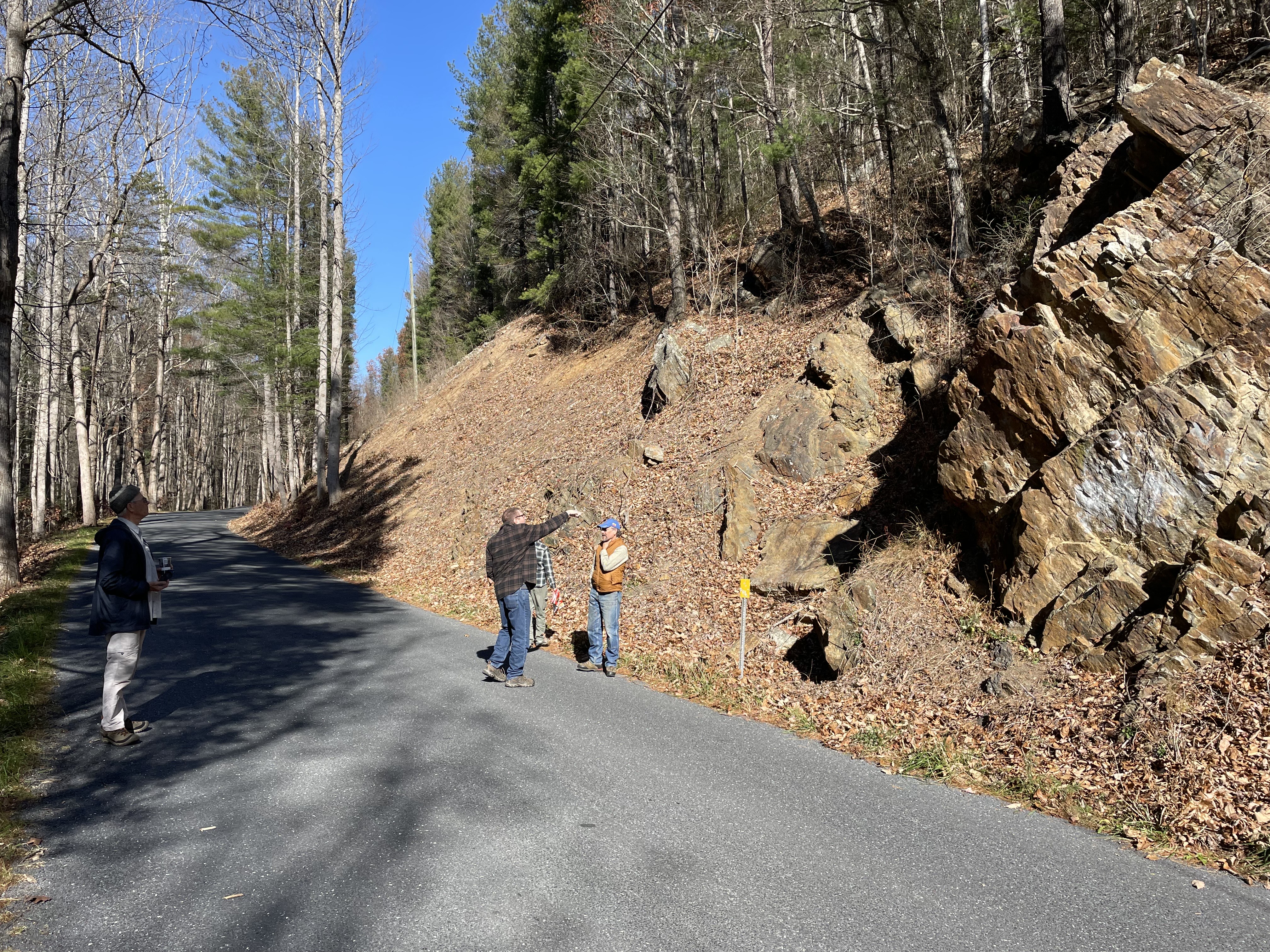
    The group looking at various beds of sandstone with a few thin coal seams in the Price formation. Photo by Malcolm.

    On Thursday, November 13, a beautiful fall day, two other HMN members and three friends joined me in Stokesville for a tour of notable rock outcrops in the Stokesville, North River Gorge, and Staunton Dam areas. The tour focused on the two most common rock formations in the North River Ranger District of the George Washington National Forest, as well as the four mountain-building events that created the high source lands to the east and the extensive erosion that shaped the Blue Ridge, Shenandoah Valley, and Allegheny regions over millions of years.

    Our first stop was at North River Gap in Stokesville, where we observed a large outcrop of the Price (Pocono) formation. This early Mississippian-aged (about 380 million years ago) sequence of sandstones, conglomerates, and dark shales is the youngest formation in the Shenandoah Mountain area. It was deposited after the Acadian Orogeny, filling a basin created by the collision of Baltica and Avalon plates. This formation originated from a broad alluvial plain and delta, with river channels indicated by quartz pebble conglomerates, and features fossil impressions of tree branches and bark. The history of Stokesville as a boom town around 1900 was linked to attempts to mine coal and later logging, which ultimately led to its decline within about a decade.

    Our second stop was just a third of a mile away at the Wild Oak Trail parking lot, where we discussed the region’s geologic history using display boards, maps, and typical rocks from Shenandoah Mountain’s three main formations. We then hiked a two-mile round trip into North River Gorge, walking along the old logging railroad grade, where I pointed out where the builders had to blast through hard sandstone. Along the trail, we observed a prominent exposure of soft shales and thin-bedded sandstone, likely formed in wetlands near a floodplain. Near the overlook, we enjoyed a broad view of North River Gorge while having lunch.

    The third stop, about five miles upriver near North River Campground, featured an outcrop of the older Late Devonian Hampshire Formation, characterized by reddish-brown sandstones, shales, and mudrock. This formation developed in a broad inland sea far from the ancient North American west coast, with features indicating small stream flows that periodically reversed, similar to landscapes we see today.

    Although we were running late, everyone chose to make one more stop near Staunton Dam, where we explored the tunnel built through Lookout Mountain in the 1920s to supply water to Staunton during a crisis. This federally protected land was selected for its clean, reliable water source, ensuring safe drinking water for generations.

    The outing provided five hours of continuing education credits for HMN members, and all participants—trail workers, a retired USFS silviculturist, and fellow naturalists—enjoyed the day, making new friends and learning about our local geology. It was a wonderful example of what Master Naturalists are all about.

    Malcolm Cameron, HMN Cohort 3

    Just above the overlook of North River Gorge, Gary Flynn and Bill Howe walking up from the sandstone outcrop. Photo by Malcolm.

    From the Lookout Mountain Trail overlook, we enjoyed lunch with views of sandstone and quartzite cliffs along North River Gorge. In the distance are Trimble Mountain (right) and Elkhorn Mountain (left). Photo by Larry Ragland.

  • Restoring Native Habitats: Invasive Plant Removal at Natural Chimneys Wildlife Trail

    Restoring Native Habitats: Invasive Plant Removal at Natural Chimneys Wildlife Trail

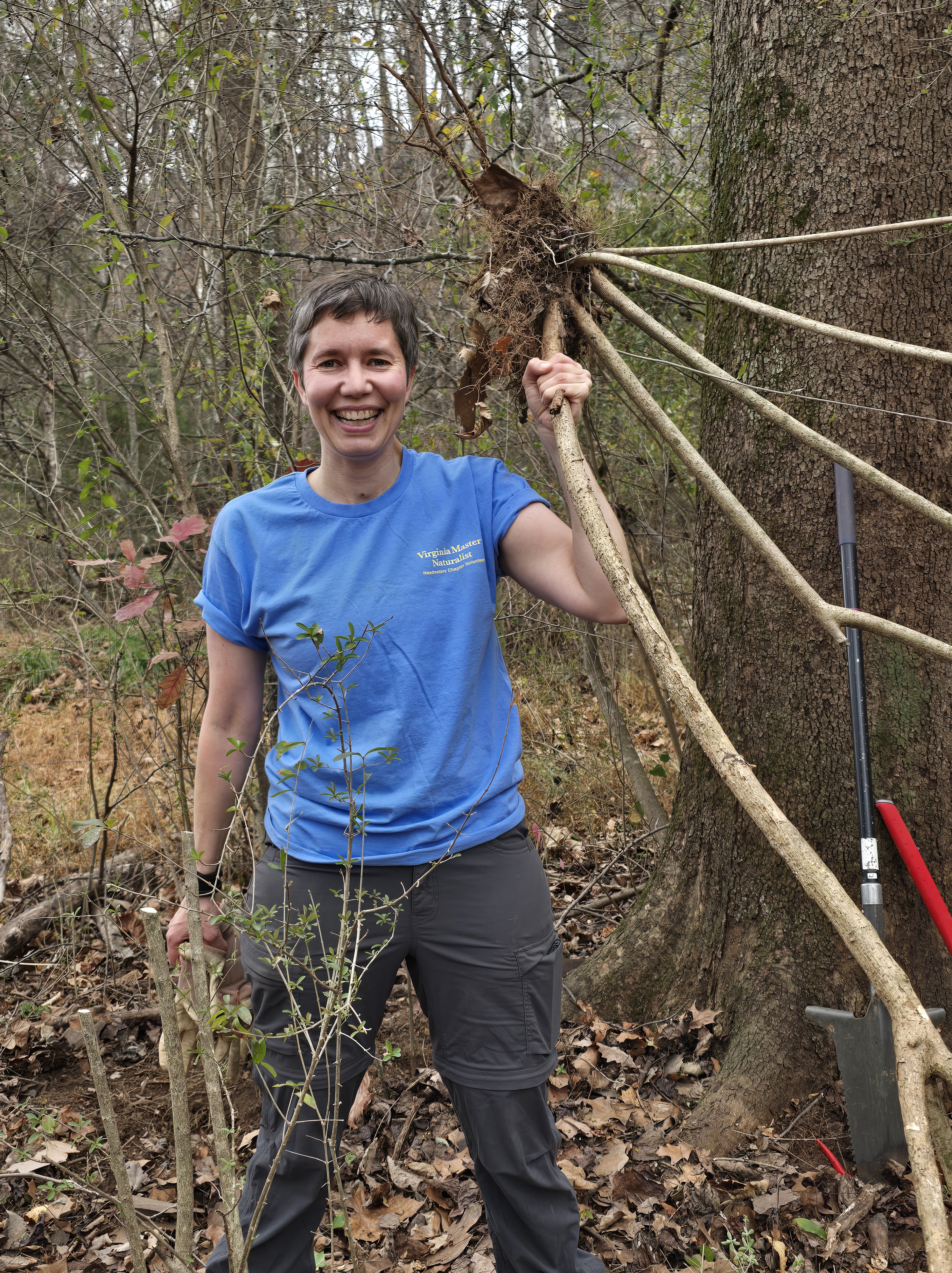
    Lora Steiner conquers an invasive. Photo by Cheryl Shull.

    Work continues on removing invasive plants from the Natural Chimneys Wildlife Trail. On November 14th, Lora Steiner, Wick Fary, Art Fovargue, and Cheryl Shull helped clear a large stand of Chinese privet from one section of the trail. There is still much work ahead, but these Headwaters Master Naturalists remain committed to restoring native habitats and promoting conservation on this important public land.

    If you’d like to join our team, please contact Cheryl Shull at cherylshull@yahoo.com.

    Cheryl Shull, Volunteer Service Projects Committee Chair

  • Bat Conservation Program Brings Fun and Education to Staunton

    Bat Conservation Program Brings Fun and Education to Staunton

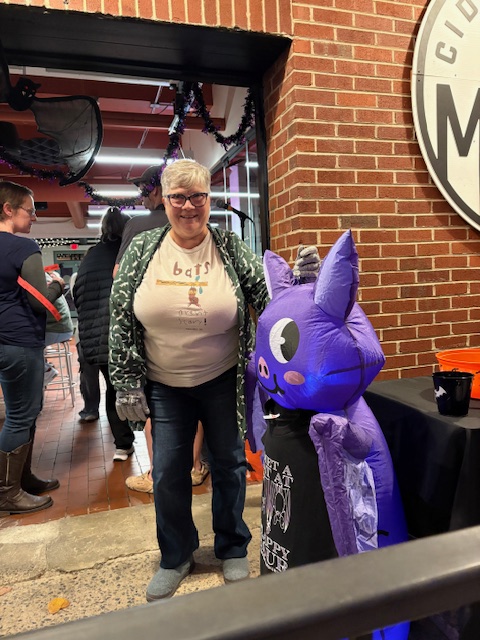
    Eunice and Leslie prepare for Floppy Hour. Photo by Ann V. Murray.

    On Thursday, October 30th, Leslie Sturges from Bat Conservation and Rescue, along with VMN President Eunice Sill and other volunteers, delivered an engaging and educational program at Ciders From Mars in Staunton. Leslie showcased a Big Brown Bat, which she enlarged on a screen for everyone to see. The event featured bat bingo, and attendees enjoyed a lively, bat-themed Halloween celebration. The tables were full, and the community had a great time learning about these fascinating creatures.

    Ann V. Murray

    The Big Brown Bat shown on a monitor. Photo by Ann.

    Leslie posing with the Flappy Hour Bat. Photo by Ann.

  • Benthic Macros Monitoring

    Benthic Macros Monitoring

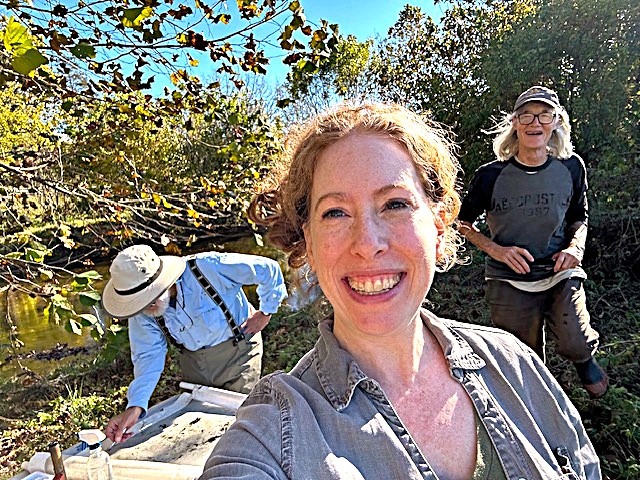
    Andrea Dono, Adrie Voors and Pete Cooper enjoying a day of monitoring along the Middle River. Photo by Andrea Dono.

    Master Naturalists and certified benthic macroinvertebrate monitors Adrie Voors and Andrea Dono joined Friends of the Middle River’s Pete Cooper to assess the water quality of the Middle River at Honeysuckle Hill. Monitors are assigned a site each fall and spring to collect longitudinal data on the water’s health. By netting macroinvertebrates and sorting the aquatic insects, they can identify organisms that require clean water to survive, helping to evaluate the river’s overall health.

    For example, mayflies and stoneflies are intolerant of pollution, while black fly larvae and scuds can tolerate lower oxygen levels and are more pollution-tolerant. Pete explained that FOMR has been “collecting and identifying aquatic macros to the family level for about 15 years, making us one of only two citizen science organizations (to the best of our knowledge) in Virginia to do so. Most others identify macros only to the order level, which provides less scientifically robust and accurate data. Until now, we have been using order-level identification, so we haven’t fully realized the potential of the data we’ve been collecting.”

    The group hopes to host a field day in the spring in Augusta County to introduce master naturalists to this activity and gauge interest in future monitoring efforts. Each time Adrie and Andrea have monitored, they have found something unique — this time, a recently molted stonefly that was white, whereas they are typically dark in color.

    Andrea Dono, HMN Secretary

    Pete sorting aquatic insects. Photo by Andrea.

    Pete sorting aquatic insects. Photo by Andrea.

    Andrea and Pete preparing to sort through the latest netting. Photo by Adrie.

    Molted Stonefly. Photo by Andrea.