Category: Field Trips

  • Spotting Spotted Salamanders at Night 

    Spotting Spotted Salamanders at Night 

    Photo by Marc Hudson

    For more about how Virginia Master Naturalists are contributing to vernal pool monitoring and salamander conservation (as well as the work of local conservation photographer Steven David Johnson), see the feature in this month’s issue of Virginia Wildlife, a publication of the Virginia Department of Wildlife Resources.

    Photo by Tim Showalter Ehst

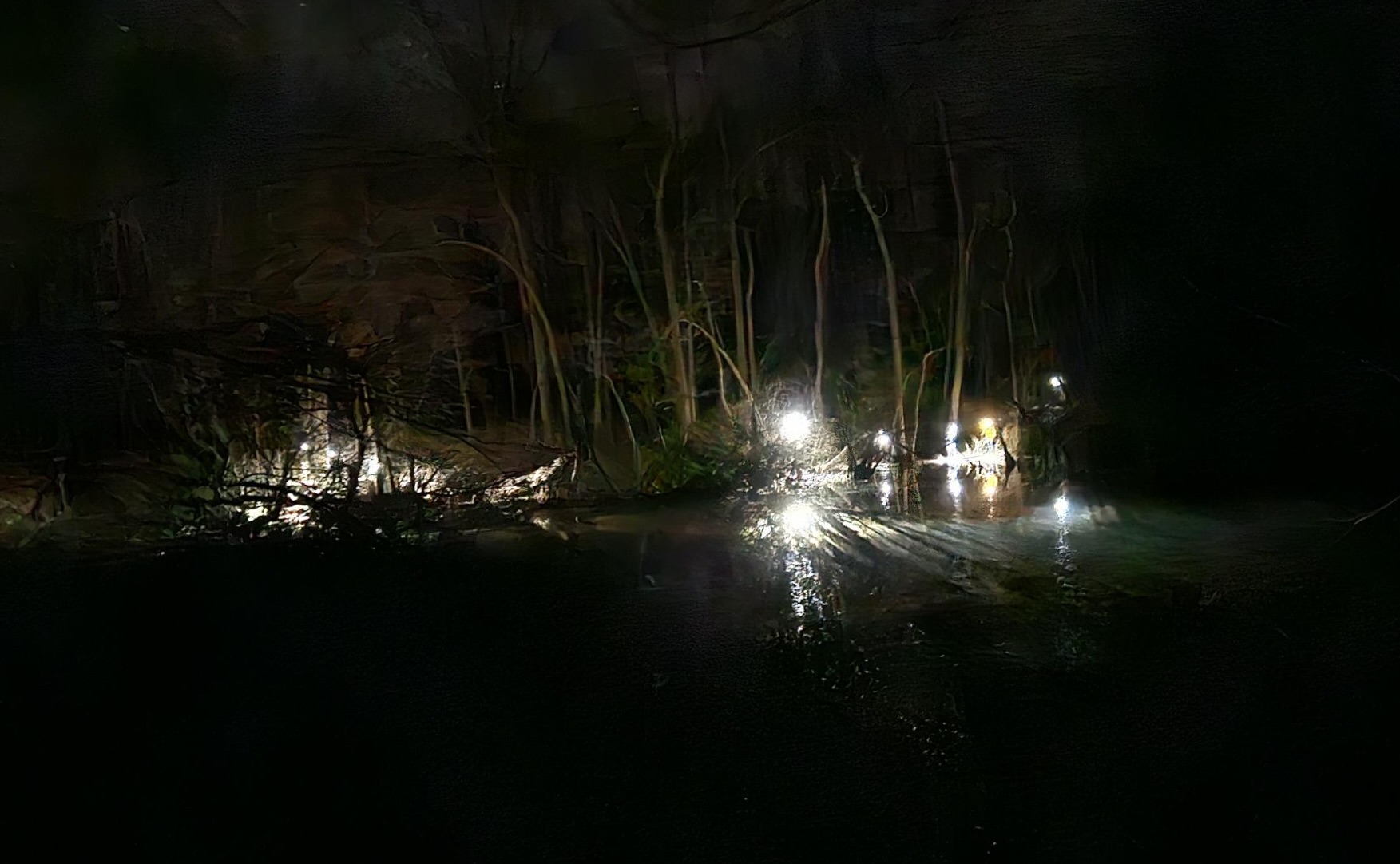
    Walking carefully among the undergrowth and dodging greenbriers on a dark night on Thursday, March 12, Billy Flint, a JMU salamander ecologist, led 13 Headwaters Master Naturalists and three guests on a two-hour search around the perimeter of a private sinkhole pond. Their goal was to find spotted salamanders on the move or their egg masses during the annual mating time, usually mid-February to mid-March, depending on the weather and pond water levels.

    Malcolm and Lynn Cameron hosted the outing on forested land they own in eastern Augusta County which has two sinkhole ponds amidst a mixed mesophytic forest along the eastern edge of the Blue Ridge. The land has a conservation easement held by the Virginia Outdoors Foundation because of the unique ecosystems within and around the ponds. The HMN group was exploring the largest pond in hope of at least finding spotted salamander egg masses and/or the salamanders themselves. The weather conditions were not optimal, which would require that it be raining. There had been about 0.7 inches of rain that morning during a cold frontal passage, but the sunshine and strong winds that afternoon had dried out a lot of the leaf litter. The pond had enough water due to rains over the previous month, but was still only up to about 8 to 10 inches below the full level. Although the temperature was in the mid-30s, we did find a few salamanders and at least one was laying eggs in the water. These salamanders are not affected by the cold, but a fairly heavy rain is needed to signal to them that it’s time to move out from under logs and rocks on higher, dryer ground and to head to a vernal pool. In this case the site was a sinkhole pond of about 1/2 acre. The fact that we did not see other egg masses probably meant that most of the salamanders in the area were waiting for heavier rains. Our group also found a dead Northern Water Snake, which was possibly killed by a raccoon or other predator.

    These vernal ponds host numerous invertebrates in the late winter and early spring months thus providing plenty of food for salamanders. In late spring, summer and fall, the ponds usually dry up and the salamanders bury in the muddy ground beneath the leaf litter, logs and loose rocks. If their favorite vernal pool becomes consistently dry, they will move over dry ground to get to new locations.  
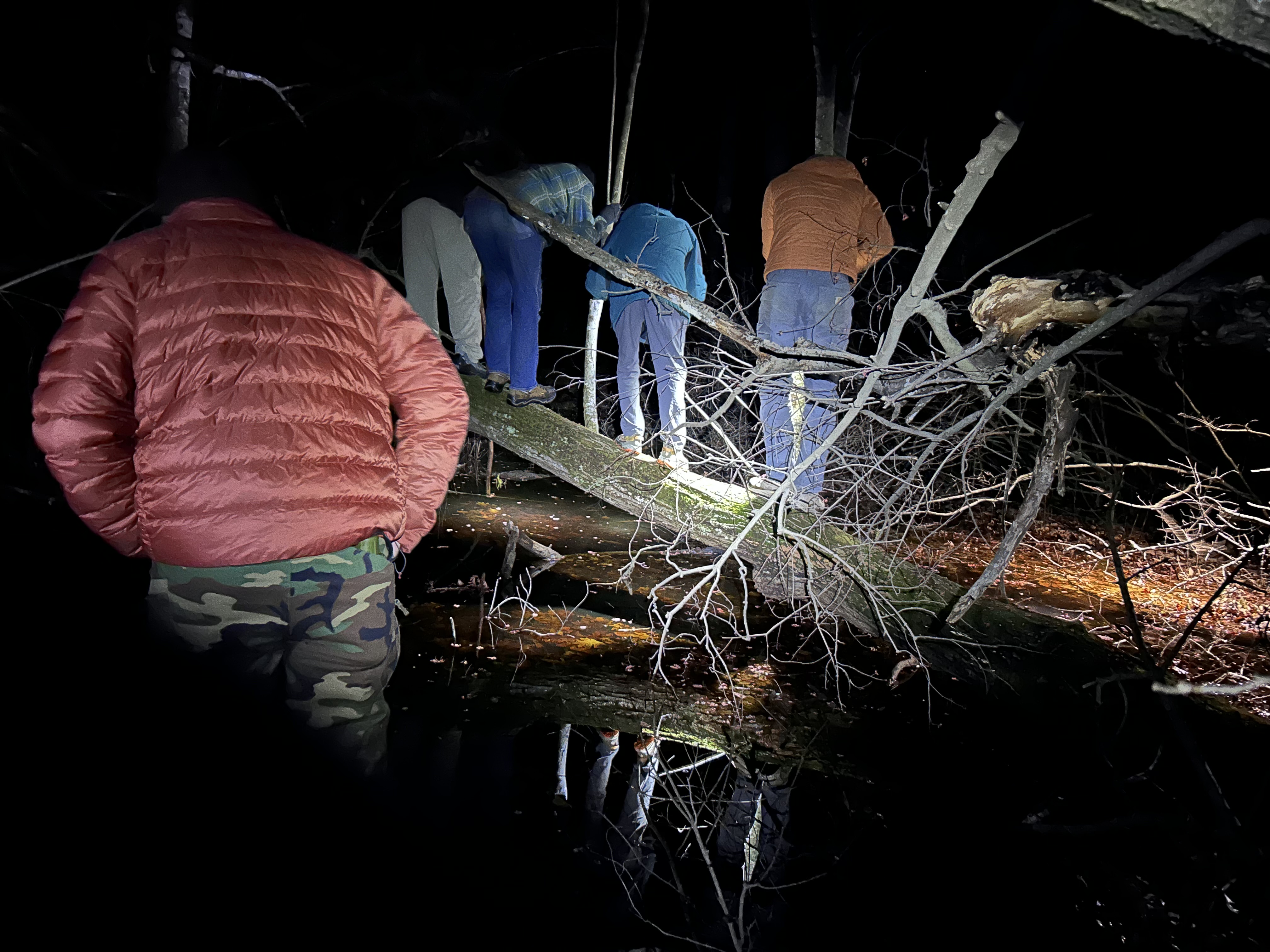
    Photo by Lynn Cameron

    Even though they bury themselves in mud they do not have keratin on the ends of their toes to dig. They also have lungs but can absorb oxygen through their skin when spending time in the water. They spend their overwintering in a mud-encased torpor. 

    Spotted salamanders often return to the same body of water in which they were hatched, reach sexual maturity after five years and can live more than thirty years. They only travel to and from vernal pools when it’s actively raining, and only then to mate; the rest of the year they remain underground. They average 6-8 inches in length, as wide as your thumb, with females usually larger than males. Males deposit silvery spermatophores throughout the vernal pool or springs and females take them into their bodies through cloaca to fertilize the eggs. A female can lay up to 300 eggs per season in multiple clutches; eggs are gelatinous clusters often attached to twigs or detritus in vernal pools. If the pools dry out before the larvae are ready to hatch, the moist gelatinous casings protect them long enough to ensure that most of them survive.
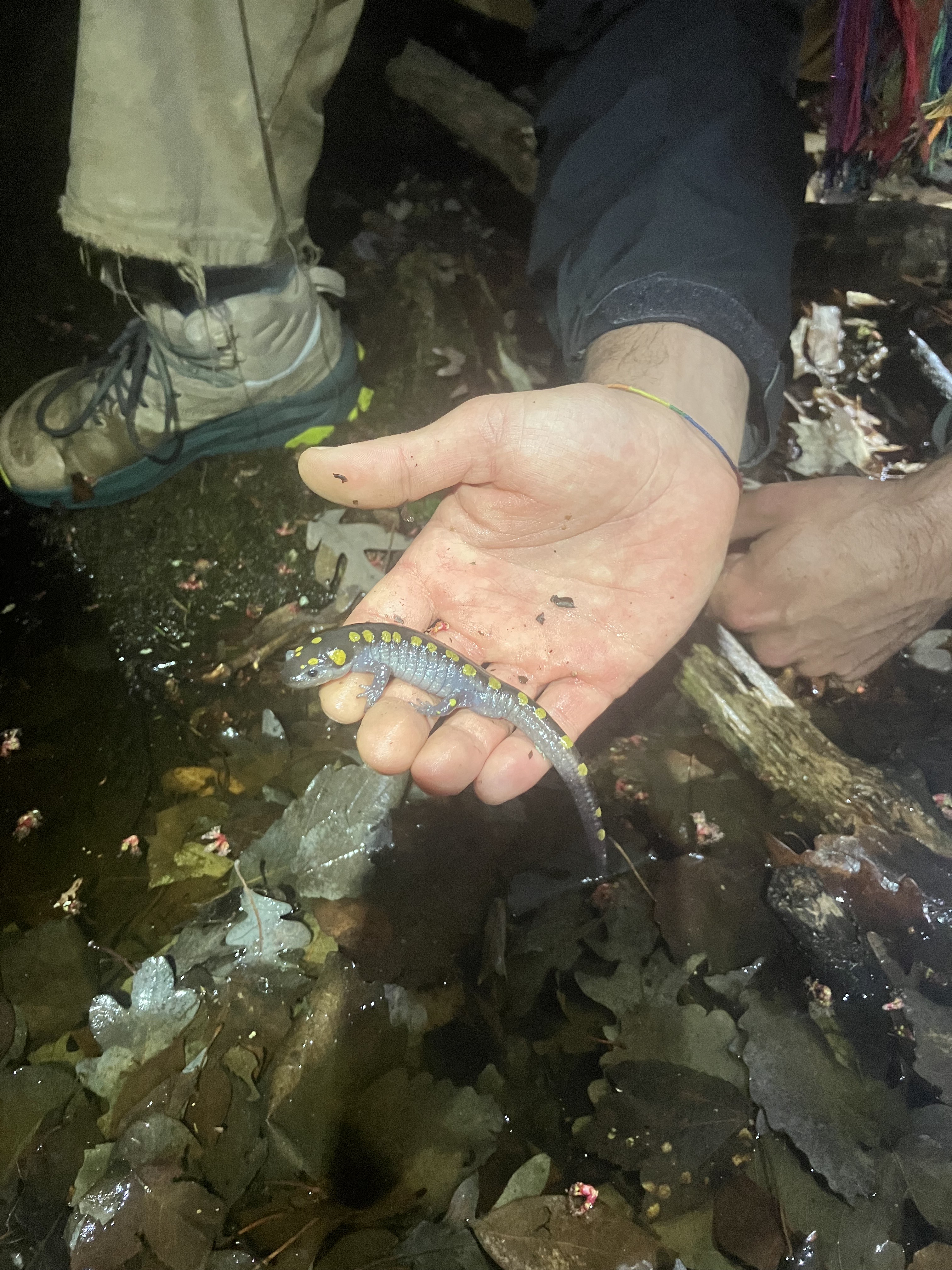
    Photo by Tim Showalter Ehst

    We left for home about 10 p.m., but most of us could have easily stayed longer. I found that one advantage of a clear night was that being able to see known constellations in the sky helped to keep me oriented in the dark, even in a familiar place.

    Story by Malcolm Cameron with assistance from Charlie Lovewell and Bill Howe

    Photo courtesy of Bill Howe

  • Stargazing at Starry Meadows

    Stargazing at Starry Meadows

    On October 17th, I led a small group of Master Naturalists and some of their family members in a stargazing session at Starry Meadows, the property of Headwaters Master Naturalists Sharon and Jay Landis. This property lies north and west of Harrisonburg and enjoys relative freedom from light pollution.

    After a day of perfectly clear skies, clouds rolled in just as we were about to begin. Fortunately, there was partial clearing soon thereafter, and the evening was not a loss. Even with thin cloud cover, Saturn shone brilliantly in the southeastern sky, viewed through a 4-inch refracting telescope. We located some double stars, various star clusters, and I was able to capture a surprisingly good image of the large but somewhat dim galaxy in the constellation Triangulum, Messier 33. Using a green laser pointer, I highlighted some of the more prominent constellations. Even with the sub-optimal conditions caused by the cloud cover, the dark sky at Starry Meadows remained an inspiring sight.

    Although the night was not particularly cold, stargazing involves a good deal of standing still, and there were no objections when I suggested we wrap up a little after 9:00 p.m. I chose these dates intentionally to avoid moonlight, allowing us to better appreciate deep-sky objects. I am considering holding a session next spring focused on the Moon, highlighting lunar surface features, along with some visible planets at that time.

    Zack Perdue

    Group enjoying night sky. Photo by Andrea Dono.

    M31 Andromeda Galaxy. Photo captured by Andrea Dono using the Unistellar app.

    M13 Hercules Globular Cluster. Photo captured by Andrea Dono using the Unistellar app.

  • The Salamander Night Hike

    The Salamander Night Hike

    Slimy salamander, the only one we saw that evening. Photo by Jess Daddio.

    The salamander night hike was led by Billy Flint at JMU and provided a really great opportunity to get in the field with the leading expert on Cow Knob salamanders, which only live here on the high-elevation slopes of the Shenandoah and Great North mountains. We met at 9pm under a perfectly clear starlit sky, donned our headlamps, and took our time carefully walking among the leaf litter and talus slopes. It took about 20 minutes until someone’s headlamps reflected back off the eyes of the first salamander of the evening, a Shenandoah Mountain salamander. Once we knew what we were looking for, it became easier to spot the next salamanders, which were sometimes crawling about in the open but, more often, lay hidden in the mossy recesses of their rock homes. Part educational hike, part meditative forest walk, the outing was equal parts discussion and silence. I really enjoyed the opportunity to move quietly through the woods and to ask questions in real time. 

    Jess Daddio, Cohort 9

    Cow Knob salamander. Photo by Jess Daddio.

    Co9 naturalist-in-training Hannah Martin photographing a Shenandoah Mountain salamander. Photo by Jess Daddio.

    Co9 naturalists-in-training photographing a Shenandoah Mountain salamander. Photo by Jess Daddio.

    Cow Knob salamander. Photo by Jess Daddio.

    Shenandoah Mountain salamander. Photo by Jess Daddio.

  • Black Bear Composting Tour 2021

    Black Bear Composting Tour 2021

    On Thursday, September 23rd, 2021, members of the Headwaters Master Naturalists chapter visited Black Bear Composting facility in Crimora. Eric Walter, the owner, showed us around the property and walked us through the composting process. They obtain the compostable waste from residential houses, businesses, and even institutions such as the local Bridgewater College.

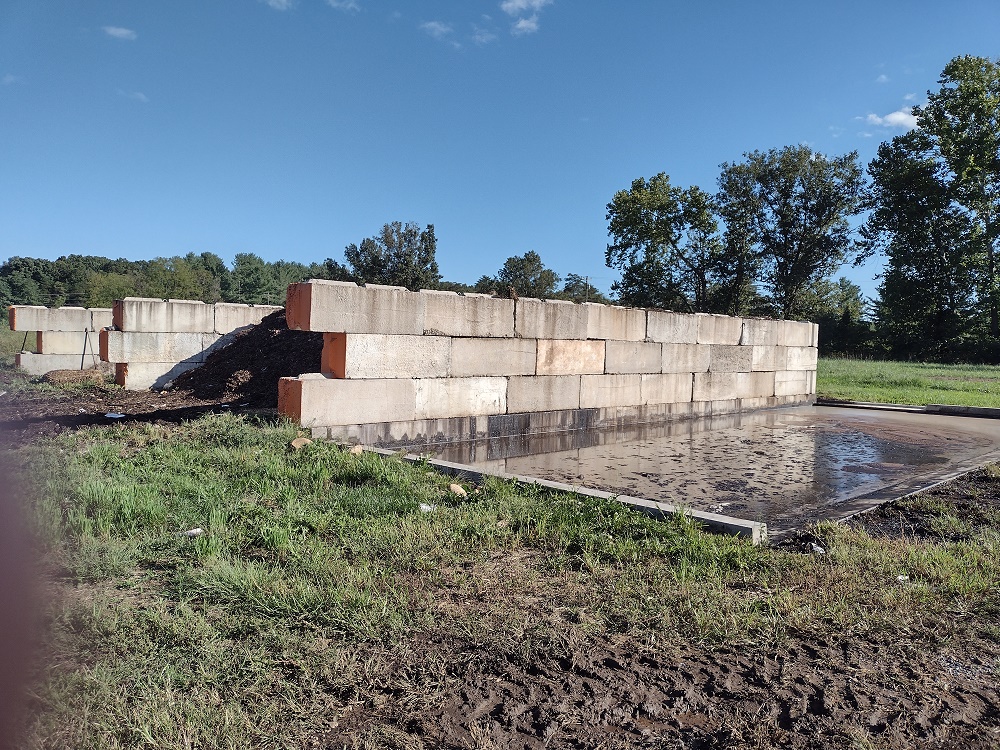
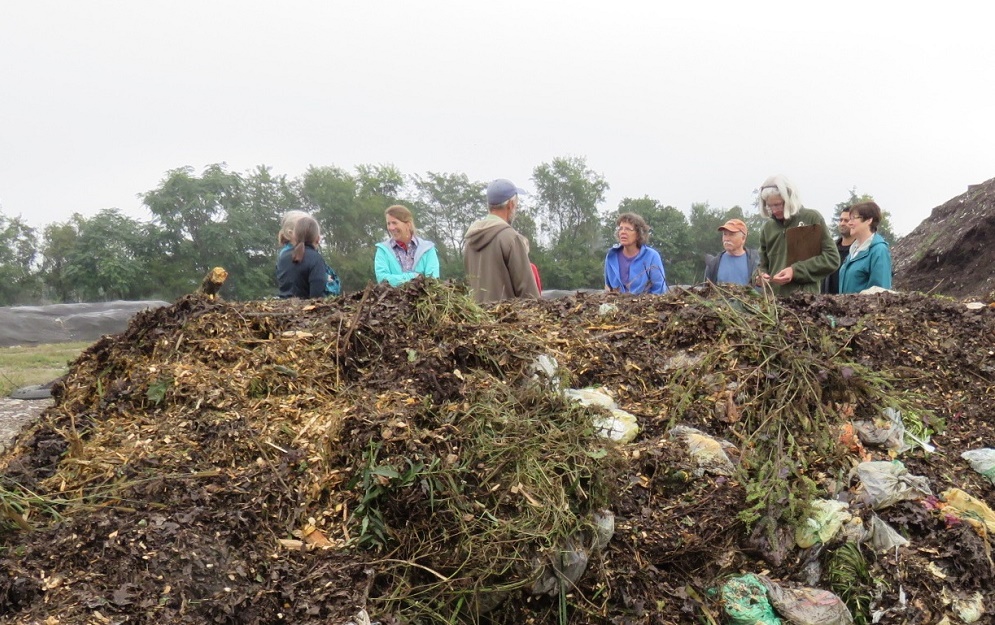
    Once brought to the facility, the food and lawn waste are combined with wood chips and leaves. The compost is then placed into large compost bins with pipes running along the bottom. The pipes pump air up through the pile to keep the bacteria happy, continuing their aerobic respiration and decomposing the waste. Temperatures can get up to 140°F within the piles from the heat given off by the bacteria hard at work. After this process, the piles of compost are left to sit and finish decomposing while being moved occasionally. The compost then goes through a huge sifter machine to separate out any larger items not fully decomposed yet from the finished compost product.

    This process from start to finish takes around 6 months. The end result they are left with is beautiful and ready-to-use compost great for any garden. It is amazing how our waste can be transformed into something that goes back into replenishing the earth! Visiting this facility and learning more about the process of composting reminds us all to check and sort our items before we throw them into the compost bin.

    – Allison O’Brien, Cohort VII, September 2021

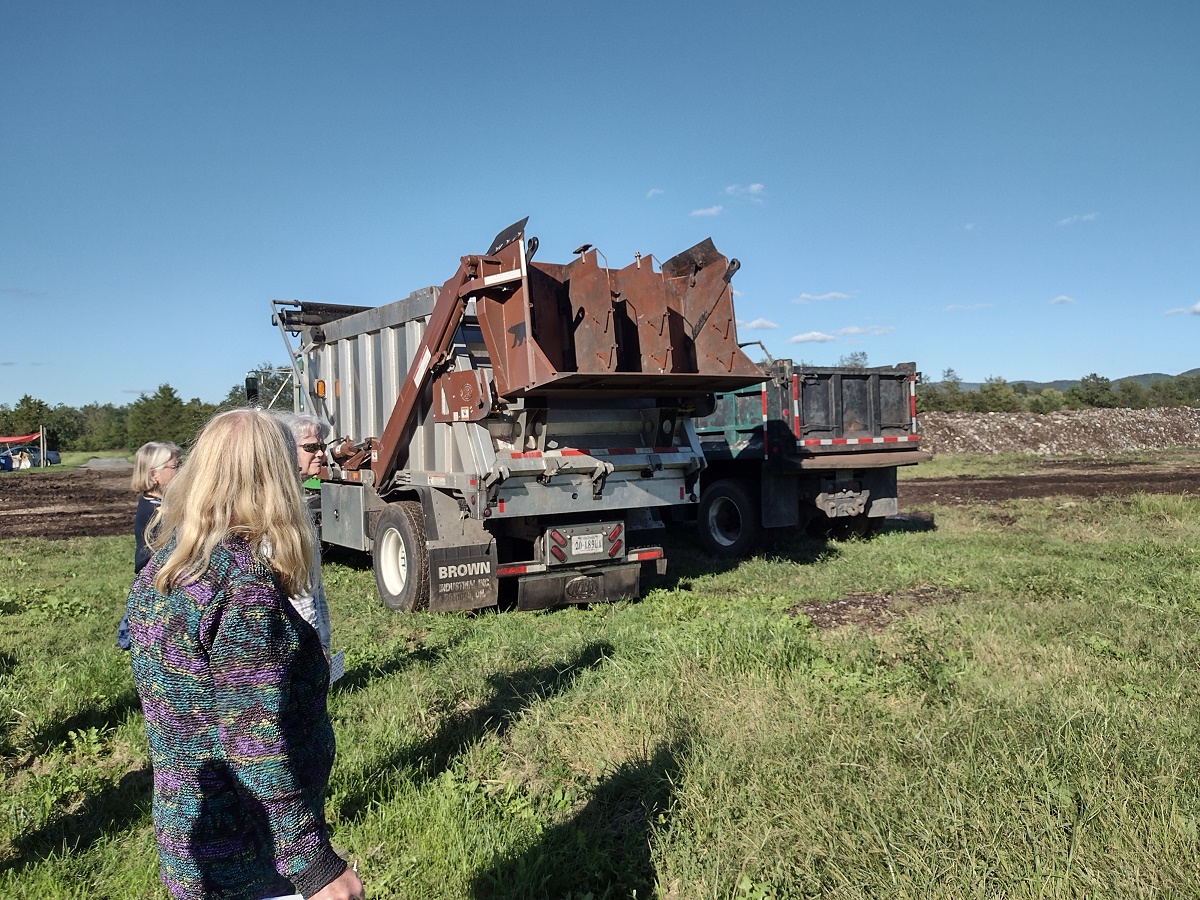
    In the photo at the top of this post, Eric shows us his new, “more expensive than my house”, screening machine. Photo and caption credit Art Fovargue, Cohort VII.

    Click on a photo below to start a slide show to see them better. Photo credits: Art (AF), Allison (AO), and Adrie Voors, Cohort II (AV).

  • Upcoming Field Trip to Black Bear Composting

    Upcoming Field Trip to Black Bear Composting

    For those of you who have been hesitant to get back into the social swing of things, now that many pandemic restrictions have been eased, come meet your favorite aerobic bacteria at Black Bear Composting at 4:00PM on Thursday, September 23.

    This will be our first tour to the Black Bear site in Crimora since June 2019. Come see how food waste, soiled paper products, certified compostable bio-plastics, and other organics are transformed into dark, nutrient-rich, compost – an ideal soil amendment. If you’ve ever contributed organics to the Harrisonburg Community Compost Drop-off, this is where they end up. Black Bear Composting owner/ operator Eric Walter will lead us on a tour of his commercial-scale facility, demonstrating the different steps and methods used to turn organic waste into sweet-smelling, nourishing finished compost. You will also get to see his new compost compactor truck and screening equipment.

    For directions, carpooling information, and other details, sign in at Better Impact and find this event on Sept 23 under the Opportunity Calendar.

    As a bonus to learning all about this composting facility, you will get to stick your hands in the piles and feel the warmth of the bugs and bacteria processing the compost. Gloves provided. Even though the little critters outnumber us (more than a billion in every handful of stuff becoming compost), just remember, these microbes love to eat viruses for lunch.*

    *Sally Brown, Letter To The BioCycle Community: COVID-19 And Organics Recycling, April 7, 2020

    – Art Fovargue, Cohort VII, August 2021

    Photo at top is from the BBC tour for HMNs held in October 2016. Photo by Art.