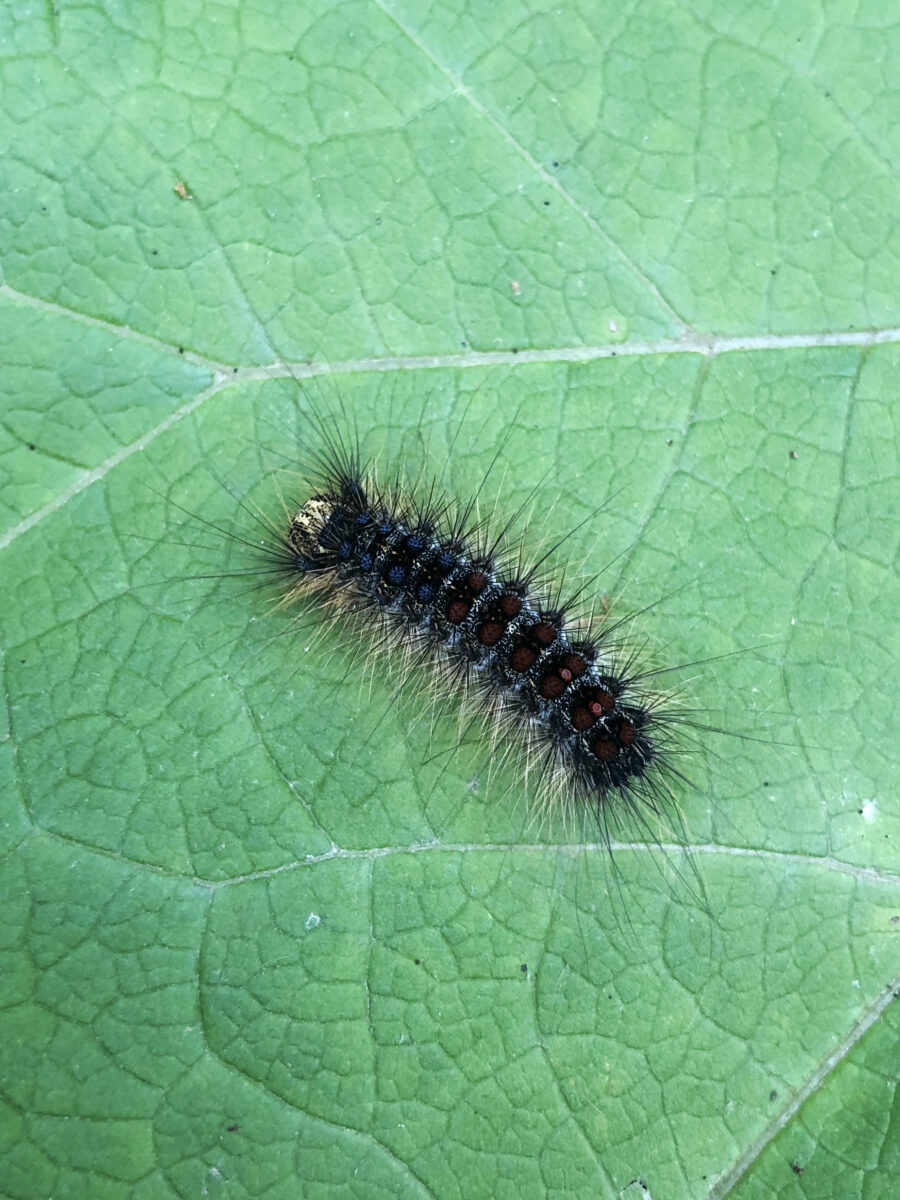
Spongy Moth caterpillar. Photo by Virginia Department of Forestry.
The spongy moth, previously known as the gypsy moth, is an invasive species causing significant ecological and economic damage in Virginia. Originating from Europe, it was accidentally introduced to North America in the late 19th century. The larvae of this moth are voracious feeders, primarily targeting oak trees but also consuming over 300 other species of trees and shrubs. Their defoliation can weaken trees, making them more susceptible to diseases and other pests, and can lead to long-term forest health issues. Virginia’s forests, which are a critical part of its ecosystem and economy, are particularly vulnerable. Efforts to manage and mitigate the spread of the spongy moth include monitoring, the use of biological control agents, and public education to prevent further dissemination.
The Department of Forestry monitors spongy moth populations and impacts to address outbreaks on state lands and help inform suppression efforts on other lands in cooperation with Virginia Department of Agriculture and Consumer Services, U.S. Forest Service – George Washington and Jefferson National Forest and localities. You can also help us track spongy moth populations by reporting sightings on iNaturalist.org.
Most trees can withstand a year or two of defoliation from spongy moth caterpillar feeding, but there are additional measures landowners can take to protect their trees.
Learn more on DOF’s website: https://ow.ly/hsOe50RK0Ne
Virginia Department of Forestry’s Post


 Virginia Master Naturalists Headwaters Chapter