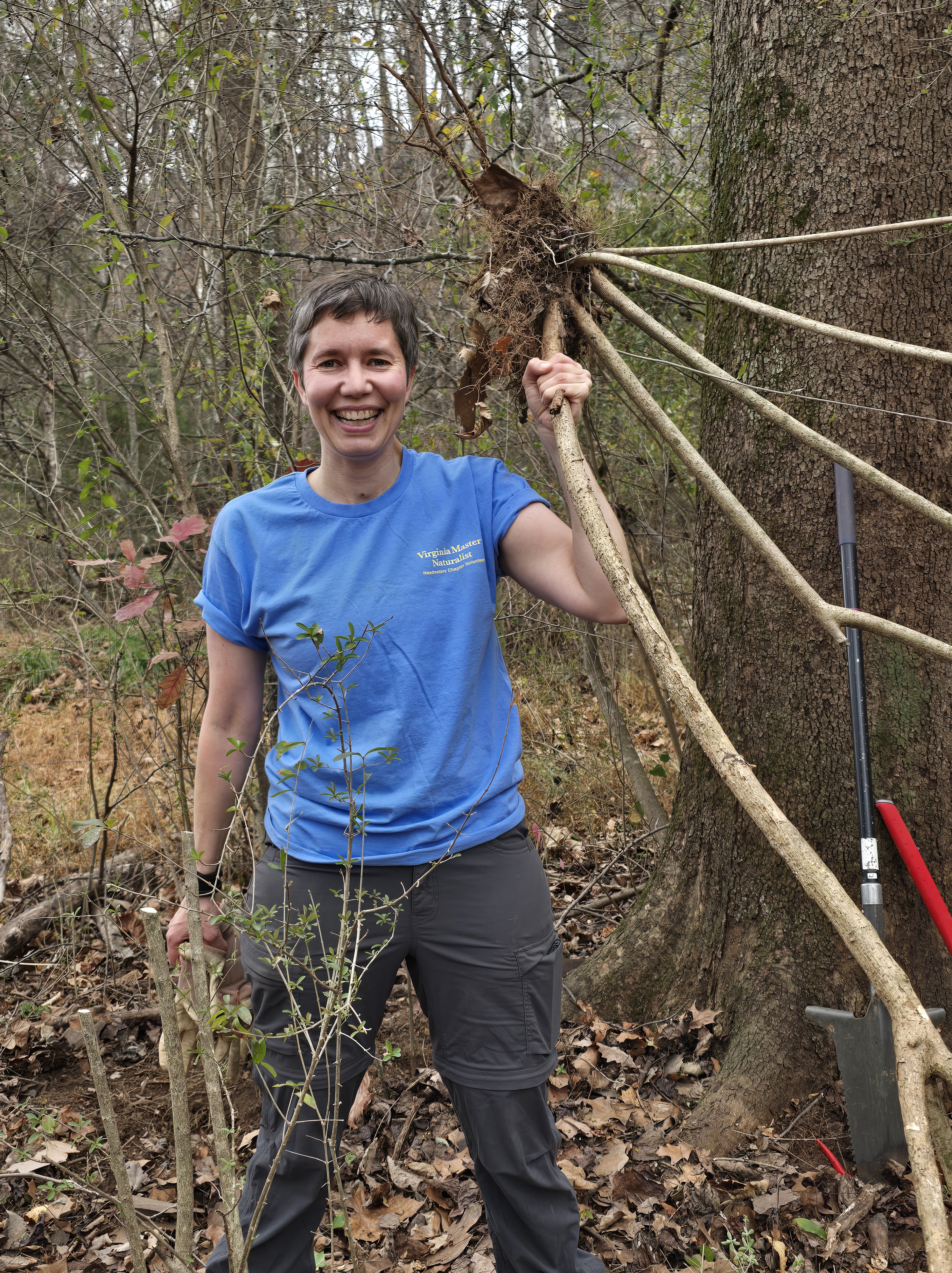
Lora Steiner conquers an invasive. Photo by Cheryl Shull.
Work continues on removing invasive plants from the Natural Chimneys Wildlife Trail. On November 14th, Lora Steiner, Wick Fary, Art Fovargue, and Cheryl Shull helped clear a large stand of Chinese privet from one section of the trail. There is still much work ahead, but these Headwaters Master Naturalists remain committed to restoring native habitats and promoting conservation on this important public land.
If you’d like to join our team, please contact Cheryl Shull at cherylshull@yahoo.com.
Cheryl Shull, Volunteer Service Projects Committee Chair
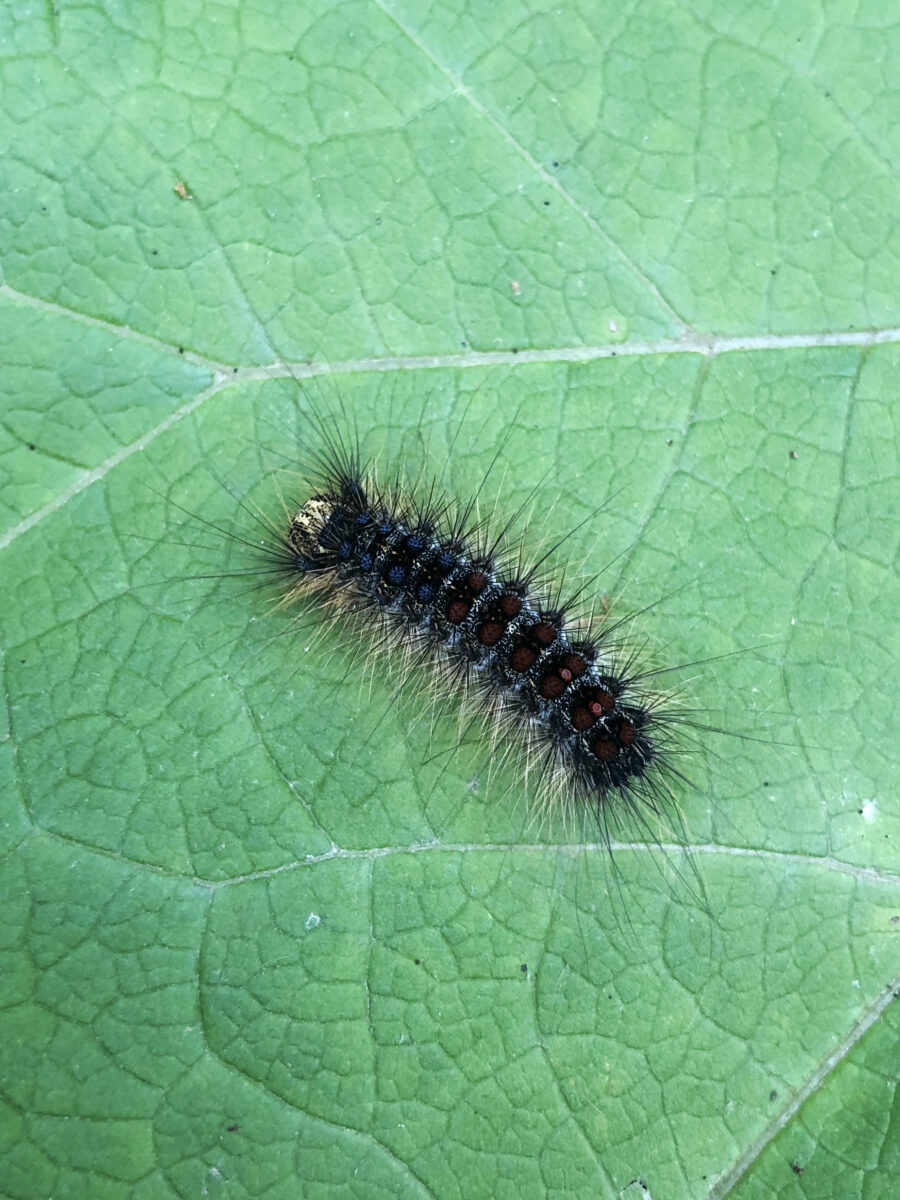
Spongy Moth caterpillar. Photo by Virginia Department of Forestry.
The spongy moth, previously known as the gypsy moth, is an invasive species causing significant ecological and economic damage in Virginia. Originating from Europe, it was accidentally introduced to North America in the late 19th century. The larvae of this moth are voracious feeders, primarily targeting oak trees but also consuming over 300 other species of trees and shrubs. Their defoliation can weaken trees, making them more susceptible to diseases and other pests, and can lead to long-term forest health issues. Virginia’s forests, which are a critical part of its ecosystem and economy, are particularly vulnerable. Efforts to manage and mitigate the spread of the spongy moth include monitoring, the use of biological control agents, and public education to prevent further dissemination.
The Department of Forestry monitors spongy moth populations and impacts to address outbreaks on state lands and help inform suppression efforts on other lands in cooperation with Virginia Department of Agriculture and Consumer Services, U.S. Forest Service – George Washington and Jefferson National Forest and localities. You can also help us track spongy moth populations by reporting sightings on iNaturalist.org.
Most trees can withstand a year or two of defoliation from spongy moth caterpillar feeding, but there are additional measures landowners can take to protect their trees.
The Virginia Department of Conservation and Recreation (DCR) plays a crucial role in preserving the state’s natural resources and biodiversity. As part of its efforts, DCR highlights nine invasive species that pose significant threats to Virginia’s ecosystems. These include notorious invaders such as the emerald ash borer, which devastates ash trees, and the spotted lanternfly, known for its rapid spread and impact on agriculture. By raising awareness and implementing control measures, DCR aims to mitigate the harmful effects of these invasive species and protect Virginia’s natural heritage for future generations. Read more about these nine invasive species HERE!