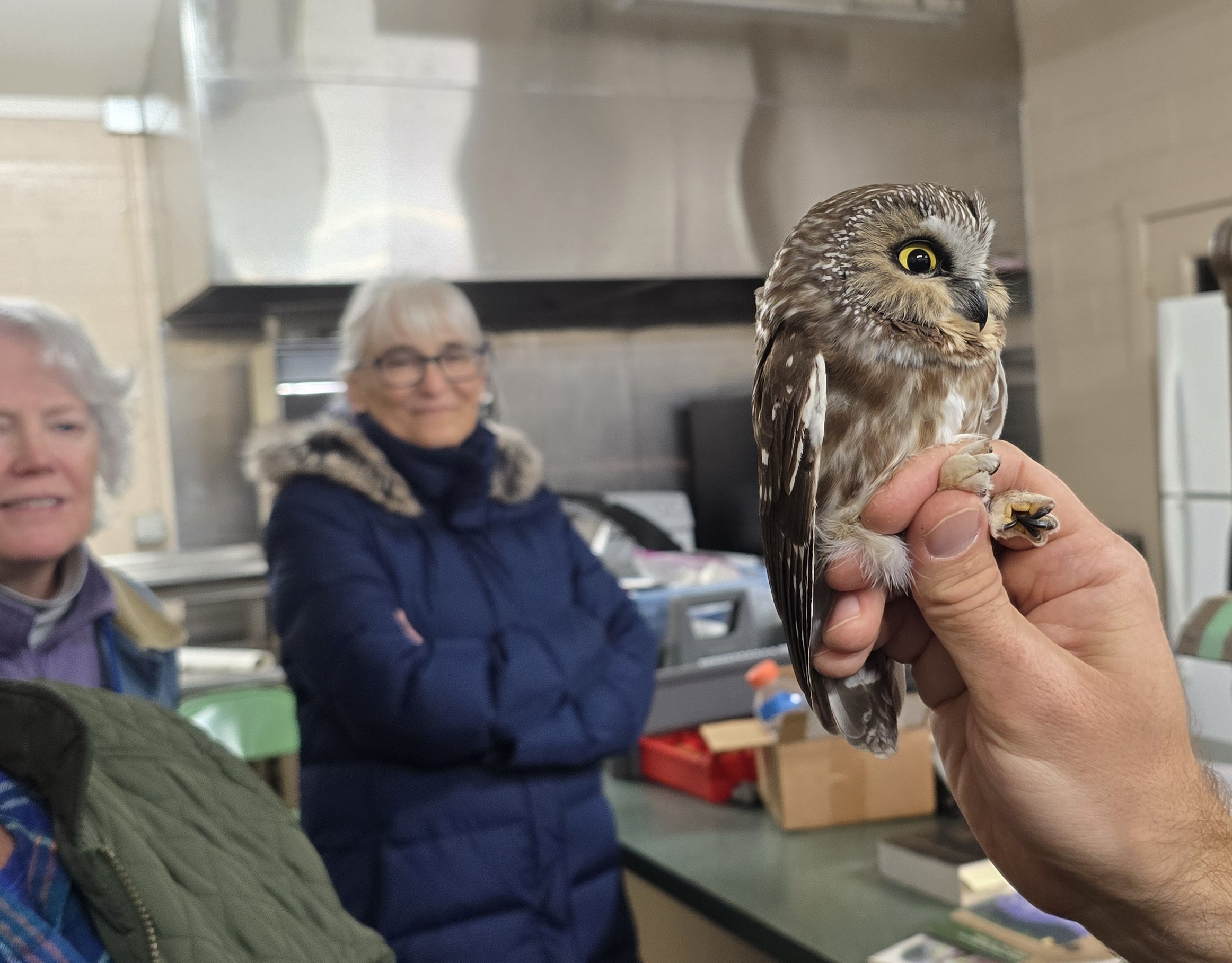
Elaine Smith and Peggy Plass enjoying the presentation. Photo by Cheryl Shull.
On Friday, November 14, four members of the Headwaters Master Naturalists visited Project Owlnet’s local research station at Highland Retreat Camp. This station is one of many located throughout Canada and the United States that work to track owl migration.
Bird banding is a widely used method for collecting data on avian species, involving attaching a small plastic or metal band to a bird’s leg, which allows for individual identification during future observations at different times and locations.
Ben Spory leads a dedicated team of volunteers several times a week from mid-October through November to retrieve Northern Saw-Whet Owls from a mist net located on the ridge above the station. The owls are then weighed, measured, and banded as needed. Researchers determine the birds’ ages by placing them under a black light with their wings outstretched. Young birds show a pigment in their wings that glows pink under the light, while birds older than four years no longer display this pigment.
Ben and the other researchers provided an informative and inspiring presentation. There was also discussion about the possibility of Master Naturalist involvement next year as volunteers for the program.
For more information about the Northern Saw-whet Owl, a good source is the Cornell Lab of Ornithology at https://www.allaboutbirds.org/guide/Northern_Saw-whet_Owl/id.
Cheryl Shull, Volunteer Service Projects Committee Chair
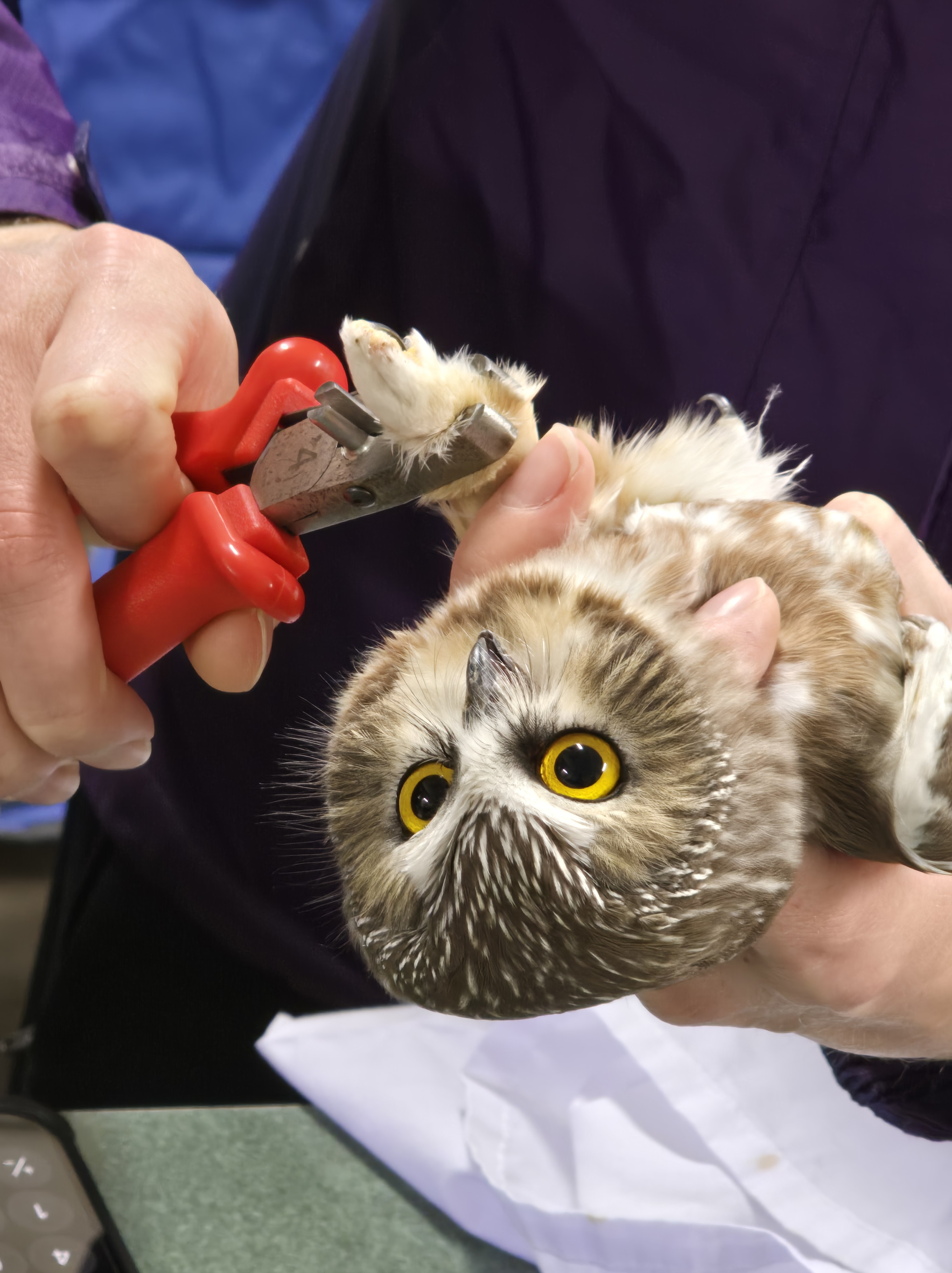
A Northern Saw-wet Owl lies upside down as it receives a band during the careful bird-banding process. Photo by Cheryl Shull.
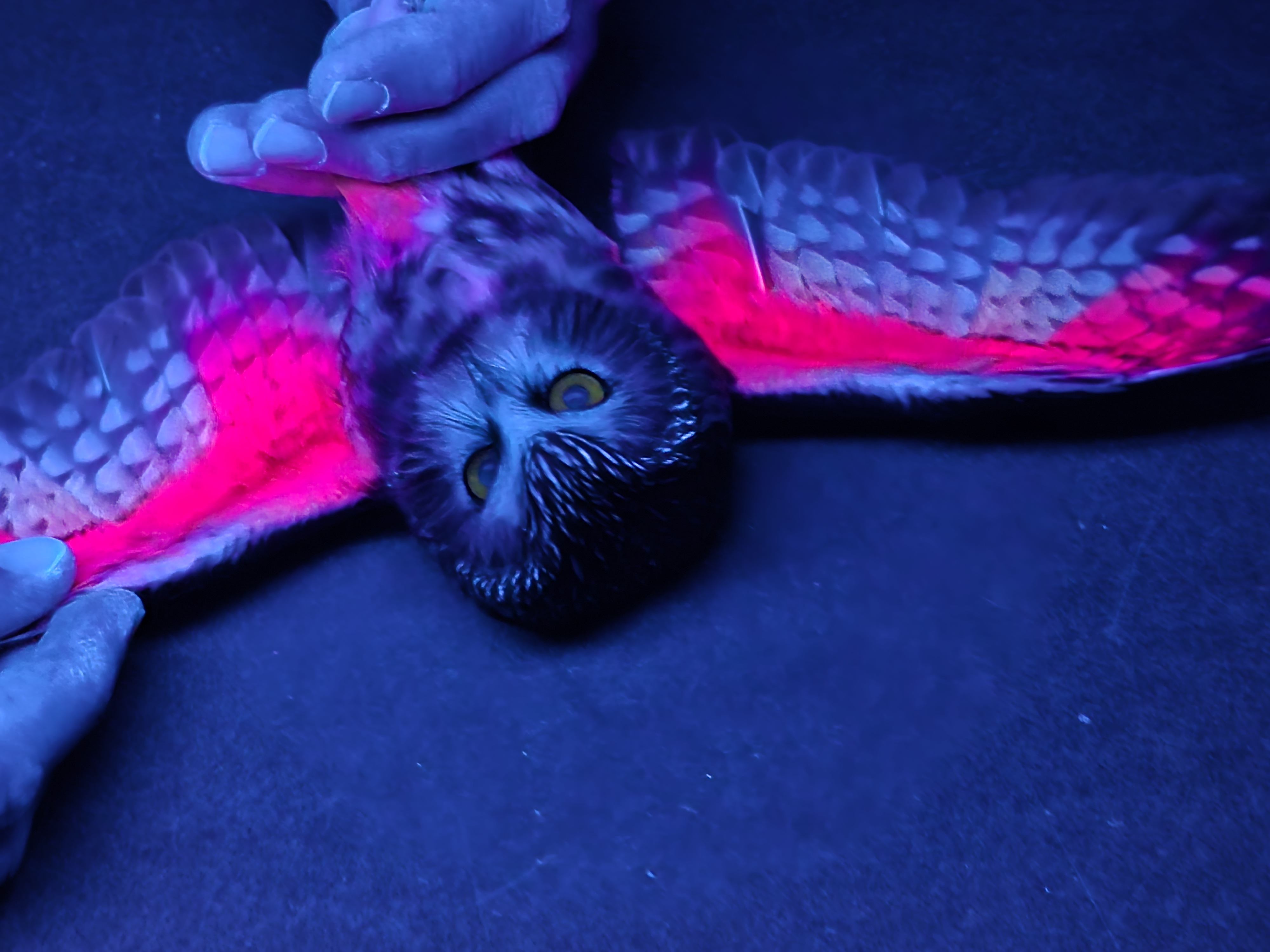
Researchers use black light to age Northern Saw-wet Owls by checking for a pink glow in their wings, which indicates youth. Photo by Cheryl Shull.
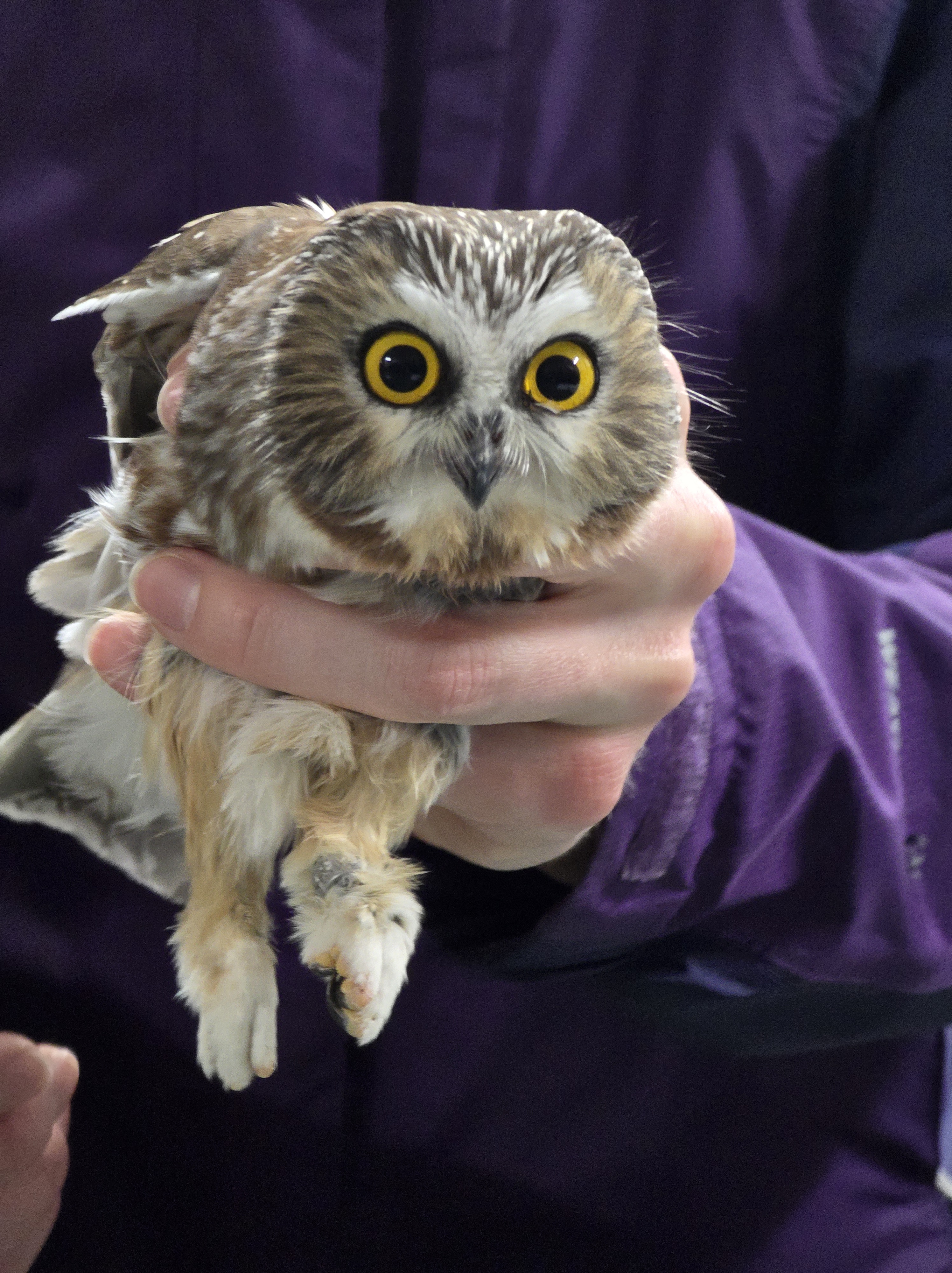
Researchers use black light to age Northern Saw-wet Owls by checking for a pink glow in their wings, which indicates youth. Photo by Cheryl Shull.


 Virginia Master Naturalists Headwaters Chapter