
Where organic waste goes to get recycled
On Friday, July 21, twelve HMN members, trainees and friends visited Black Bear Composting in Crimora, VA, for another fun tour of our local commercial composting facility. Although this was my 5th tour of the Black Bear, I never fail to learn something new.
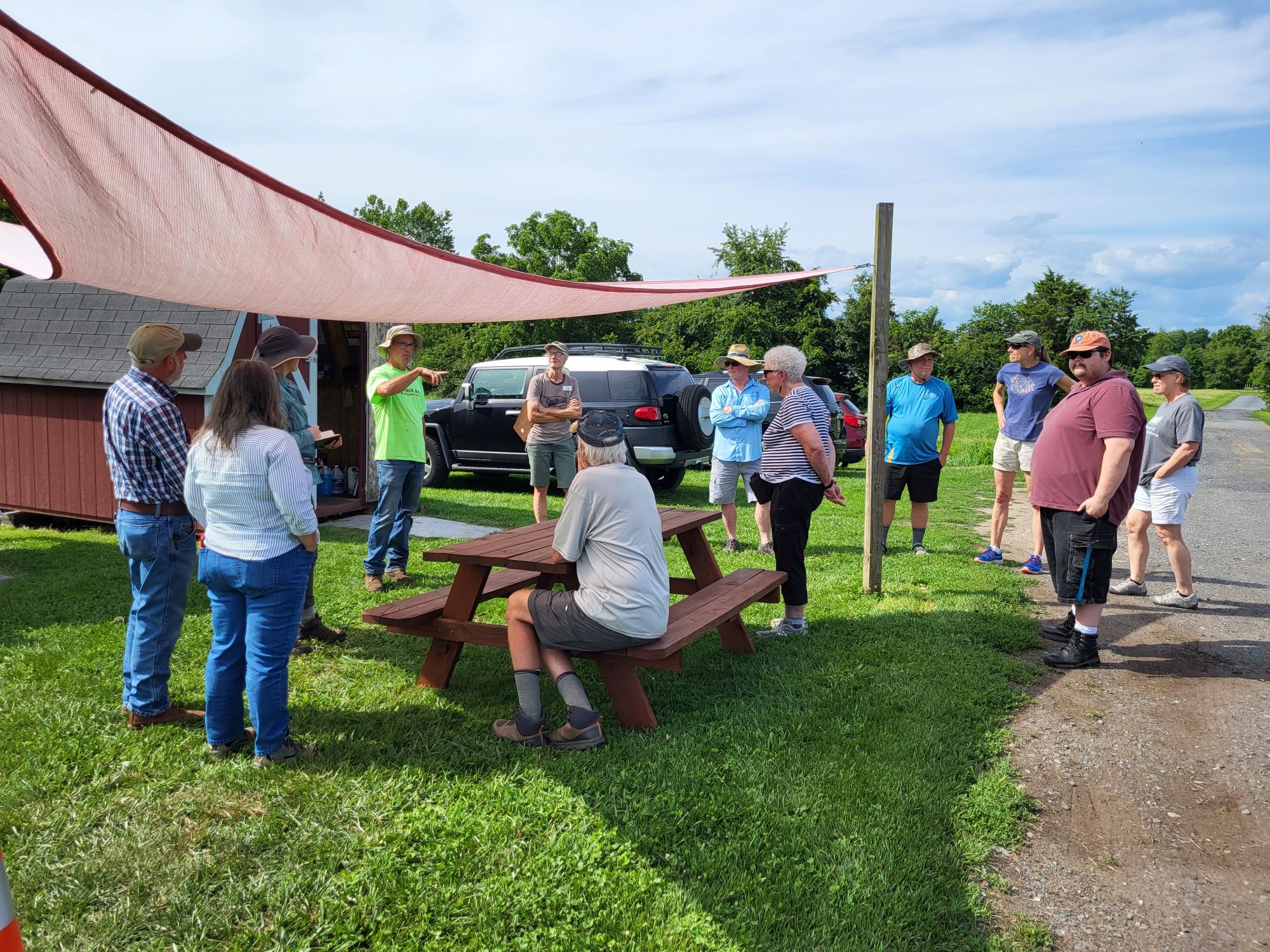
We first gathered in the “break room” where CCO Eric Walter (Chief Composting Officer) gave us an introduction to the business and the importance of composting in the global warming battle. He gave a thorough explanation of aerobic vs anaerobic digestion, CO2 vs methane release and how putting food waste in the landfill has a much more detrimental effect on global warming than composting.
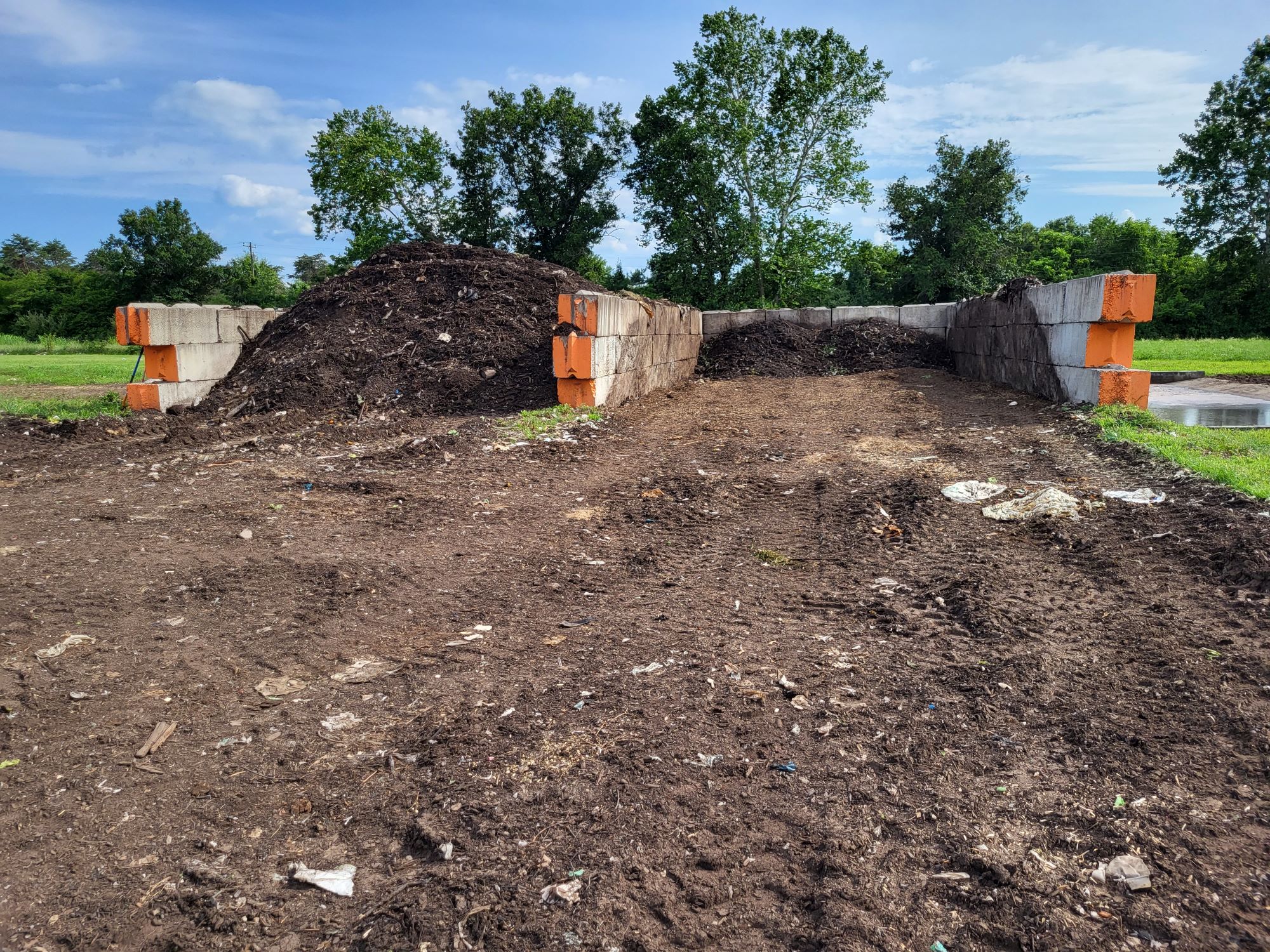
We then set off around the 4 acre portion of his 47 acres where the various processes take place. First stop was the pad where food waste and other compostables are dumped and mixed with leaves and wood chips to get the right ratio of “browns” to “greens”. Then we visited the active pile where the new mix has air blown up through it to keep it in the aerobic state. After about 4 weeks, the budding compost is then moved into long piles which are turned weekly to complete the process. Depending on various factors, this “curing” step will be 3 to 6 months. Pulling a linen from the pile, he showed us one of the compostable bed sheets the University of Virginia uses in their summer orientation housing.
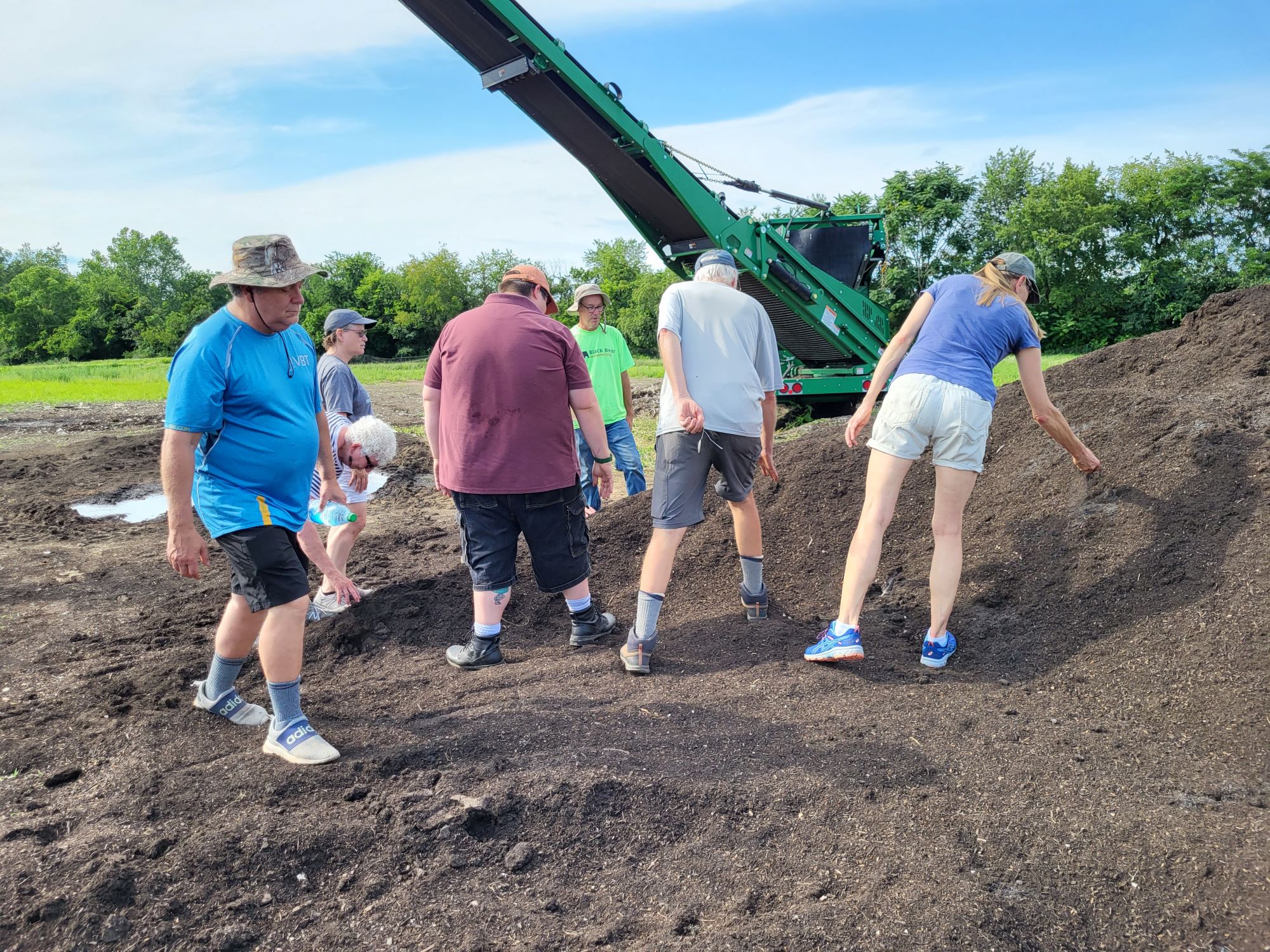
Eric then took us to the final step in the process, the screening, where a pile of the finished compost was eagerly waiting to be a nutritious supplement in someone’s garden. Many of the followup questions centered around quality control aspects of the business. He discussed the various tests done for pathogens, the documenting of temperatures in the active pile, analysis of the final product, and what efforts were done in the site preparation to ensure runoff would not flow into the neighboring South River.
As always, the crows and ravens serenaded us with their opinions while we were there. They could barely contain their excitement as we departed, so that they could start their evening scavenging.
– Art Fovargue, Cohort VII, July 2023
Thanks to Art for these photos and descriptions! Click on one to enlarge it and start a slide show.




 Virginia Master Naturalists Headwaters Chapter