
by Elizabeth Pass, Cohort VI
for the August 2023 issue of Headwaters Highlights
We enter August sweltering through the hottest days in history. Dog days, indeed!
Something to Read
Here are a couple of reads about our history and how interconnected we are with our climate, flora, and fauna. They point out the delicate balance and what effects can occur when that balance is disrupted.
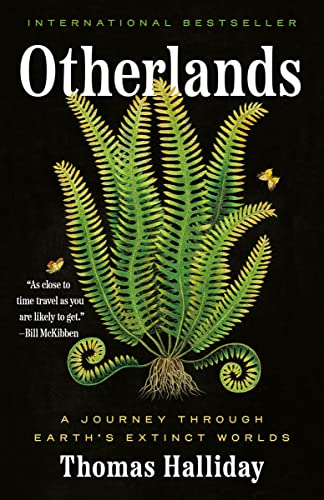
Otherlands: A Journey Through Earth’s Extinct Worlds, Thomas Halliday
Otherlands examines the history of Earth, specifically 16 fossil sites, “…as it used to exist, the changes that have occurred during its history, and the ways that life has found to adapt―or not.”

Gone: Stories of Extinction, Michael Blencowe
Blencowe takes a different approach, with each chapter revealing a different extinct animal from across the globe. His book tells the amazing stories of the following animals, how they were discovered, their lives, and how they became extinct:
- Great Auk. A majestic flightless seabird of the North Atlantic and the ‘original penguin.’
- Spectacled Cormorant. The ‘ludicrous bird’ from the remote islands of the Bering Sea.
- Steller’s Sea Cow. An incredible ten-ton dugong with skin as furrowed as oak bark.
- Upland Moa. The improbable birds and the one-time rulers of New Zealand.
- Huia. The unique bird with two beaks and twelve precious tail feathers.
- South Island Kōkako. The ‘orange-wattled crow,’ New Zealand’s elusive Grey Ghost.
- Xerces Blue. The gossamer-winged butterfly of the San Francisco sand dunes.
- Pinta Island Tortoise. The slow-moving, long-lived giant of the Galápagos Islands.
- Dodo. The superstar of extinction.
- Schomburgk’s Deer. A mysterious deer from the wide floodplains of central Thailand.
- Ivell’s Sea Anemone. A see-through sea creature known only from southern England.
In case the heat and readings about the Earth’s extinctions leave you feeling despondent, here’s another great read.
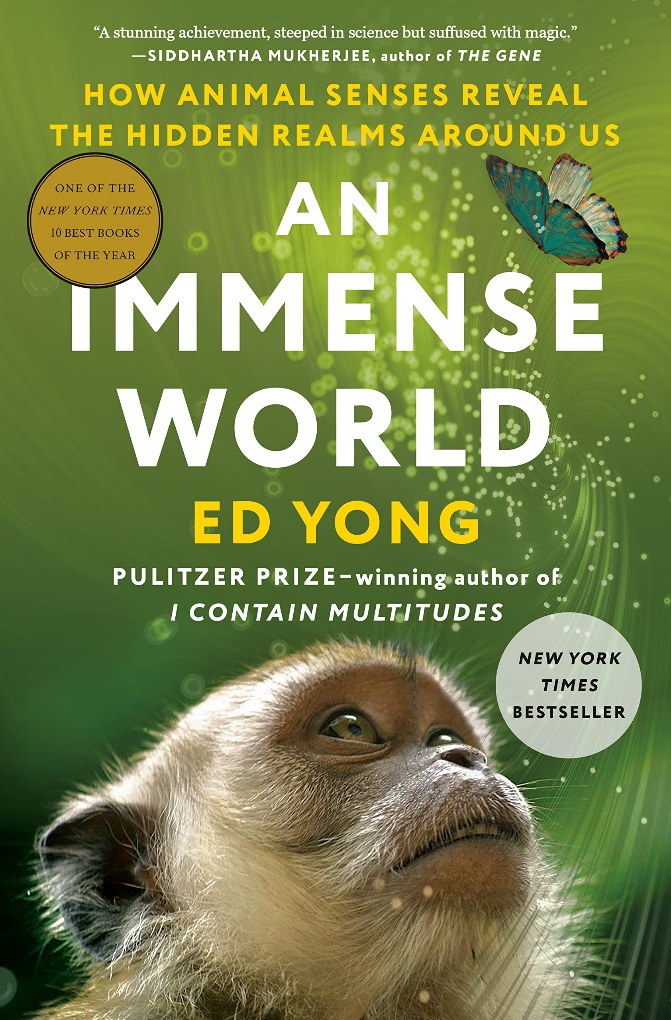
An Immense World, Ed Yong
Yong, an award-winning science writer, shows us how animals perceive the world and how that relates to us. His comments on language and its limits are particularly insightful:
…there are many places where our language leaves us in the lurch. Like with vision, we don’t have a word for detecting light but not having a conscious experience of it…. And the problem is even worse when you think about senses like smell, where most Western cultures, at least, have a very impoverished vocabulary…. There’s none of the words that we would use to describe tastes or sounds, none of that sort of rich lexicon, and that’s a problem.
Ed Yong from An Immense World
Something to Do

Taking Yong’s comments into account, Gretchen Rubin, in her book, Life in Five Senses, offers an exercise to pay more attention to the world around us and expand the language around our senses. Also, we can become more aware of our precious environment. She created a journal, to support the advice from her book, that offers a quick and daily way to become more aware of our surroundings and senses.
Each day has you do the following:
“Pick a subject for this month’s five-senses portrait. You can choose a person, a pet, a place, a city, yourself, or any other subject you can think of. Identify the sights, sounds, smells, and touch of all the things and experiences you associate with the subject you choose.”
You next put the Date for each day, the Subject you chose for the month (“When I think of….”), and then create a bullet list for each Sense (“I think of seeing…”, “I think of smelling…”, I think of tasting…”, I think of hearing…”, I think of touching…”).
I’ve created a variation that doesn’t have you focus on one subject for a month. Instead, create a journal so that you record what you notice for each of your senses that day. List the Date, then each Sense with room to write a quick observation. Then, at the bottom of the Senses list, create a Summary Observation, like so:
Date:
What I most noticed with my senses:
- Sight
- Smell
- Taste
- Sound
- Touch
Summary Observation:
– Elizabeth Pass, Cohort VI, for the August 2023 edition of Headwaters Highlights


 Virginia Master Naturalists Headwaters Chapter