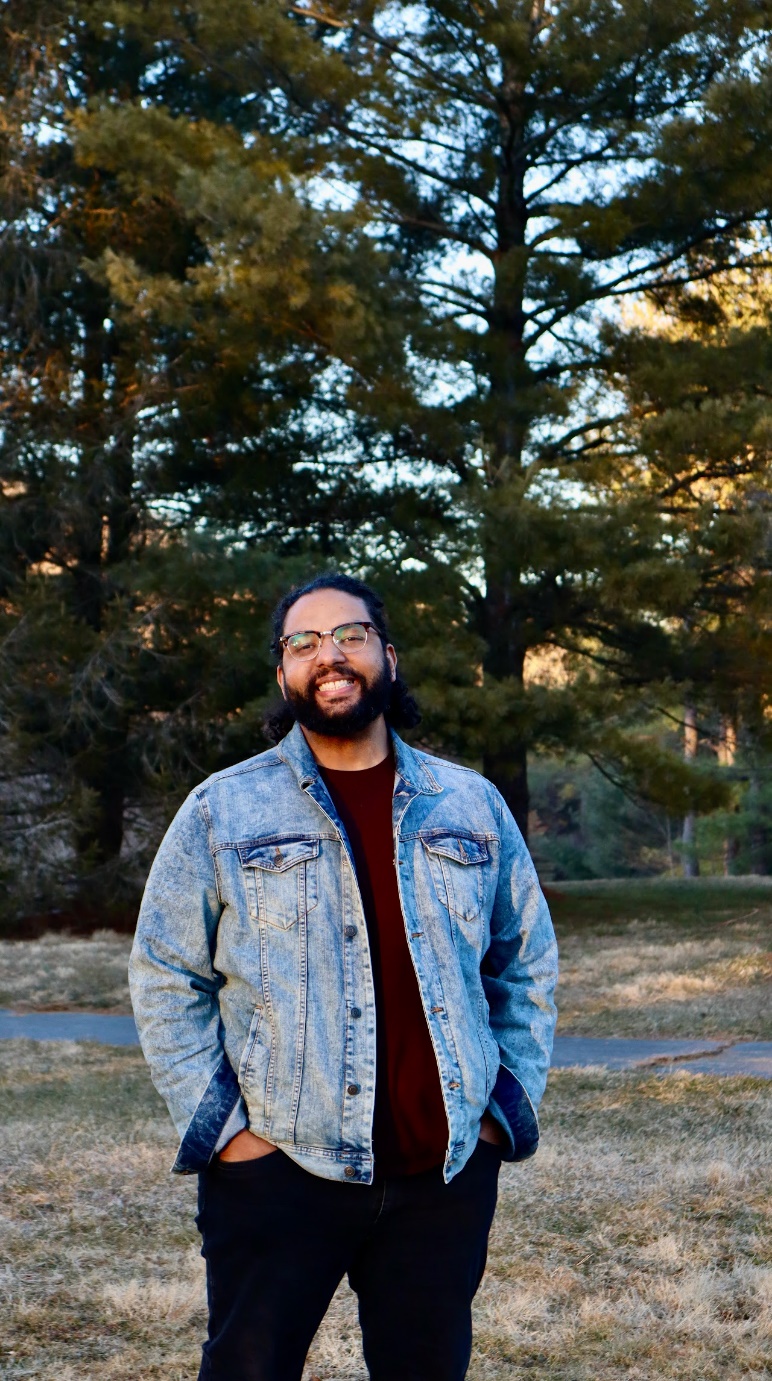
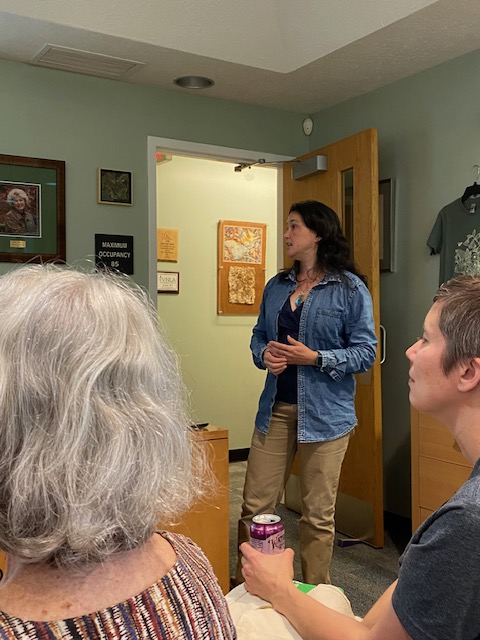
Dave Forrer and Cindy Westley work on the JMU tree ID project, June 8, 2023. Photo by Ann Murray.
Over the last six weeks, eight master naturalists have spent over 37 hours working in the shade of James Madison University campus trees – identifying trees to species, collecting data on each tree’s health and maintenance needs, and assisting the Edith J Carrier Arboretum as staff begin the process of logging trees there. Over 100 of the specimen trees in the arboretum have been logged into the tree inventory map. A specimen tree at the arboretum could be one that is planted singularly as a focus of attention. It could be noteworthy because of its size, age, species, flower, bark, form or rarity. What is most often the case, the specimen trees at the arboretum are used for educational purposes during guided tours and where tree labels are placed to introduce visitors to different species of trees.
On the main campus, the tree inventory efforts have been focused on identifying the trees that were initially logged into the map, but the species name, tree health and maintenance data were not added into the database. There were 3,356 trees needing identification and additional tree health data added and with the help of these master naturalists, we have identified 582 of those trees, leaving our total at 2,774 trees! We are looking forward to getting the remaining of those tree identified before the end of the year. If you haven’t yet joined us in this effort, it is never too late to come on out to our inventory days at the arboretum or on our main campus. We would love to share the shade with you!
– Ali Sloop, JMU Stormwater Compliance Specialist, June 2023
Dr. Ángel Garcia from James Madison University will treat Headwaters Chapter members to a private geology tour starting at 1:00 PM on Sunday, July 9th at Grand Caverns in Grottoes. It will last 2 hours and provide CE credit. Limited to 25 participants. Sign up in Better Impact!
Dr. Garcia is a Boricua (Puerto Rican) geologist who is interested in ethnogeology, cave and karst science, place-based education, and increasing diversity within geosciences.
This will be after the picnic lunch with the Chapter.
by Elizabeth Pass, Cohort VI for the July 2023 issue of Headwaters Highlights
July reminds many of lazy days sitting on porches, patios, and anywhere there’s shade and a breeze, drinking something cold while watching flora and fauna go about their industrious work. Some of you will gather with friends and/or family for the holiday. Some of you will take a vacation, and many will continue your explorations into our beautiful natural areas.
Whether you’re active or whiling away the days this month, I have a suggestion that may make your time more sense-sational.
As you gather with your friends and or family, or as you walk/hike, focus on your senses. Share with each other, or focus around you and answer/notice the following:
Visual: What’s an image from nature in your past that brings you joy? Or, as you are out and about in nature, what do you see that brings you joy?
Before I moved to Virginia, I had never seen a firefly. Imagine my surprise, confusion, and then delight when I went outside one night and saw fireflies for the first time! Fireflies are now one of my favorite parts of summertime—each night when I watch them, I feel that I’m witnessing a private magic show nature is giving just for me!
Scent: What’s a scent from nature in your past that brings you joy? Or, as you are out and about in nature, what do you smell that brings you joy?
My brother is a wonderful gardener, and when he moved to north Austin/Lake Travis, he set about landscaping his new home. Along his walkway to the front door, he planted lavender so that it eventually became a lavender hedge. When I visited him, I asked him about it and he said that he planted the lavender there so that as he or others came to or left the front door, they would brush against the lavender, releasing that beautiful lavender smell. He was so right! Every time we went anywhere during my visit, leaving or coming I got that wonderful lavender aroma. What a fabulous idea!
Sound: What’s a sound from nature in your past that brings you joy? Or, as you are out and about in nature, what do you hear that brings you joy?
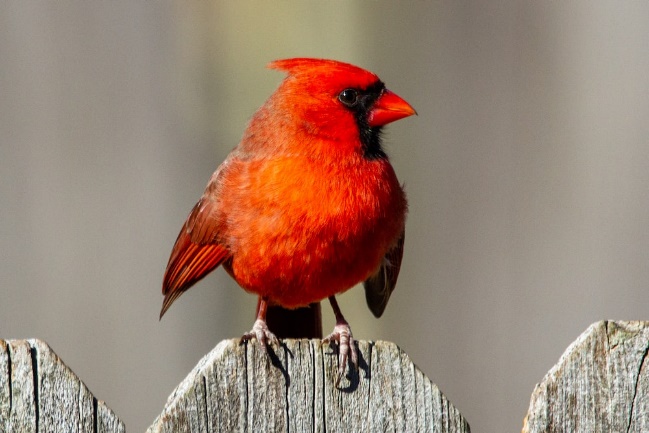
A sound that brings me joy is one I get to hear most every day. For me, a silver lining of COVID and having to work from home much more is that now I listen to the trilling of the Northern Cardinal as I sit on the couch with my laptop and work. Next to the couch are large windows with trees outside, so all day birds flit in and out and squirrels run up and down them. But the sounds the Northern Cardinal makes are loud and distinctive and keep me happy as I plug away at my work. I’ve included a sound file to The Cornell Lab of Ornithology’s Macaulay Library so you can hear the sound if you’d like.
Texture: What’s a texture from nature in your past that brings you joy? Or, as you are out and about in nature, what do you feel that brings you joy?
A texture I’ll never forget is a once-in-a-lifetime moment when I was a young teenager. My family would spend several weeks at our cabin in northern New Mexico, and as I was passionate about all the animals there, I would spend hours on our porch getting the chipmunks, squirrels, and birds used to me until I could hand-feed the chipmunks and squirrels and get the hummingbirds to sit on my finger to drink from the feeder. Once, a female ruby-throated hummingbird was sitting on my index finger while she drank, and I reached up my thumb and pet her breast several times. Her feathers were so soft; I almost couldn’t feel them. What an amazing moment I’ll never forget!
“Female Ruby Throated Hummingbird summer neighbor” by NE Pennsylvania Nature Lover. Flickr.com Creative Commons.
Taste: What’s a taste from nature in your past that brings you joy? Or, as you are out and about in nature, is there a taste that brings you joy? Be careful with this one!
At my family home, there was a honeysuckle vine on the fence by the gate to the backyard (we had a Japanese honeysuckle vine (Lonicera japonica), one of the edible honeysuckle flowers). One of the best memories of summer was that vine blooming. My brother and I would each take a flower, hold the top of the flower with one hand, pinch the bottom of the flower with our other hand, and gently pull out the stamen so we could capture the sweetest nectar. We were firm believers that the yellow flowers were much sweeter than the white ones and were forever testing our theory!
“Japanese Honeysuckle 02, Patapsco Valley State Park” by David Heise. Flickr.com Creative Commons.
– Elizabeth Pass, Cohort VI, for the July 2023edition of Headwaters Highlights
Photos of Anna Maria, Ann and Peggy by Elaine Smith, June 14, 2023.
Native Plant Brown Bag Presentation, Edith J. Carrier Arboretum
On June 14, Anna Maria Johnson gave a great presentation on gardening with native plants at the Edith J. Carrier Arboretum at JMU. The room was packed with avid listeners. There were several HMNers in attendance (Ann Murray, Peggy Plass, Dave Forrer and Elaine Smith).
After a nice introduction from the Arboretum Director Jan Sievers Mahon, Anna Maria started with a plug for the native plant gardening guide. Then she advocated for thoughtful use of the land, in order to share it with all the other “people” (plants, animals, bugs etc.).
Key points she covered included:
Ecological Gardening, which means choosing plants that feed and shelter wildlife, improve the soil and protect the water, as well as redefining “beauty” to include less pristine specimens.
Some considerations: removing invasive species; using straight species vs cultivars; maximizing diversity; considering eco-regions; “mild, styled or wild” options of approaches, and not needing to be perfect.
She discussed four kinds of diversity: species, structural, functional and genetic. She also urged us to “learn and edit our landscape, rather than trying to control it.”
All in all, it was a wonderful presentation to a large, receptive audience!
– Elaine Smith, Cohort IV, June 2023
Reprinted (and adapted) from the June 2023 issue of the Shenandoah Chapter of the Virginia Native Plant Society’s newsletter, thanks to Elaine!
by Elizabeth Pass, Cohort VI for the June 2023 issue of Headwaters Highlights
Happy June and welcome in summer!
In my ramblings around the internet, I found a fascinating site you may be interested in. I know it’s become a rabbit hole for me!
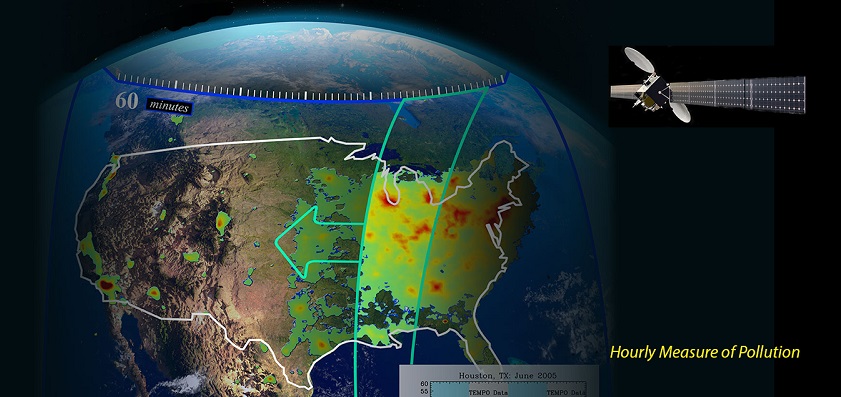
TEMPO (Tropospheric Emissions: Monitoring of Pollution) is a UV-visible spectrometer instrument, the first space-based instrument to monitor air pollutants hourly during the day across North America. A Smithsonian Astrophysical Observatory (SAO)/NASA venture, TEMPO will “…collect high-resolution measurements of ozone, nitrogen dioxide, and other pollutants….” Under the link TEMPO Project, Data, there are a couple of options/links to view the recent data from TEMPO. Be sure to check it out and see how the Valley is doing! If you are interested in keeping up with the TEMPO Project, be sure to join the TEMPO Early Adopters Community Mailing List. You will need to get a NASA Earthdata account to sign up for the newsletter.
Image from the TEMPO website accessed May 2023
Even better, because you got a NASA Earthdata account to sign up for the TEMPO Early Adopters Community Mailing newsletter, you get access to all of NASA’s collection of Earth science data. The areas you can spend hours and hours in rabbit holes are many:
Atmosphere
Biosphere
Cryosphere
Human Dimensions
Land Surface
Ocean
Solid Earth
Sun-Earth Interactions
Terrestrial Hydrosphere
I’ve also found some fiction and non-fiction reading you may enjoy as we settle into summer.
Fiction
Demon Copperfield, Barbara Kingsolver, 2022 – If you enjoyed David Copperfield by Charles Dickens or never had a chance to read it, you will most likely enjoy this novel, winner of the 2023 Pulitzer Prize for Fiction. That’s because Dickens’s novel is the inspiration for Demon Copperfield, set in the southern Appalachia mountains and about a boy being raised by a single, poor, teen-aged mom.
The Lost Journals of Sacajewea: A Novel, Debra Magpie Earling, 2023 – Finally, the story of Sacajewea from an Indigenous woman’s point of view. This multi-awarded novel imagines Sacajewea’s story, giving her voice to her own history. Powerful and beautifully written.
This stunning memoir is all at once many things: the telling of an amazing life story, the discoveries of frontier exploration in the deep ocean, the illustrations of never-told marine behaviors and animals, and the revelations of communication through marine bioluminescence.
– Elizabeth Pass, Cohort VI, for the June 2023 edition of Headwaters Highlights