Category: Projects

  • Parks for Pollinators September BioBlitz

    Parks for Pollinators September BioBlitz

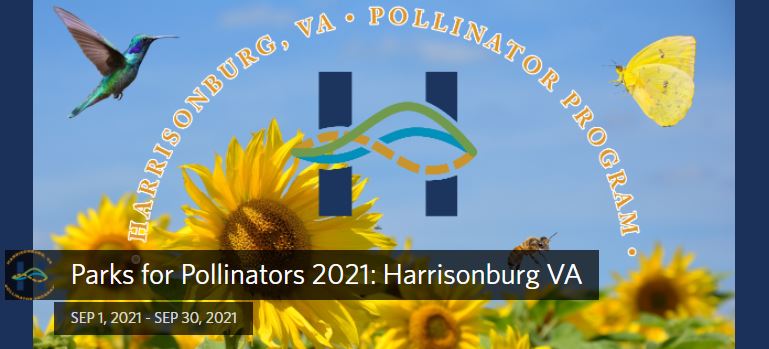
    Harrisonburg City’s Public Works department is hosting “Parks for Pollinators: Harrisonburg VA,” a BioBlitz event all September long. 

    “In celebration of pollinators, join us all September long to create a snapshot of the variety of local wildlife. Work alongside City staff to advance the health of local pollinators, which are essential to our ecosystem. Participants will use an app called iNaturalist to take pictures of plants, insects and animals; see what wildlife is present all during the month of September, and contribute to a scientific inventory of pollinator species.” – Harrisonburg City Department of Public Works

    Headwaters Master Naturalist Trevor Chase, Cohort VII, who is a Harrisonburg High School Environmental Science & Ecology teacher, is helping HMNs participate through a “pop-up” BioBlitz at HHS on Thursday, September 9:

    “As part of Harrisonburg City’s bioBlitz month, Harrisonburg High School is hosting a bioBlitz to measure the biodiversity around the school. Science teachers will be bringing their classes out to conduct the bioBlitz, and we could use the help of Master Naturalists to get students logged into iNaturalist, ID unknown organisms and talk about the value of biodiversity and pollinators.”

    If you can help, reach out to Trevor at: tchase [at] harrisonburg.k12.va.us.

    If you can’t join the pop-up BioBlitz at Harrisonburg High School described above, there are other events in the planning where HMN members are needed to add their expertise, and for which you can earn volunteer hours. These include a chance to work with elementary school students at various Harrisonburg schools, at least one event at JMU and possibly some pop-ups at some city parks. Stay tuned for further details via emails from HMN or check what the city says on their Facebook page.

    And whether or not you participate in any of the events, you can still help Harrisonburg’s BioBlitz by being a Citizen Scientist. Load iNaturalist on your smart phone (if not there already) and join Parks for Pollinators 2021: Harrisonburg VA. Then anytime during the month of September take pictures of pollinators in your backyard, at your neighbors, in parks or other green spaces, on your way to the store or anywhere else in the City of Harrisonburg. Your sighting will then be added to Harrisonburg’s database and assist the Greenspace folks in making the city more attractive for pollinators.

    – Art Fovargue, Cohort VII


    [How] to join the project. On your smartphone, there is a button in the bottom right of the app that has three dots and says More. If you click on that it will bring up two options. Select Projects. From there you can use the search feature in the upper right corner and type “Parks for Pollinators 2021: Harrisonburg VA” This will bring up our project where you can join it. Once you have joined a project, any observations that you make which satisfy the conditions of the project (in September, in the City, and a pollinator) will automatically be added to the project.” – Keith Thomas, Harrisonburg Public Works


    Parks for Pollinators is a national campaign to raise awareness and community involvement in the pollinator crisis through local parks and recreation and likeminded organizations. – National Recreation and Park Association

    Read about Harrisonburg’s Pollinator Program which began in 2017: The Buzz in the Burg

  • Teasel Cutting at Cowbane

    Teasel Cutting at Cowbane

    Surrounded by industrial plants, farm fields, and encroaching subdivisions, Cowbane Prairie Natural Area Preserve in Stuarts Draft is an oasis for wetland loving wildflowers. It is one of 65 protected Natural Area Preserves which are scattered around Virginia and managed by the Virginia Department of Conservation and Recreation’s (DCR) Natural Heritage Program. The program’s South River Restoration Projects Specialist Steve Gaines invited HMNs and fellow outdoor enthusiasts for a recent morning of cutting seed heads off the invasive common teasel plants at the Cowbane Preserve. Teasel is a threat to the native plant population here that the Natural Heritage Program is striving to protect. While accomplishing this task, we were treated to a generous dose of learning and appreciation for this area’s increasingly rare ecosystem.

    “On the western slope of the Blue Ridge in the Shenandoah Valley, Cowbane Prairie NAP protects outstanding examples of wet prairies, mesic prairies, and calcareous spring marshes which were once common natural communities in the Shenandoah Valley. These communities have been reduced over the years by agricultural and industrial development. Eleven rare plants including queen-of-the-prairie (Filipendula rubra), blueflag iris (Iris versicolor), and marsh-speedwell are found at the preserve.” – https://www.dcr.virginia.gov/natural-heritage/natural-area-preserves/cowbane

    Seven HMNs and a fellow nature enthusiast met Steve at the Cowbane Preserve on Saturday morning, August 14. Its public inaccessibility that helps protect it gave us a bit of a late start, but we made up for it. Equipped with pruning clippers and buckets and (mostly) protected from the briars with long sleeves and pants and gloves, we strode into the fields, along the paths, and around a seasonally wet area where the tall teasel stalks were congregated to remove their seed heads and hopefully prevent this year’s seeds from being sown. As our buckets filled, we emptied them into big black plastic bags provided by Steve for secure disposal.

    Our efforts will likely be followed up in the spring by DCR staff conducting spot herbicide spraying of the rosette leaves that are the first year growth of teasel.

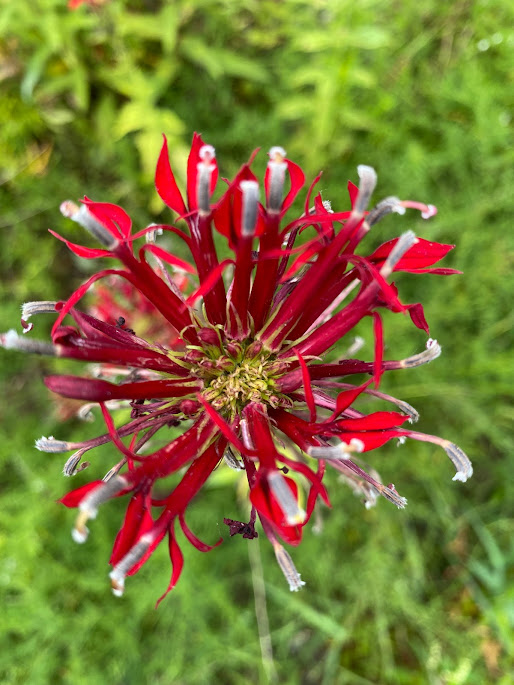
    Steve led us on side wanderings to find cardinal flowers just past prime bloom, swamp rose mallows in full bloom, queen-of-the-prairie non-longer blooming, and a host of other plants. We learned how to identify native viburnums and persimmon trees, round rushes and sedges with edges, and about the lesser known but tremendous invasive threat of brown canary grass that has become well established at this preserve, outcompeting native cat tails. With a little luck, we may be invited back in June to experience the queen-of-the-prairie in its showy, full bloom.

    Thanks to Steve for organizing this interesting outing for us!

    Adrie Voors, Cohort II, August 2021

    The photo at the top of this post is of Ann Murray, Cohort II, at Cowbane Preserve on August 14, 2021. Photo by Jeanine Botkin, Cohort VII.

    The hot and happy crew at Cowbane Preserve. From L to R, John Bauman, Jeanine Botkin, Phil Henning, Angie Cromer, Adrie Voors, Lora Steiner, and Ann Murray seated in front. Not pictured is Karen Milne. Photo by Steve Gaines with John’s phone.

    Click on a photo below to start a slide show to see them better. Thanks to Jeanine Botkin and Lora Steiner for the photos!

  • HMNs Help with Heat Watch Project

    HMNs Help with Heat Watch Project

    Carl waiting for the stroke of 6am to start his route on July 15.

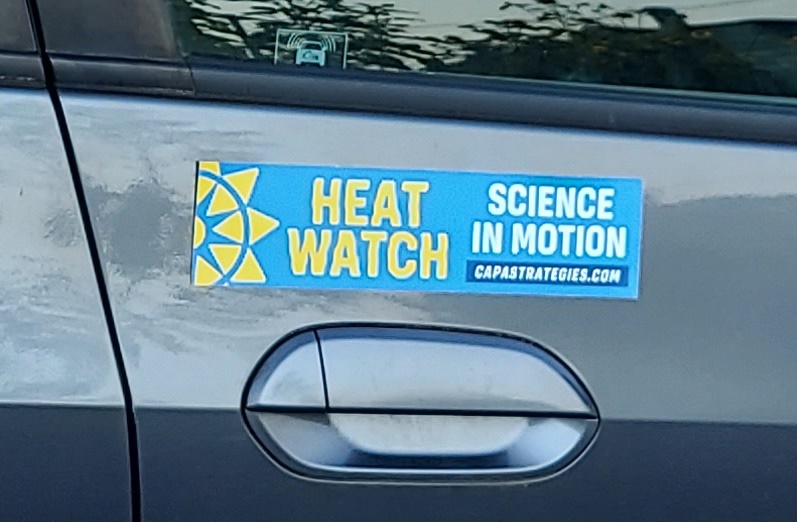
    On July 15, HMNs Adrie Voors, Art Fovargue, and I, along with other volunteers, participated in the “Heat Watch” project, a nationwide program for heat mapping in local communities. Our job was to drive around a preset 20-mile route with a temperature sensor attached to the passenger’s side window of our car. The device measures the temperature once a second and stores the data. Once we finished and returned the equipment, the data were downloaded and analyzed by CAPA (Climate Adaptation Planning and Analytics), with the goal of locating “heat islands” in our community. All together, there were four routes, each one driven three times, 6-7 AM, 3-4 PM, and 7-8 PM.

    The effort in the Harrisonburg-Rockingham area was coordinated by Bridgewater College student Trevor Brooks as part of an ongoing research project. Nationally, there were 13 Heat Watch campaigns in 11 states. The effort in Virginia was undertaken by the Virginia Foundation of Independent Colleges, including Bridgewater College and 12 other Virginia colleges, who took measurements in 10 communities throughout the Commonwealth.

    As the climate warms, we know that people and places will be impacted differentially. The Heat Watch project is one attempt to try to quantify how these effects are distributed, with the goal of mitigating or adapting to them.

    Carl Droms, Cohort II, July 2021

    Below left, Carl and Adrie show off the temperature sensor attached to the passenger window of Adrie’s car. On the right, Art is in the navigator (passenger) seat of his car for the team effort he shared with his wife Kathy.

    More about the Heat Watch project HERE.

  • Volunteering at the Edith J Carrier Arboretum

    Volunteering at the Edith J Carrier Arboretum

    HMN Project Spotlight by Dave Forrer on his work at the Edith J Carrier Arboretum at JMU

    I was asked to write an article about my experience volunteering at the arboretum…and I’m pleased to do whatever I can to support this wonderful natural gem we have within the sprawl of eastern Harrisonburg. 

    Although I had enjoyed walking through the arboretum many times since moving to the Valley in 1979, I had never considered volunteering there until my Master Naturalist Cohort (2018) was given a tour by the arboretum’s director, Jan Sievers Mahon. During the tour, Jan revealed some fascinating facts new to me about forests and trees and recommended a couple of books that inspired me to learn more…and to become a volunteer there. Another new VMN and I (and later, another fellow “cohorter”) joined two other retirees who had just started volunteering there. That team, which is now called the Forest Stewards, has slowly grown to eight or nine people, although it’s not unusual for only four or five volunteers to show up due to conflicts with our personal schedules. The Forest Stewards work for 2 – 3 hours one day per week…usually Tuesday or Wednesday morning depending on the weather. Our tasks include removal of invasive plants (and even some understory native plants to make room for others), spreading wood chips on paths, constructing water bars, and planting trees, shrubs, riparian plants and occasionally wildflowers. We also help with setting up and breaking down the arboretum’s plant sales.

    The work isn’t exactly glamorous, but it’s great exercise, great camaraderie and it guarantees a couple hours of Shinrin-Yoku (forest bathing) per week! Admittedly, sometimes I have to make myself stop working……….just to enjoy the forest’s gifts and wonders. Another benefit of volunteering at the arboretum is that we’re always learning about new plants and plant care from the arboretum’s experts. And I have wonderful new friends now from the group too!  

    At least three members of the 2018 Cohort, including myself, also signed up to be docents, leading tours through the arboretum for grade-school classes. Of course, that was suspended when the “damndemic” hit; but hopefully, it will start up again in the fall. For some of these kids, it’s their first experience in the woods and it’s truly a joy to watch the amazement in their expressions.

    The friendly staff at the arboretum are always looking for additional volunteers…especially master naturalists, because we’re all nature nerds and love what the arboretum has to offer. Even with all the truckloads of invasive plants we’ve removed, there is no chance that we’ll work ourselves out of a “job.” And the more docents, the better (to spread out the load). Anyone interested in volunteering at the arboretum can contact Janis Traas (Arboretum Volunteer Coordinator) at 540-568-3194 or traasjm [at] jmu.edu. Or give a shout-out to me, Dave Forrer, at davidforrer07 [at] gmail.com. A woodland sanctuary may be just the thing you need to bring to your life and to your volunteering experience.

    David Forrer, Cohort VI, June 2021

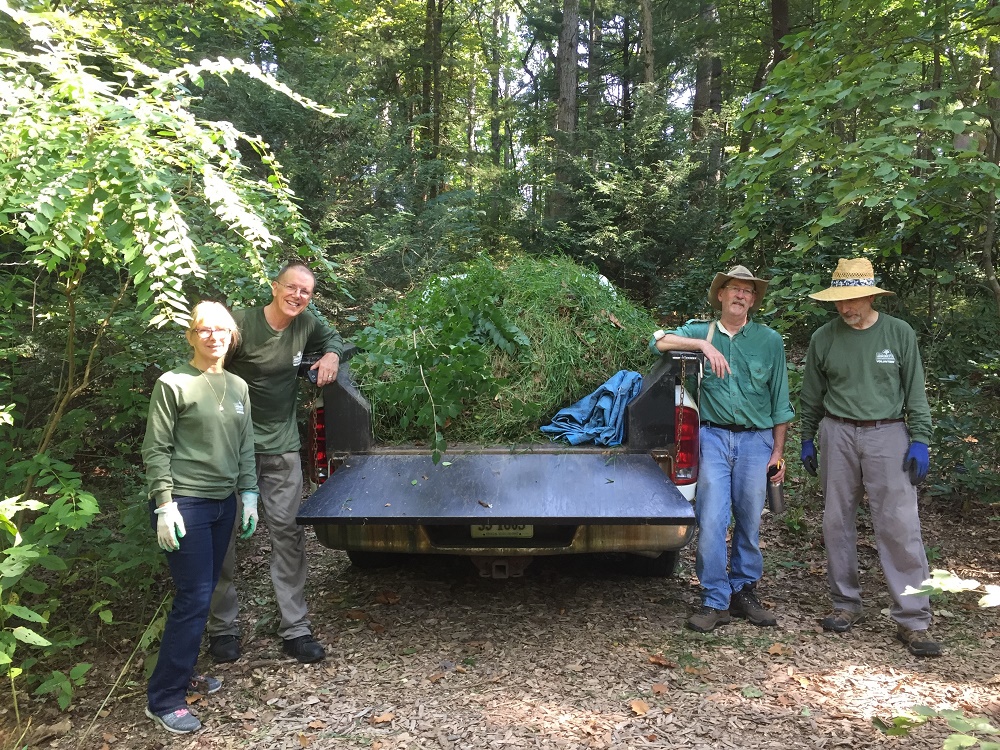
    The photo at the top of this post shows HMNs Burt Blessing and Dave Forrer on the right with fellow arboretum volunteers Karen Craun and Craig Chandler on the left. The truck bed is full of invasive stiltgrass they have removed.

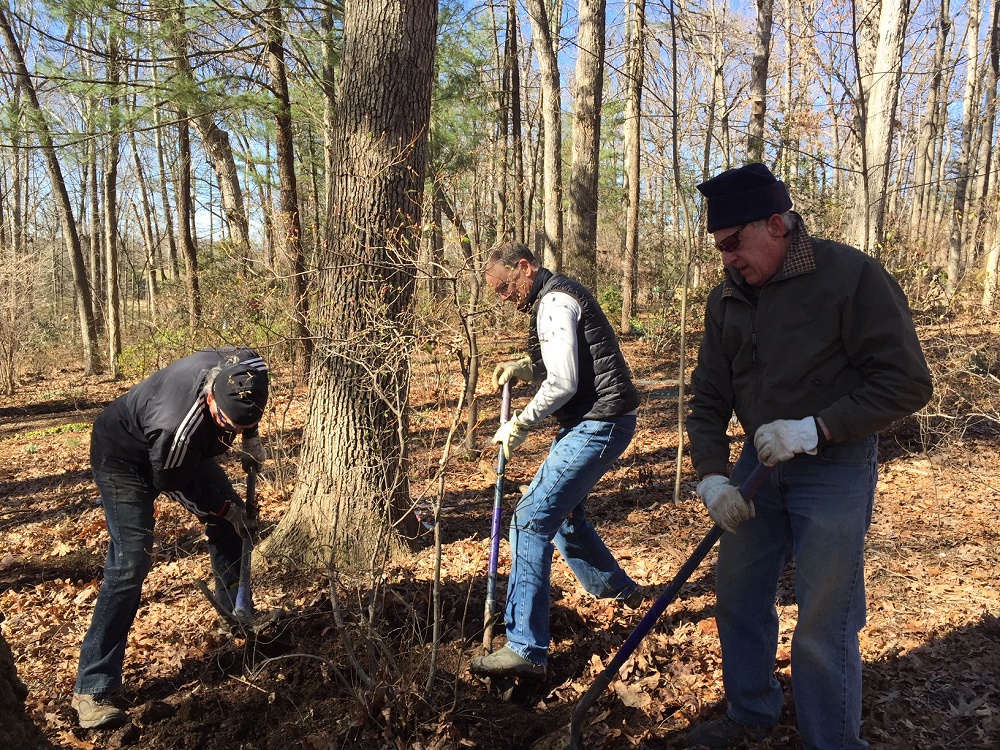
    The photo on the left below is (L to R) HMN Lincoln Gray with two fellow Forest Stewards Craig Chandler and Mark Briehl. The photo on the right is of a group of young people getting a tour of the Arboretum “forest”.

    All photos courtesy of the Edith J Carrier Arboretum.

  • Heat Mapping

    Heat Mapping

    Bridgewater College student Trevor Brooks is looking for volunteers to help collect data for a heat mapping project named Heat Watch.

    “We aim to collect highly detailed near surface air temperature data of different areas around Harrisonburg and Bridgewater. The data collected will relate land use and topography to temperatures, and the projects’ results should have implications in public health, climate change mitigation, equity, social justice, and emergency preparedness. … we are looking for volunteers who would be willing to help us with the collection of data on one day in July (between July 11 and 18). All it would involve would be driving and or navigating a predetermined route.”

    “Volunteers will either drive or navigate their assigned route at least once. We need each route driven 3 times, during the periods from 6-7 A.M., 3-4 P.M., and 7-8 P.M. We understand people have busy lives which is why we are asking for many volunteers to fill in scheduling gaps. It is ok if you can only participate in one of those time slots!”

    If you are interested in getting involved, please email, text, or call either Trevor Brooks tbrooks [at] eagles.bridgewater.edu ; 443-924-7938 or Dr. Kreps tkreps [at] bridgewater.edu ; 540-209-7938

    More about why this project is needed, from the Heat Watch Volunteer Packet

    “As the effects of climate change become more and more apparent, we can expect to see extreme weather patterns more frequently. This includes heat waves such as the one that hit the west earlier this summer. Urban areas are highly susceptible to adverse heat waves due to their concentration of man-made materials that are highly effective at absorbing and trapping solar radiation. This causes urban areas to experience a phenomenon called Urban Heat Islands (UHI) which is simply when an urban area is hotter than the surrounding rural areas.

    The magnification of summer heat by UHIs can have many adverse effects both for humanity and our surrounding environment. According to the CDC more than 600 people die from excessive heat every year. Excessive heat also is related to a greater demand for energy which can stress local power grids and can even lead to rolling blackouts in some areas. Heat has also been linked to an increase in smog and other pollutants that can be hazardous to human health. Aquatic ecosystems can also be harmed, as temperatures of stormwater runoff warms streams and stressing ecosystems.

    There is growing evidence that UHIs have the greatest effect on lower socioeconomic groups and minorities. This is due to the unintentional effects of urban planning. Lower socioeconomic areas tend to have less green space and greater housing density. These factors increase an area’s ability to absorb and trap solar radiation thereby increasing the surface temperatures.

    This project aims to map the UHI effect in Harrisonburg and Bridgewater to identify the areas it is most intense. The data collected will end up becoming open source, in the hopes that it inspires future research and can assist city planners and politicians in building a more equal urban life for those less fortunate. This effort is one that is national, being done in 11 other cities partnered with NOAA and Climate Adaptation Planning Analytics (CAPA). With YOUR help we can generate data that will shape the future of Harrisonburg and Bridgewater and create a more just future and resilient community.”

    Find even more about this state-wide study from The Virginian-Pilot on June 3rd HERE.

    Please note that the approval of this activity for HMN volunteer service credit is pending. (Update: project was approved and is listed in our Better Impact volunteer management system.)

    As of June 30, volunteers are still needed!

    Adrie Voors, Cohort II, June 2021

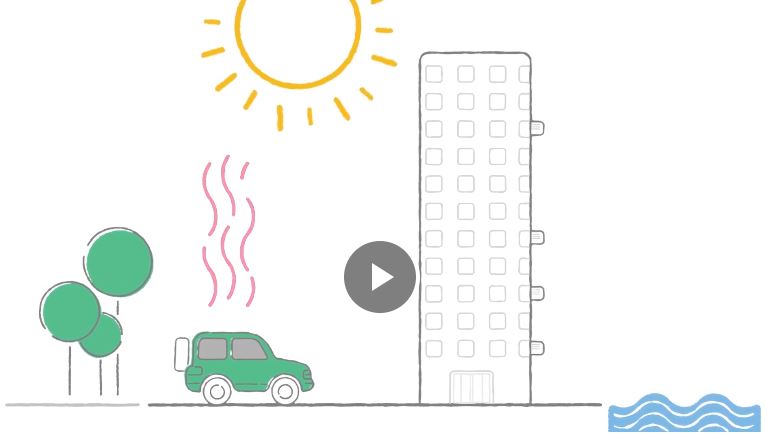
    The graphic at the top of this post was taken from the Heat Watch volunteer training video HERE.