Category: Projects

  • Virginia Working Landscapes

    Virginia Working Landscapes

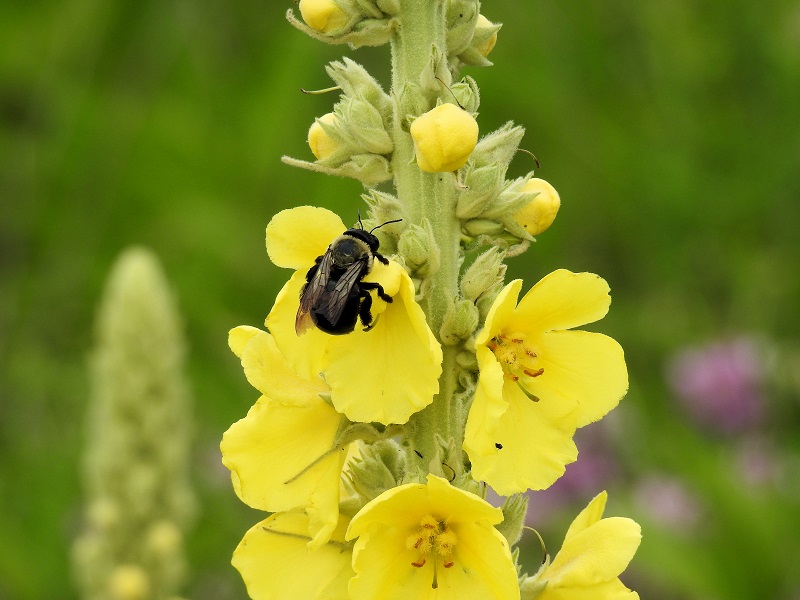
    bumblebee.PP

    Working on the newest approved project for Headwaters Master Naturalists Chapter definitely has some great moments—if you like tromping around in a field with grasses and wildflowers growing up to your shoulders, and using your GPS to locate an insect trap hidden in the midst of all that beautiful vegetation, then the new Virginia Working Landscapes (VWL) project might be a perfect fit for you!

    The HMN Projects Committee approved VWL projects for our membership in May of this year and I’ve been working on their Bee Survey for the past month.  Virginia Working Landscapes is an organization which provides great opportunities for citizen science in a number of different projects every year.  Citizen scientists, many of whom are members of Master Naturalist chapters throughout the state, can work on a variety of bird, plant, pollinator, or riparian surveys which take place each year.  Associated with the Smithsonian Conservation Biology Institute (SCBI), VWL provides amazing training opportunities and the survey work itself takes volunteers to some of the most beautiful spots in our beautiful state!

    VWL works primarily with private landowners (hence “working” landscapes) to “promote the conservation of native biodiversity and encourage the sustainable use of working landscapes through research, education and outreach” (VWL Mission Statement).  I’ve been working on the bee survey this summer—my site is in Luray at the beautiful White House Farm.  Every two weeks from early June through late July, I’ll make a visit to the site to empty the bee trap that’s placed there.  I admit that when I attended the training for the project in May, I was troubled by the fact that I’d be collecting dead bees.  Everyone else at the training actually seemed pretty unhappy about that too, but when the researchers in charge of the project began to talk about the usefulness of the data that’s been collected over the past two years (they’ve already learned great things about the presence—and absence—of various species of bumblebees in the Valley, and being able to document that this has some definite benefits for conservation efforts), I felt a bit better.   Plus the training itself was amazing—I learned so much about bees in the time I was there, and SCBI has made other training opportunities available to volunteers throughout the summer on a variety of topics.

    There are, however, a number of challenges to doing this work.  First is just finding the trap—VWL Project director Olivia Cosby sent me GPS coordinates for my bee trap before my first visit, and my assumption was that it would be pretty easy to find.  Ha.  White House Farm is a really big place, and while there are pathways which wind through the experimental fields there (where the trap is located) the trap itself is, of course, not on a path.  So I definitely got some practice with using the GPS on my phone on my first visit!  On my second visit, the pole supporting the trap had actually almost fallen over, so it wasn’t visible at all from the path.  There was a definite “treasure hunt” aspect to that visit, as I literally had to use the GPS coordinates to bring me directly to the spot where the trap was before I could see it!

    Then, there are the ticks.  I usually pull them off myself when I feel them crawling around on the drive home and throw them out the window.  All while trying not to panic and wreck the car.  I really don’t like ticks.  I guess they come with the territory of lush tall grasses though….Good thing we master naturalists are made of strong stuff….

    In spite of the challenges, I can hardly imagine a more fun project.  First, White House Farm is like heaven—amazing fields of wildflowers, all the birds that you can imagine in such a spot, with the South Fork of the Shenandoah River meandering along just on the edge of the field where my trap is located.  There are butterflies (actually a part of the project too—after I empty the trap, I do a 20 minute survey of the species of butterflies that are found in the immediate area around it and get to report those data as well), dragonflies, bunnies, rolling hills—what more could a master naturalist want?

    Right now, there are two packs of bees from my trap (preserved in alcohol) stored in my freezer (which I see as another advantage—who doesn’t want the opportunity to tell family or guests to be careful of the bees in the freezer when they open the door?).  I’ll deliver those to the Smithsonian Conservation Biology Institute up in Front Royal in the next week or so.  I still have two more visits to make before the end of the survey, and find myself already feeling sad about completing the work.  It’s an amazing project, and speaks to all of the reasons why I wanted to be a Master Naturalist in the first place.

    If you’re similarly inclined, I’d invite you to check out the VWL website—all of this summer’s projects are fully “staffed” so they’re not taking any more volunteers for this season, but next year is coming.   For more information you can check out the Project Proposal on the VMN-VMS website and/or take a look at some of VWL’s website materials here:  http://www.vaworkinglandscapes.org/about/citizen-science

    – Peggy Plass, Cohort IV, June 2016

    Photos by Peggy Plass

  • Arboretum Stream Planting Day Scheduled

    Arboretum Stream Planting Day Scheduled

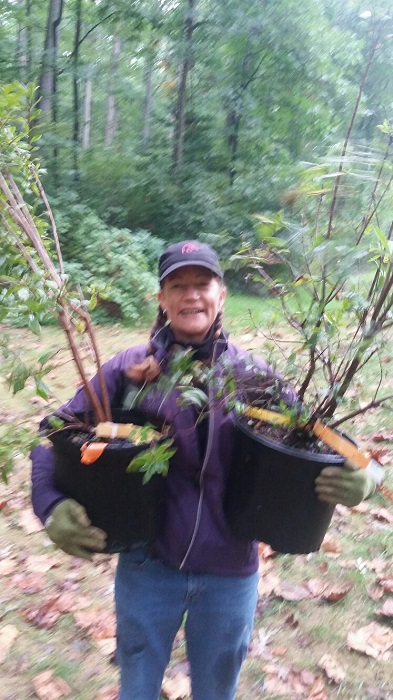
    Dwayne.CDThe stream restoration and storm water management project at the Edith J Carrier Arboretum at JMU continues and our Master Naturalists continue to contribute volunteer hours towards planting forbs, shrubs and trees and weeding out invasive species.

    On June 21, three Headwaters Chapter volunteers joined other Arboretum volunteers and staff at the sycamore flats area for a morning of planting and weeding. The site has been continually challenged by unusually large rainfall events soon after planting, but many of the plants have taken root and are starting to fill out.

    Become a part of the team of people called upon to help at future planting events by signing up under the Stream Restoration Project in the VMN-VMS website, https://virginiamn.volunteersystem.org.

    – Chip Brown, Cohort II, HMN Stream Restoration Project Coordinator

    Top photo of HMN Dwayne Martin by Carl Droms

    Photos below by Carl Droms and Chip Brown


    Kathy Byers.700
    The Edith J. Carrier Arboretum at James Madison University stream restoration continues and we have scheduled another planting day for Tuesday, June 21, from 9 am to 12:30 pm.

    Please sign up on the VMN-VMS calendar so we can let them know how many of us will be available.

    We will meet at the Pavilion at 8:45 so we can begin work at 9 am.

    Wear sturdy shoes and clothing that can get dirty.

    Optional items to bring:
    water, work gloves, sunscreen, snack, a favorite shovel or digging/planting tool.

    Please contact Chip Brown at cbrown2001 [at] gmail.com or 507-459-1839 with questions.

  • Scouting Tour of North River Birding and Wildlife Trail

    Scouting Tour of North River Birding and Wildlife Trail

    PeggyscoutingReddishKnobforBirding.wildlifetrail

    Headwaters Chapter is adopting the 10-site North River loop of the Virginia Department of Game and Inland Fisheries (VDGIF) Birding and Wildlife Trail (BWT) in response to VDGIF’s request for adopters. This involves four visits a year to each site to check on signs, VDGIF official businessparking, as well as noting and reporting bird species using eBird, and any other naturalist sightings with the iNaturalist app, easily loaded onto smart phones, or home computer, including photos for positive ID. VDGIF BWT coordinator Jessica Ruthenberg has indicated that we can be very flexible about which trails or areas we observe and hike. That can change seasonally, and with the interest of the monitor or team. We hope to bring new HMN students into this project. We used the provided vehicle signs “Virginia Master Naturalist On Official Business for VDGIF.”

    The main requirement for adoption is filling out the monitoring forms and returning them to Jessica Ruthenberg quarterly. For sites that are privately owned, there is also the request to contact the owners and reaffirm the relationship. This is not an issue with the North River Birding & Wildlife Trail, as most (and maybe all – we’re checking!) sites are on federal or state public lands.

    On May 15th, 2016, Peggy Plass, Betty Forrest and Sandy Greene drove the route on a cold and windy day, passing through snow flurries several times over the day. We filled out the forms as a baseline. We note that all these sites are listed as “hotspots” on eBird, and all have had data input this spring from a variety of individual birders. We also found that there is no cellphone connectivity from Verizon in several remote and high altitude sites.  Don’t forget, no gas stations along this route, and few restrooms.

    northloopmapsnip
    Click above for a Google map of the North River sites with information about each.

    MNR01 Silver Lake in Dayton.  We straightened the BWT sign there and wired it back to the post. There is already an eBird link: VA Dayton 2271, stocked trout waters, family and several other anglers present. Directional signs ok. Good to observe from the far north end where some natural vegetation is present.  Adopter: Peggy Plass

    MNR02 Paul State Forest.  We parked in the gravel pullout of Paul State Forest, which has a large sign, but no BWTrail or number sign. Need to add parking to amenities. Directional sign from 257. Gate is open to hiking trail. This is a fee area; carry your DGIF permit or fishing license or other ID. BWT sign could be affixed to the large Paul State Forest sign.  Adopters: Betty and Bob Forrest

    MNR03 Switzer Lake is an outlier to the loop, at least driving. Directions are accurate, and there is a directional sign on 33.  Did not see BWT or number sign at the site. Need to watch for traffic on the entry to the lake, which is a steep and narrow rutted road, with blind turns and lots of recreational traffic. Great for observation on the way in, or alongside the lake. Potential adopters: Carl Droms and Adrie Voors

    MNR04 Hone Quarry.  Has directional signage, but no BWT or number sign at the campground area. Just driving through allows for good observation on either side of the road, although the meadow behind the CCC picnic shelter and trail along the creek are mentioned in the description, and the dam lake has great viewing.  Adopter: Sandy Greene

    MNR05 Briery Branch Lake.  No signs on site, but driving directions ok. SST toilet (sweet smelling toilet), big black racer snake outside it. Potential temporary adopter: Sandy Greene

    MNR06 Flagpole Knob.  Directions unclear, no signs noted, no internet access, very rough road used by 4-wheelers and jeep club.  We only went to the edge of the ridge from where the road turns right, just opposite of the left turn to go up to Reddish Knob.   Potential adopter: Jerry Hopkins

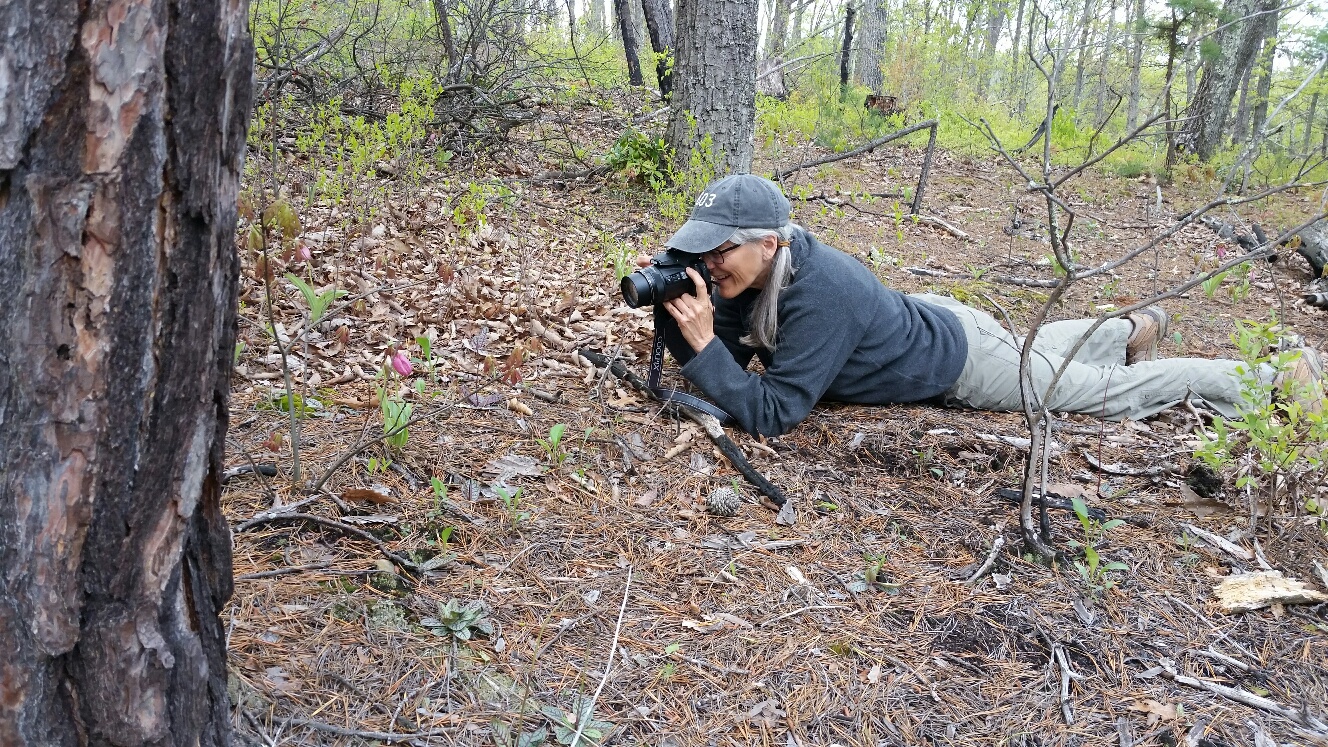
    MNR07 Reddish Knob.  We didn’t drive all the way to the top today, and didn’t see any directional signs for the BWT. Saw pink ladyslippers on the way up to the split in the road.  Potential adopter: Jerry Hopkins

    MNR08 Hearthstone Lake.  Access road “Little River” from Tilghman Road was rutted and not accessible. No BWT signs visible.  Potential adopter: Chip Brown

    MNR09 Todd Lake.  No BWT signs visible. Fee area. Nice bathrooms, camping, picnicking, parking area.  Potential Adopter: Chip Brown

    MNR10 Natural Chimneys Park.  No signs on site, directional signs from both directions though. HMN Pollinator Garden there looks great. No day fee.  Potential adopters:  Kelly Rourke, as park manager; Sophia Cliffe

    You can see the stops on the loop from the Department of Game and Inland Fisheries’ website HERE.

    Notes to DGIF:  We will be glad to put up the site signs if you send them. Most places have a logical other signpost to attach it to. Next monitoring should be mid July. We thought that suggesting a week mid month with weekend on either side would be a good monitoring target – in July, October, January and April. Sandy will send a prompt out to monitors on the first of each monitoring month, and will ask for any change in baseline data. She will also send vehicle signs and monitoring forms to monitors, and she and Peggy are happy to meet with anyone to practice eBird and iNaturalist data entry. Both apps are very user friendly. We hope to continue this data search and entry education as Continuing Education for all HMN’s.

    We would love to recruit more monitors, and create teams, including the bird club members who are already feeding eBird data from all these sites.

    Notes by Sandy Greene  540-487-1224

    VBWTwebinar

    Click on the power point image at left for the March VMN webinar with everything you need to know to participate in the Department of Game and Inland Fisheries Virginia Birding and Wildlife Trail adoption project. Be patient, the webinar may be slow to load up. You can also find it through the VMN Continuing Education Resources page here.

  • SNP/HMN Spring Clean-up

    SNP/HMN Spring Clean-up

    SNP5.10.16.am.4

    Shenandoah National Park/ Headwaters Master Naturalists Spring Clean-up

    With 2016 being the National Park Service’s Centennial year, Shenandoah National Park will have a marked increase in visitation with folks coming from all over the world to take in the beauty of the Shenandoah Valley.  A trip along Shenandoah’s Skyline Drive offers visitors stunning views of our majestic mountains and vistas. Unfortunately, increasing garbage at our overlook and trail head areas is marring that beauty. This is a wonderful opportunity for the Headwaters Master Naturalists to assist SNP in removing the unsightly trash from these highly visible areas and leave only the breathtaking beauty for all to enjoy.

    – Margaret Speicher
    Natural and Cultural Resources Volunteer Coordinator, Shenandoah National Park
    HMN Cohort III

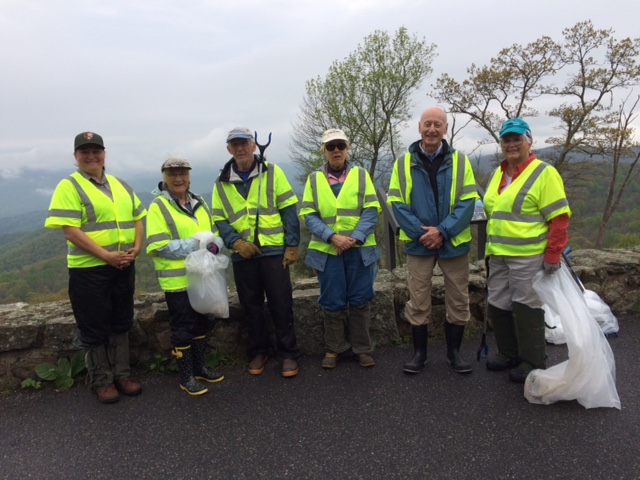
    May 10th, 2016, a trash-hating group of Headwaters Master Naturalists met Volunteer Coordinator, Park Ranger, and member of our group, Margaret Speicher, at the Shenandoah National Park.  The group included Betty and Bob Forrest, Jerry Hopkins, Ginny Joseph, RoxAnna Theiss, and Ann Murray.  Margaret reviewed safety rules and directions, distributed snake gaiters, trash bags and my favorite: long handled trash grabbers. I found those grabbers could pick up something as small as an ugly cigarette butt!

    As we picked up trash, we observed lovely wild flowers such as Trillium.  We headed north as far as Dark Hollow Falls, working at all the parking areas and overlooks.  The weather was so pleasant and cool that we didn’t spot a single snake!  Margaret brought us fruit to keep up motivated and we later enjoyed a picnic lunch.  Some continued picking up after lunch as the mist rose circling the mountains and I headed home.

    Anti tick tips:
    Shenandoah Park recommends spraying your long pants with 0.5 % permethrin, which can be obtained from Walmart.  Let the clothing dry before wearing. Try the farm supply stores, too since it is used on animals.  Be sure to inspect your body thoroughly using a mirror for the hard to see spots.  Remove tiny nymphs by brushing your pants with a lint roller.  You can use this on your skin, too.

    – Ann Murray, Cohort II, May 2016

    Top photo left to right: Margaret, Betty, Bob, RoxAnna, Jerry and Ginny, by Ann Murray

    Thanks to Ann for sending in these photos too!


  • Wildflower Walks 2016 Photos

    Wildflower Walks 2016 Photos

    BP.cd.crop

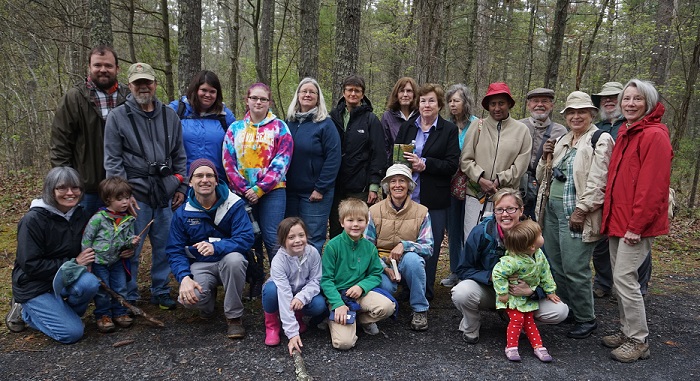
    Shenandoah Mountain Wildflower Walks 2016 enjoyed a record turn out and pleasant weather. Thanks to the dozen Headwaters Master Naturalists and the 47 wildflower enthusiasts who joined us for the 2016 Shenandoah Mountain Wildflower Walks on April 30th!

    Though the weather threatened rain, that was no deterrent to seeing some of the great spring wildflowers of Braley Pond, Hone Quarry, and North River Gorge. Though our wildflower numbers and species are still being tallied, some highlights of the day include seven violet species*, wild yamroot, pink ladys slippers, yellow star grass, wake robin trillium, whorled pogonia, heartleaf, jack-in-the pulpit, and (a perennial favorite) fringed polygala.

    Top photo is from the Braley Pond hike by Carl Droms. More of his photos from Braley Pond here:


    Friends of Shenandoah Mountain‘s Lynn Cameron along with HMNs Elaine Smith, Malcolm Cameron and Lacey Dean captured the shots below. See Friends of Shenandoah Mountain’s complete album of photos from the walks on facebook: Wildflower Walks a Success! Elaine has more photos on her Flickr photostream here.

    If you attended one of the walks and have photos to share, see here for sharing options.

    Find more photos on our facebook group page HERE.

    Feel free to post photos of the day to the fb page or to the 2016 Shenandoah Mountain Wildflower Walks album on the fb page.

    – Chip Brown, Wildflower Walks Coordinator

    * Click here (and on arrows) for Eric Jones’ photos of six of these found on the Braley Pond walk.

    More about the Walks from Friends of Shenandoah Mountain here: Wildflower Walks a Success!

    Stay tuned for the 5th annual Shenandoah Wildflower Walks on Saturday, April 29, 2017!