|
|
Category: Projects
-
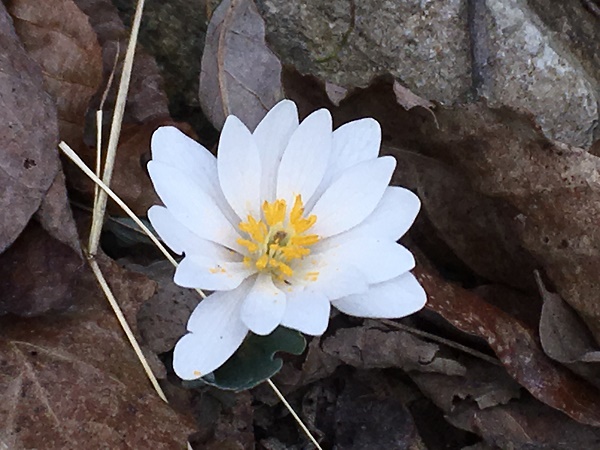
April 27th Wildflower Walks
-
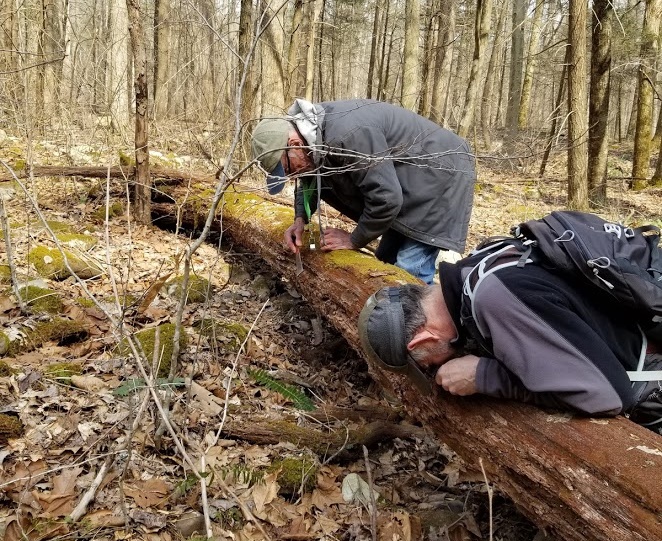
Pursuing Liverworts in Rockingham County

Liverworts are grouped with the mosses and hornworts forming the Bryophytes. All of the Bryophytes reproduce by spores and Liverworts are considered to be the simplest true land plants from which it is thought that all land plants evolved. As Liverworts have been understudied in the state of Virginia, the plant record database overseen by Virginia Botanical Associates is lacking in its county occurrence data. (http://vaplantatlas.org/). For a plant to become included and documented for a county occurrence record, a specimen of that plant has to be collected (rare plants may take different treatment), preserved, identified if possible, and sent to one of the Virginia herbariums.
Upon my learning that Bryophytes have only been sporadically collected in Rockingham County, and mainly mosses at that, it was with that thought that a Liverwort collecting foray should be taken since the opportunity presented itself. Land access permissions must always be obtained which can sometimes be difficult and time consuming, and David Forrer (Cohort VI) was able to get that (via Rebecca Stimson – also Cohort VI) from the Harrisonburg Parks & Recreation folks for the City of Harrisonburg land. So one recent afternoon, David, John Bauman (also Cohort VI!), and I set out to scout around the land bordering the Skidmore Fork and Dry River, about 2 miles downstream from Switzer Dam.
To find and be able to see Liverworts, a loupe is a must-have piece of equipment since the plants tend to be very tiny. And many times it takes magnification to be able to tell them apart from small lichens and mosses. Once the search began, it didn’t take long for us to find different species. With Liverworts’ size they are vulnerable to desiccation, so it’s paramount that they remain moist to keep from drying out. So you search in places that may tend to remain wet. We found them on tree bark, along the wet soil of the stream, growing on roots that stayed moist along the stream, and on certain rocks. I know a good number (maybe nine?) of the plants that we found and collected that day will prove to be county occurrence records once they are identified. When they are, I’ll let David know their names and if they’re records or not.
– John Bunch, VMN Historic Southside Chapter, March 2019
Top photo: John Bunch and John Bauman “liverworting” at Skidmore Fork on March 20, 2019. Photo credit: David Forrer
Top two photos below are both of the same liverwort found by the VMNs on their recent search of a Rockingham County forest. It is being identified for the Virginia Botanical Associates’ database. Bottom photo was not from the trip but demonstrates the growth pattern of some liverworts. Click on any of the photos to enlarge and create a slide show.
 Photo credit: David Forrer
 Photo credit: David Forrer
 Photo credit: John Bunch
 -

McCormick Farm Morning
 The Headwaters Master Naturalists had a great time at the Cyrus McCormick Research Farm in Raphine on Saturday, March 16! Led by Sandy Greene, Master Naturalists Derek Blyer, Peggy Plass, and myself (Emily Fugate), along with two guests, set off on this unexpectedly cold morning to plant trees along the short but beautiful path on this National Historic Landmark.
The morning had other plans for us, as the keeper of the trees, retired forester Charlie Huppuch, had not arrived, and the stream that runs parallel to the path had flooded over several times during this past wet fall and winter, leaving some muddy spots in need of gravel. We spread a lot of gravel then a bit later in the morning Charlie arrived and we got a chance to plant trees. We planted probably 20 trees including some River Birch and Lilac.
 We had a lot of fun along the way, including finding some owl pellets! We at first were not sure if they were someone’s droppings, but after some close investigation (with sticks) we noticed all the little bones inside! It is great to be able to volunteer with people that make it so much fun. Thank you everyone for a nice morning!
For those who have never been, the Cyrus McCormick Farm has been owned by Virginia Tech since 1954, when it was donated to the university from the McCormick family. Some call the McCormick farm the “birthplace of the agricultural revolution” because this was the place where Cyrus McCormick invented the mechanical reaper, a primitive version of the combine.
Today, Virginia Tech and Virginia Cooperative Extension use the facility for various agricultural research. The late David Fiske was very involved with the management of the property, and his presence is certainly missed there. Visitors are welcome during the spring, summer, and fall, and admission to the grounds is free.
I hope everyone can visit if they get the chance, and they can check out some of the trees we planted as well!
– Emily Fugate, Cohort VI, March 2019
-
Vernal Pool Monitoring

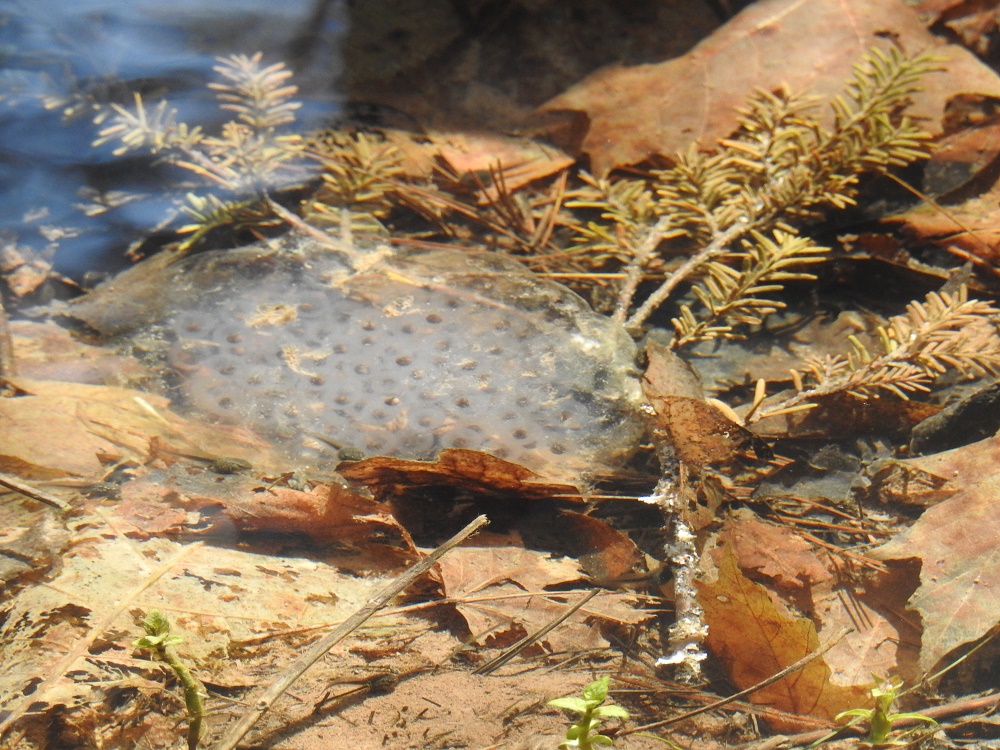
Last spring on the annual wildflower walk, I encountered a beautiful vernal pool at Reddish Knob, complete with gorgeous masses of eggs belonging to ….someone. No idea what species had left those eggs. This April, Headwaters is kicking off a new project for vernal pool monitoring with a day-long seminar which will empower participants to make just those types of species identifications!
The training session will be held on Saturday, April 6 and is a full day event. Dr. Anne Wright, director of Life Sciences Outreach at Virginia Commonwealth University in Richmond will be making a trip to Harrisonburg to do the training for us. Dr. Wright will be joined by Susan Watson, Fish and Wildlife Information Services Biologist with the Virginia Department of Game and Inland Fisheries headquarters in Henrico. The training will consist of two parts—we’ll begin with a classroom session (to be held at Bridgewater College) at 10:30AM on April 6. This part of the day will last until about 1:30PM (that includes time for a lunch break), at which point we’ll head into the field to do some identifications! Our field survey spot is Deep Run Ponds (about a half hour drive from BC). We’ll spend another 2-3 hours there looking at and identifying the species in those vernal ponds!
We’ll be sending out more information (for example, there are procedures for cleaning boots to be worn at Deep Run to be sure that we’re able to prevent contamination of the site) prior to the event, but you can already sign up for the training through the VMN VMS calendar. Meanwhile, if you have questions about the day, feel free to email me (plassms [at] gmail [dot] com) and I’m happy to share more information!
– Peggy Plass, Project Committee Chair, February 2019
Read about Vernal Pools from the Capital Naturalist Alonso Abugattas HERE.
Photos by Peggy

-
Trees for Harrisonburg

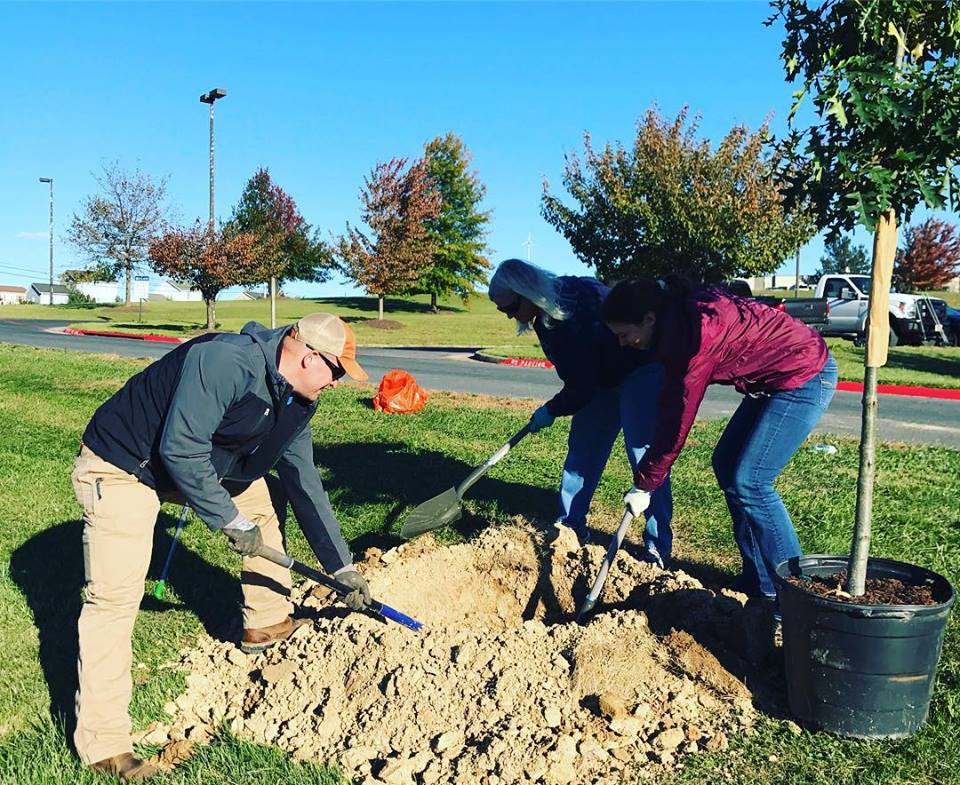
Recently, Headwaters Master Naturalists joined other volunteers to help the City of Harrisonburg plant over 50 trees. On Wednesday, October 24, Kathy McKenzie, Cohort V, planted trees around Thomas Harrison Middle School, and on Saturday, October 27, trees were planted along a small tributary at Heritage Forest and Gardens.
A variety native species were planted, including: pin oak, black gum, red maple, willow oak, and swamp white oak.
The tree planting events were part of an effort to get everyone more involved in the community, as well as increase tree canopy coverage and tree species diversity throughout Harrisonburg. These two events wrapped up a great season of planting – new trees were also planted along North Mason Street, on South High Street, and on Old South High Street next to the Martin Luther King, Jr Way bridge.
Thanks to Kathy for helping out!
– Rebecca Stimson, Cohort IV, October 2018
Photo at top courtesy of Rebecca shows Kathy and Rebecca (2nd and 3rd from L) planting a tree at Thomas Harrison Middle School on October 24.
Basic Training Cohort VI member Rebecca Stimson is the Stormwater Compliance Specialist for Harrisonburg. In that capacity she organizes events to engage the public in learning and stewardship towards protection of Harrisonburg’s local stream, Blacks Run, which is in the Chesapeake Bay Watershed. Other events which have involved HMNs include Blacks Run trash pickups.


