Dave Forrer and Cindy Westley work on the JMU tree ID project, June 8, 2023. Photo by Ann Murray.
Over the last six weeks, eight master naturalists have spent over 37 hours working in the shade of James Madison University campus trees – identifying trees to species, collecting data on each tree’s health and maintenance needs, and assisting the Edith J Carrier Arboretum as staff begin the process of logging trees there. Over 100 of the specimen trees in the arboretum have been logged into the tree inventory map. A specimen tree at the arboretum could be one that is planted singularly as a focus of attention. It could be noteworthy because of its size, age, species, flower, bark, form or rarity. What is most often the case, the specimen trees at the arboretum are used for educational purposes during guided tours and where tree labels are placed to introduce visitors to different species of trees.
On the main campus, the tree inventory efforts have been focused on identifying the trees that were initially logged into the map, but the species name, tree health and maintenance data were not added into the database. There were 3,356 trees needing identification and additional tree health data added and with the help of these master naturalists, we have identified 582 of those trees, leaving our total at 2,774 trees! We are looking forward to getting the remaining of those tree identified before the end of the year. If you haven’t yet joined us in this effort, it is never too late to come on out to our inventory days at the arboretum or on our main campus. We would love to share the shade with you!
– Ali Sloop, JMU Stormwater Compliance Specialist, June 2023
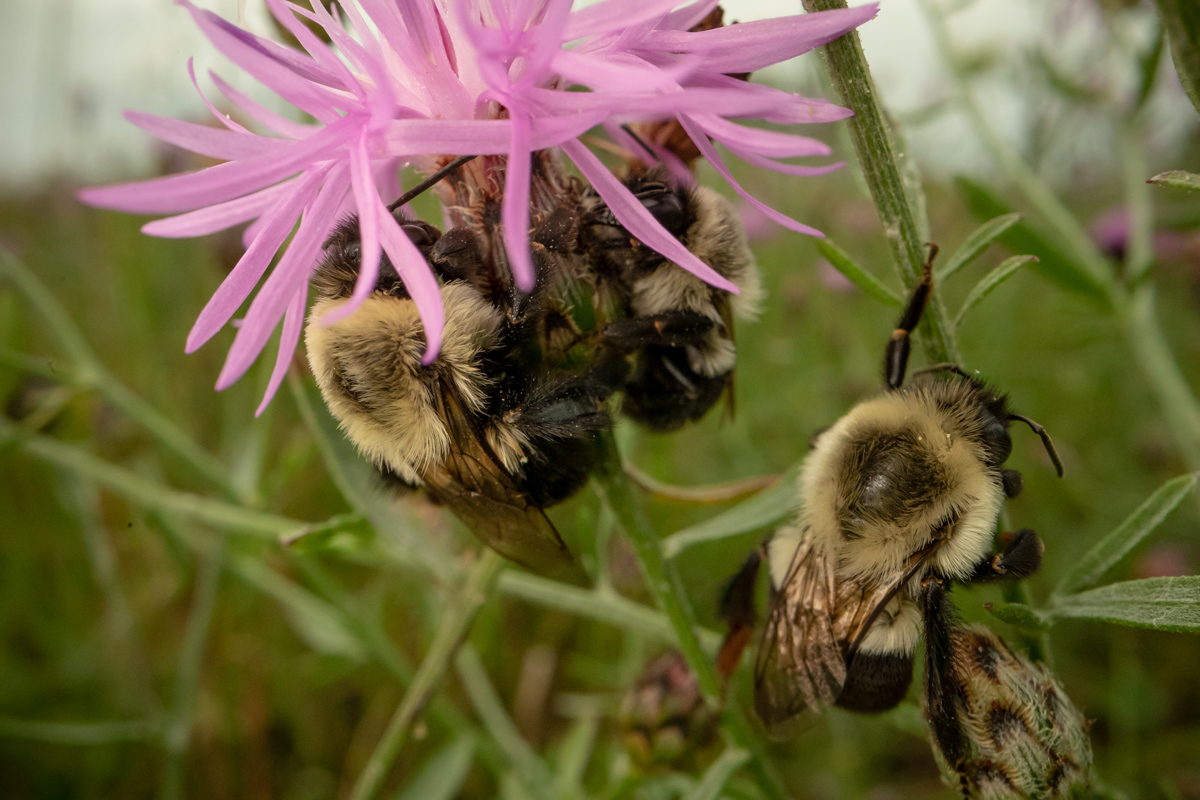
Sleeping bumble bees in Shenandoah National Park, July 2022, by Scott Jost, Cohort VIII.
New approved activity for HMNs!
Thanks to Scott Jost in our new Cohort VIII class of trainees, the Headwaters Chapter Volunteer Service Projects Committee has approved Bumble Bee Watch as a citizen science activity. From Scott’s proposal for the project:
Project Purpose and Value: Bumble Bee Watch is a collaborative effort to track and conserve North American bumble bees. This community science project allows participants to help researchers determine the status and conservation needs of bumble bees, help locate rare or endangered populations of bumble bees, learn about bumble bees, their ecology, and ongoing conservation efforts, and connect with other community scientists. Bumble bees are essential pollinators in agriculture, wildlands, and urban areas. Evidence shows, however, that many species are suffering serious population declines. To support conservation efforts, more information is needed about the distribution and trends of bumble bee populations.
Project Description: Bumble Bee Watch observers make photographs of bumble bees and then upload them, along with contextual data, through the Bumble Bee Watch website or mobile app. Observers identify the bumble bees in the photographs, which are then verified by bumble bee experts. The identifications contributed by citizen scientist volunteers help researchers determine the status and conservation needs of bumble bees, and in some cases, help locate rare or endangered populations of bumble bees. Through their participation, citizen scientist volunteers learn about bumble bees, their ecology, and ongoing conservation efforts.
Scott will be spending time on this project in the coming months and hopes other HMNs will be interested in joining him!
Are you interested in native bees, bee habitat, and bee conservation? I would love to connect with other HMNs who might want to work on this project with me, or who are knowledgeable about native bees or just enjoy them, or who know of promising bee habitat on public lands for making observations.
Rob Beaton writing down observations on the habitat and organisms that live in a vernal pool.
Maple Flat Ponds
Each spring, as wood frogs and salamanders across Virginia make their way to vernal pools, so too do avid Vernal Pool Monitors. This presented an opportunity for me to connect with an extraordinary citizen scientist and Master Naturalist by the name of John Holden. If you ever get a chance to attend a hike, wildflower walk or numerous other guided outings led by John, do yourself a favor and your life will be enriched for doing so.
It was a cool 41-degree sun filled morning and my mission was to meet up with John at the Maple Flats Vernal Pools in George Washington National Forest. The pools are located in southeastern Augusta County and are largely on U.S. Forest Service property and encompass 272.8 hectares. It is home to a wide array of flora and fauna that will surely sidetrack you from your original mission as it easily did me. John has monitored these specific pools for more than 10 years and has clearly immersed himself in the surrounding area as he frequently gives tours/talks to students and other groups on wildflowers, butterflies and numerous other native species that reside in this area.
Our day started off with a 30-minute informal training and informational session on the seasonal pools and the ecological services provided by the pools. This session contained numerous handouts, guides, maps and equipment that he considered necessary for a new vernal pool student to be successful in becoming a monitor in the future.
These sinkhole ponds are unique to the western base of the Blue Ridge in our area and form when limestone dissolves locally beneath a mantle of colluvial soils which washed off the mountains. A layer of clay forms several feet below the surface of this area and creates a perched surface water table that reaches up into the sinkholes during the wet season. Due to different hydrologys, some of the sinkhole ponds may have ground water connections, while others fill from surface runoff. They start to fill with water in late fall, then dry up in the summer. Since they are not permanent, fish cannot survive in them. This is significant for many species of amphibians as fish can eat their eggs and larvae.
Recently hatched salamander egg masses.
On this day, we set out to survey and monitor five of the thirteen pools and wetland areas John monitors. Our mission for the day was to observe the various life stages of seasonal pool indicator species. Specifically, three species of Salamanders, the Spotted, Marbled and Eastern Tiger Salamanders and other vernal pool residents such as the Fairy Shrimp, Wood Frog and other indicator species. Our search mostly resulted in the egg masses and older larvae of the Spotted Salamander. In one specific pond, we were excited to observe over 40, mostly Spotted Salamander, egg masses that appeared to be already hatched out. The number of hatchlings observed confirmed this and John seemed happy with the results.
At left: John Holden observing a Red Backed Salamander. At right: A Red Spotted Eft.
Though we did not find any adult salamanders, not due to a lack of turning rocks and logs on our part, the invaluable training, education and stories presented by John were enough to fill those gaps. I did however, find a few Red Spotted Efts and Red Backed Salamanders. Though not our target, they were a first find for me.
We completed our trip with an out-brief and John presented me with some further information and an invitation for anyone in the HMN Chapter who is interested to attend another guided training event at the Maple Flat Vernal Pools. While volunteers like John work to verify potential vernal pools as part of the mapping project, repeated monitoring of known pools is essential to establish a baseline of data with which to compare future changes, and to increase our body of knowledge about these unique wetlands. The success of this project depends on committed volunteers who will visit “adopted” pools a few times each year to assess biological and physical metrics. A day well spent and a new friend made.
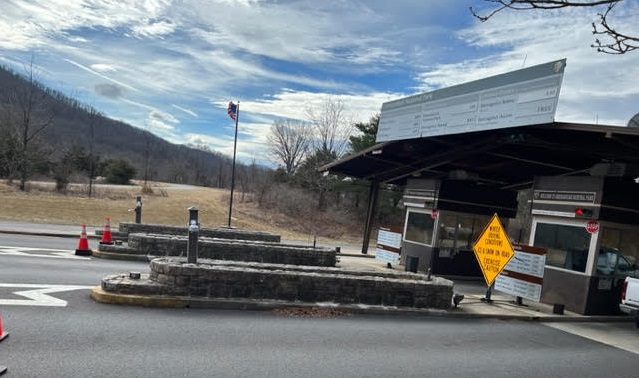
Shenandoah National Park Thornton Gap entrance planters
Learn about a unique volunteer opportunity at Shenandoah National Park, thanks to Jerry Hopkins!
Shenandoah National Park [SNP] has four wildflower planters along the 105 mile Skyline Drive. One is located near the north entrance [Front Royal] at Dickey Ridge Visitors Center; one is at the entrance station at Thornton Gap; one is at the Big Meadows Visitors Center; and the fourth is at the entrance station at Rockfish Gap.
The purpose of these planters is to showcase some of the wildflowers native to the SNP and to help educate the visitors of the different flowers and the pollinators they attract. Many visitors are unable to see wildflowers up close and this provides them the opportunity.
I volunteer to help with the Thornton Gap planters, along with seven other individuals, at the Thornton Gap Entrance Station. This is located at the intersection of Route 211 and the Skyline Drive. Rt 211 was built before the revolutionary war and was graveled before the Civil War thus providing better crossing of the mountains by both armies. The colony of Virginia had the road built in 1746 to provide a route for farmers in the valley to access Mr. Thornton’s mill in Sperryville. Francis Thornton built a mansion similar to Mount Vernon with its huge columns and his home can still be seen [not open to visitation] driving Rt 231 from Sperryville.
The wildflower planters are constructed of stone in the same manner as the stone walls that were built by the Civilian Conservation Corps lining most of Skyline Drive. Volunteers provide all of the upkeep to the planters throughout the Park. The season starts in April when the beds are cleaned and plant ID labels are inserted. New plants may have to be added and some plants may have to be removed. The replacement plants are propagated by the Park at the Luray Headquarters. To help conserve moisture the beds are mulched. Last year we were able to add soaker hoses to provide drip irrigation to the planters at Thornton Gap. Because these planters are in full sun and absorb the heat from the stone walls and the asphalt drive, they tend to dry out quickly in the summer. The soaker hoses are meant to be kept in the planters year-around and are covered by mulch which helps keep the moisture in the planters longer and cover any unsightly hose. Throughout the growing season there is maintenance to be done such as deadheading spent blooms, removing weeds, fertilizing, and cutting plants to a certain height. Each planter location in the Park has its own requirement for plants.
At Thornton Gap, plants have to be kept at a certain height so as not to block security cameras that cover the Entrance Station. This prevents these planters from having the taller wildflowers such as the Joe Pye Weed, Milkweed and Cow Parsnip. The plants are arranged so that there is always some blooming types through the growing season.
Later this month, around March 19, the swallows will return to San Juan Capistrano, California, from their wintering grounds 6,000 miles away in Argentina. In early April, swallows will also return to Thornton Gap. These swallows have a longer journey to reach Thornton Gap where they will nest to rear their young. They have their nests in the Entrance Station roof. It is always exciting to witness their return and to hear all the noise that over 100+ birds can make flying around the visitor entrance area. It is a mixed blessing to those visitors who may enter the entrance area in convertibles with the top down and for the Park Entrance Staff as they have to hose down their windows each day until the swallows start their long migration back to South America. This is the only area in the Park that I know of where swallows nest. They are able to meet their big three at Thornton Gap: shelter; food [there is no dearth of insects flying around]; and, water [an underground spring next to the entrance station has water bubbling to the surface that provides year-round water]. All of the luxuries of home so close to the nest! Sometime in the fall, in September or October, they will gather in a large swirl and all of the families will be gone at one time, heading south. One day they are here and the next they are all gone until next year. A void when they go as you know cold weather is coming soon and it is now time to start the wintering process of the wildflower planters.
Wintering the planters consists of making them visibly pleasant to the fall and winter visitors. This means cutting the plants to about an inch high, removing all plant debris, removing plant ID tags and fertilizing and mulching for the winter. The drip hoses are kept in place, hidden by mulch and the maintaince tools are cleaned and put away in the storage area for the winter.
The Park is always looking for volunteers to help with these planters. The Park provides you with a uniform and safety equipment [gloves, safety vest and safety glasses]. The uniform is required at any time you are working on the planters. Many visitors will stop to ask you questions recognizing you as a representative of the Park. If someone has an interest in volunteering at any of the four planter locations for the April through early November season they should contact me by text or phone [540-383-1079] or by email [gerald.hopkins [at] comcast.net]. Time requirements would mean one trip to the planter each month. It may require a three hour stay each time you go depending on need. It is fun, rewarding and educational. And it gets you close to your next hiking trail. Mary’s Rock can be seen from the entrance station and this walk provides what many experienced hikers claim is the best view in the Park!
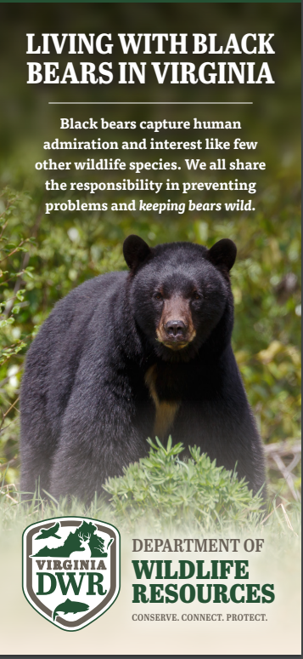
We are working on initiating a new project for volunteers to work on to earn their volunteer hours. The Department of Wildlife Resources (DWR) is seeking the help of Virginia Master Naturalists in spreading awareness and education on living with black bears to a broader audience in hopes to alleviate negative interactions and human-bear conflicts across the state of Virginia.
VMN volunteers will work with regional biologists from the Virginia Department of Wildlife Resources to develop educational programming about bears and how to sustainably co-exist with bears. Volunteers will decide when and where to present the material to reach the desired audiences. Possible opportunities include talks for homeowners’ associations, realtors, community groups such as Ruritans, garden clubs, libraries, and government groups such as boards of supervisors. Volunteers can also present information in a tabling/booth format at local events and festivals.
Each chapter involved should aim to have at least 3 programs per year if possible, and more is fine if the opportunities exist. The desired audiences include homeowners and their families (particularly those who can make a difference by changing their behaviors, such as by keeping their garbage secured or not leaving pet food outside), organizations who can influence residents (such as HOAs), and, in some cases, visitors to the area (particularly in locations with vacation rentals in bear country).
VMN volunteers will determine the specific locations and times of the educational programming.
Our DWR District Biologist for the Headwaters area will schedule a Black Bear 101 presentation for the chapter. All interested members will be invited to attend. The presentation may be offered as a CE. We could arrange to set up the presentations in person or virtually.*
Once the 101 presentation is given, Pam Gray will ask for volunteers to be part of the Better Impact Living with Black Bears project. Once that group is assembled, our statewide Black Bear biologist or the Black Bear co-chair will come and give a very specific presentation that the group can use for outreach education, as well as print resources from DWR such as stickers and handouts to give out at events.
Reach out to Pam Gray by email at pamsjolinder [at] mindspring.com to express an early interest or get more information.
– Pam Gray, Cohort VI, Projects Committee Chair, January 2023
Find an excellent writeup of the Part 1 training for this project, Black Bears 101, held on April 24, 2023, by Stephanie Gardner HERE.
*Living with Black Bears in Virginia Part 1 Training is available as a YouTube video for those who missed the in-class session on April 24th. It is not a recording of the class, but an official DWR training video. Those of you who were unable to attend Part 1 in person, but want to attend Part 2 and participate in the Living with Black Bears Project may watch this video (and earn the same CE) and be eligible for project participation. Find the video here: https://www.youtube.com/watch?v=T4tgRx4kswg