Category: Continuing Education

  • Creating Healthy & Productive Forests

    Creating Healthy & Productive Forests

    MtJoy3.forestmanagement

    The History of Forest Management in the United States

    Presented by Patti Nylander of the Virginia Department of Forestry

    Monday, March 19th | 5:00 – 7:00PM
    light snacks will be provided
    Augusta County Government Building Meeting Rooms, Verona

    We will be in the South Board Room. Use the Public Meeting Room Entrance at the Augusta Govt Center Bldg. It is around back from the main entrance. Enter the Double doors on the left.

    Spend an evening learning about Forest Management, and how past decisions about fighting wild fires are still influencing our forest ecosystems today. Balancing the needs for fiber production, wildlife habitat, recreational opportunities, and ecosystem services like clean air and clean water can be a challenge for natural resource managers, especially on public land. Continuing with the principles taught by the “Father of Conservation” Gifford Pinchot at the first Forestry School in North Carolina, foresters make it work; we can grow beautiful, healthy, productive forests while meeting all of these needs!

    Bring yourself….bring a friend…..all invited !!!

    This presentation is a excellent opportunity for some to challenge their thinking about current forest management practices and realize that cutting trees is not a bad thing!

    Please Register on the VMN-VMS Calendar

    This is Continuing Education opportunity is sponsored by the Headwaters Chapter of the Virginia Master Naturalists.

    pattiPatti Nylander has worked for the Department of Forestry for 17 years. She first started her career with DOF in 2001, working as a County Forester in SE Va. in Prince George and Surry Counties. Three years later in 2004, she moved to the Valley to work as the Forester for Augusta County. In 2012, she was promoted to a Senior Area Forester, with the dual role of supervising employees and serving as a field forester in the counties of Augusta, Rockbridge, Highland, Bath, and Alleghany. She has a BS in Forestry from Virginia Tech.  Her husband Erik teaches Math at Shenandoah Valley Governor’s School and she has a 10-year old son and a 7-year old daughter. When Patti is not working she enjoys hiking and camping with her family, reading Sci-Fi/Fantasy books, and looks forward to any opportunity to go to the beach.  

    Photo above, right is of Patti leading an HMN basic training field trip on winter tree silhouettes in March 2013

    Photo at top is of Virginia Department of Conservation and Recreation’s Natural Heritage Program’s Shenandoah Valley Region Steward Adam Christie in November 2015 leading HMNs on a walk around Mount Joy Pond Preserve, near Raphine, VA, to learn about the benefits of controlled burns as a forest management tool. 

  • Getting Batty at the HMN Annual Meeting

    Getting Batty at the HMN Annual Meeting

    annualmeeting.pic

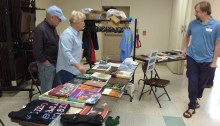
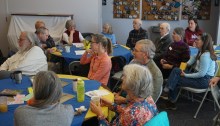
    Saturday, January 20, 2018, Headwaters Master Naturalists gathered at the Bridgewater Community Center at Arey Hall to socialize, reconnect over a pot luck meal, and support our bats through continuing education and outreach.

    It was an absolutely beautiful and yes, an unseasonably warm winter day, adding extra energy to conversations, as around 30 HMNs perused the annual book sale titles, and the bat-themed door prizes. These included some perfectly witty bat-themed stationary designed by Erin Murray, a “Resist White Nose” T-shirt promoting the Save Lucy Campaign, and several copies of “A Guide to Bats of Virginia” generously donated by Paul Bugas of the Virginia Department of Game and Inland Fisheries.

    beingabatwithleslie.sg.1.20.18.crop2
    Leslie led us in some fun “batty” exercises. Photo thanks to Sandy Greene.

    The HMN 2017 Board met briefly, and the attending Chapter members voted on the new additions to the 2018 HMN board.

    Following, Leslie Sturges of the Save Lucy Campaign had everyone attempting to think like a bat, pointing out the physical characteristics that enable a bat to catch insects in flight and dangle from a cave ceiling. Learning more about how these flying mammals have been affected by our changing landscapes can inform how we may best protect our remaining bat population.

    Paul Bugas followed Leslie with some information about the challenges to bat populations in Virginia and introduced us to a new bat survey project, NABat. Some bat resources are available on the VDGIF website HERE.

    Thanks to Program Committee Chair Chip Brown and his committee, Sandy Greene and everyone else who helped organize this event, and thanks to all those who participated in this day of camaraderie and learning! We’ll look forward to doing it again next year!

    – Mary Gatling-Finks, Cohort V, January 2018

    Top photo by Carl Droms. Click on a photo below to turn the set into a slide show. 

  • HMN Annual Membership Meeting

    HMN Annual Membership Meeting

    cdAM2

    Calling all Headwaters Master Naturalists!
    Please join us for our annual membership meeting! 

    Saturday, January 20, 2018
    12 PM
    Arey Assembly Hall
    201 Green St., Bridgewater

    Activities for the general membership include a used book sale, a potluck lunch, the annual meeting and HMN board elections, and continuing education program about bat research and conservation. Also, there will be (bat-themed) door prizes and newly minted HMN logo baseball hats for sale.
    potluck2016
    Please bring a dish to share. Plates, utensils, and drinks will be provided.

    Let us know you are attending this meeting by signing up on the VMN-VMS website. Navigate to the General Event Calendar, then click on the “HMN Annual Membership Meeting.” In the comments, please indicate what you are likely to bring as a dish to share.

    Schedule:
    11:30AM: Book Sale opens
    12:00PM: Potluck Lunch: please bring a dish to share
    12:30PM: Annual Membership Meeting and Board Elections
    1:15PM: Program: Bat Research and Conservation, Rick Reynolds, DGIF; Leslie Sturges, Save Lucy Campaign

    All are welcome to the following activities that are taking place before and after the main membership meeting, board elections, and program:
    10:00AM: Set up
    11:15AM: Current 2017 HMN Board meeting
    2:30PM: New 2018 HMN Board meeting
    3:00PM: Clean up

    Snow date is Saturday, January 27th.

    – Chip Brown, Program Committee Chair
    Top photo is from the HMN Annual Meeting in 2016 by Carl Droms

  • Lichen Hike

    Lichen Hike

    lichenhike2.jh.600

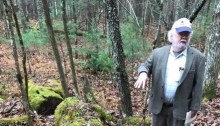
    Another exciting outing jointly sponsored by Headwaters Master Naturalists and Friends of Shenandoah Mountain took place Sunday, November 5th near Braley Pond. Jack Wilson, local expert on mycology and all things fungi, led 13 hikers from both groups on a fascinating journey of discovery around his MoonDance Camp and the adjoining George Washington National Forest.

    3types.lichenhike3.avA lecture on the basics about the local forest, fungi in general, mushroom and lichen basics and ID and the history of the area forest started our day and included the noting of several good reference books. We learned that fungi make up 20 to 30 percent of the biomass of the G.W. National Forest and that lots has been written on the intelligence of mushrooms. Lichens are a symbiotic relationship between fungus, algae and/or cyanobacteria and they grow only a few millimeters a year. They grow in three forms; crustose, foliose and fruticose. (Photo on right shows all three on one tree. Crustose is flattened, foliose leafy and fruticose is bushy.)

    Jack and his wife Mary led us on a nearly two mile hike around various habitats in the wooded site to discover many species of mushrooms and lichens and also discussed various local trees and how they fit into the picture. Lichens, and lungworts in particular, are a very good indicator of air quality. Jack showed us his shiitake growing log racks and discussed how to process medicinal mushrooms like turkey tails. (See photos below.) 

    The day was topped off by a delicious lunch of homemade five mushroom soup, bread and pickled ramps.

    – Malcolm Cameron, Cohort III, November 2017
    Top photo by Jerry Hopkins shows Jack Wilson explaining how the lichen have grown on this log. Click on photos below for descriptions and photo credits.


  • Nature Journaling with Betty Gatewood

    Nature Journaling with Betty Gatewood

    nature journalingwithbetty.es.10.27.17

    Keeping a journal of your observations, questions, and reflections will enrich your experiences and develop gratitude, reverence, and the skills of a naturalist. The goal of nature journaling is not to create a portfolio of pretty pictures but to develop a tool to help you see, wonder, and remember your experiences.  – John Muir Laws

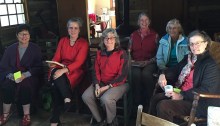
    Accomplished botanical artist and Headwaters Master Naturalist Betty Gatewood, Cohort I, treated Headwaters Chapter members to a Nature Journaling workshop on Friday, October 27 at Sandy Greene’s log cabin in Mt. Sidney. Thanks to Elaine Smith for coordinating this opportunity and putting together some photos from the class and of the venue into a Journaling Workshop Oct 27 2017 Flickr album here.

    Photo at top is by Elaine. It shows (L-R) workshop participants Kathy Whitten, Breyette Lorntz Covington, Sandy Greene, Betty Forrest, and Barb Phillips flanking Betty third from left.

    naturejournalling.sg.2.picsnipSandy took the photo on the right showing workshop participants matching up leaves to drawings of the leaves on her cabin porch. See “To Each Its Own” journaling idea from Betty below.

    You can stay engaged with nature journaling by joining the Shenandoah Nature Journal Club which meets on the 2nd Saturday of each month. Email shenandoahnaturejournalclub [at] gmail.com to be put on the email list. Join the Shenandoah Nature Journal Club facebook group for announcements and updates about meetings. The group draws inspiration from the works of naturalist and artist John Muir Law quoted above.

    A Few Journaling Ideas from Betty

    1. Enter “metadata” – date, time, location, special considerations of where/why they are where they are.
    2. Colors of the Day – to break away from that blank page, use colored pencils or paints to document the day with streaks of color that they see.
    3. Mapping – for practice, draw a map of their home/house/yard, then expand to mapping their schoolyard, nature trail, or what area is of importance to your objective.
    4. Blind Contour Drawing – (Drawing without watching what is being drawn!) Using leaves or natural items that you have provided or that students can see without picking, hold the item in one hand and have students study the leaf. Then with the other hand, position pencil on the paper (and without looking at their paper!), draw the leaf (blindly) by following the outside of the leaf with the pencil.  Have students imagine that their eye is an ant crawling around the leaf, and that their pencil is mimicking its crawling.
    5. To Each Its Own – This activity gives participants confidence in the fact that they CAN draw! Each person takes a leaf that you have collected. (All leaves from same tree, so not too much difference).  In pencil, give participants 5-10 minutes (?) to draw the leaf in as much detail as they can, i.e. outline, veins, any insect damage, distinctive features, etc. Collect the leaves.  Have each person lay down their drawings – table/ground.  Now each person takes a leaf from what you have collected, but not THEIR leaf.  They need now to match up the new leaf with the leaf drawing.  Group rearranging might follow, but certainly discussion. The goal is: “I CAN draw because someone else identified the leaf I drew!”
    6. Power Place – a sensory activity with art and/or language arts applications.

    More about Betty Gatewood from the VMN VMS calendar event listing:

    Midway through her college career, Betty Gatewood changed her interest from laboratory science to the “outdoor” sciences of ecology, natural history; and science education. She’s been outdoors ever since ~ observing, hiking, skiing, teaching, learning, sharing, documenting, journaling, and painting. After teaching middle school for several years, and being the Teacher-in-Residence at Mary Baldwin College with Dr. Tamra Willis under a NOAA grant, Betty enjoyed being an Education and Interpretative Park Ranger in Shenandoah National Park. She continues as an active member of Potomac Appalachian Trail Club and advisory council member for Appalachian Trail Conservancy’s Trail To Every Classroom. Her passion is to provide opportunities for anyone to get outside to experience, observe, analyze and document the natural world through art and journaling.

    Betty provided the cover art for Virginia’s Mountain Treasures, published by The Wilderness Society, and for the Virginia Native Plant Society’s Wildflower of the Year brochures for 2009 and 2013. She has contributed illustrations for the Appalachian Trail Conservancy’s Junior Ranger Booklet and Virginia Department of Forestry’s book, Common Native Shrubs and Woody Vines of Virginia. She has co-conducted local art and journaling workshops for teachers, as well as Shenandoah National Park visitors. She has exhibited her Appalachian Trail/travel journals and her botanical art at Lewis Ginter Botanical Gardens in Richmond and at Staunton Public Library. In 2016, her witch hazel illustration was on display at the US Botanic Garden in Washington, DC, along with 70 other botanical art images for the Flora of the National Parks exhibit. Most recently she illustrated the children’s book, Milkweed Matters.

    Frequently on her outdoor ramblings, she is accompanied by her husband Mark, an avid outdoors-man, who often suggests particular subjects to document with her art. Her rambles near and far have provided many inspirations for her journals and art ~ the Shenandoah Valley, Appalachian Trail, Shenandoah National Park, and New England are her favorite places to experience and document the beauties and intricacies of the natural world.