Category: Training

  • Looking Ahead… 

    Looking Ahead… 

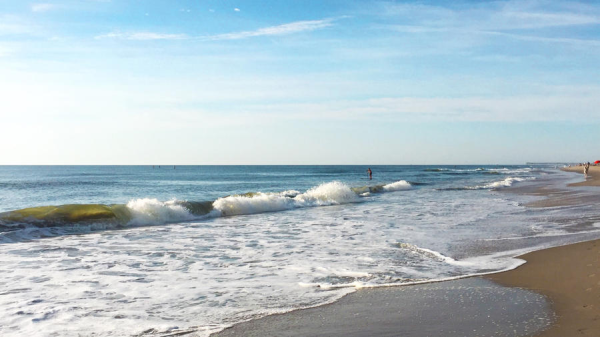
    VMSConferenceVaBeach600

    Photo: by coastalliving.com

    Looking Ahead… 

    Hello, VMNs. The web page for the 2020 VMN Statewide Conference and Training is now available! The dates for the conference will be Friday, September 11, through Sunday, 13, 2020.

    At the top of the page, the latest updates are listed. Today, we have event dates, venue and lodging information. We will add more sections and details as we move along in 2020 with the newest update being listed at the top each time.

    Lodging reservations can be made now. Registration dates will be posted next month.

    Are you getting excited yet?!

    By Tiffany Brown

  • Learn to be an Active Watershed Steward! Participate in CBF’s 2019 VoiCeS Course

    Learn to be an Active Watershed Steward! Participate in CBF’s 2019 VoiCeS Course

    ChesBayWPSite

    Thursday evenings, October 10 through November 21, 6-8:45 pm. Waynesboro Public Library, 600 S. Wayne Avenue, Waynesboro. The Volunteers as Chesapeake Stewards (VoiCeS) program engages local volunteers and their communities to create a deeper understanding of the Bay and the efforts to restore it. VoiCeS is CBF’s most in-depth adult education program available to its members and the public. Attendees will leave knowing how their everyday actions can help restore the Bay and local waterways. Participants learn from engaging and thought-provoking speakers about the Bay’s biology, how farmers are reducing runoff, the critters that call the Shenandoah streams home, and how to protect them.

    Special presenters include Senator Emmett W. Hanger, Shenandoah Valley farmer Bobby Whitescarver, and Delegate Tony Wilt. Participants are expected to attend at least six of the seven classroom sessions, as well as a field trip. The program culminates in a service requirement of 40 hours on a clean water-related project of your choosing. Successful graduates receive CBF’s designation as “Chesapeake Stewards.” Materials fee: $30/individual, $50/couple. Registration deadline: October 7, 2019. Space is limited! For question, contact Robert Jennings or 434-826-0958.

  • Northern Saw-whet Owl Banding at Highland Retreat

    Northern Saw-whet Owl Banding at Highland Retreat

    SawwhetOwls8.bb.crop

    On Saturday, November 10th members of the HMN chapter participated in the Saw-whet Owl banding at Highland Retreat in western Rockingham county.

    Saw-whet Owls are migrating through our area this time of the year from their northern nesting grounds.

    Dr. Clair Mellinger, assisted by Charles Ziegenfus and HMN trainee Ben Spory, collected the birds and performed the data gathering.

    Mist nests higher up the ridge are set up near an electronic call, and as the owls fly through the area they are captured and brought down for banding, measuring and aging. The bands and permits to band are supplied by the US Fish and Wildlife Service. The information from the project is added to a database with the US Geological Survey Bird Banding Laboratory.

    SawwhetOwls5.bb

    After banding and measuring, the birds are aged using ultraviolet light. Owls and some other birds have pigments in their feathers called porphyrins that fluoresce bright red in UV light. As the feathers age the pigment is reduced and an older bird that has molted some of its feathers will fluoresce less. After the second year, this technique cannot be used to determine age because all feathers are not molted every year. The owls are aged HY (hatching year), SY (second year) and ASY (after second year).

    After banding and measuring, the birds are placed on a table outside to recover and continue their journey.

    Most of the birds we saw were HY with one older owl. Previously banded owls have been caught including an owl banded near Lake Superior. This year’s recaptures included an owl banded on November 3rd and one banded October 2016 from Peterborough, Ontario.

    This year only trained or trainee volunteers are allowed to collect the owls.

    On Saturday night over 40 people were there with 13 from HMN, including some family members, and 25 owls were banded.

    For more information about the Northern Saw-whet Owl, a good source is the Cornell Lab of Ornithology at https://www.allaboutbirds.org/guide/Northern_Saw-whet_Owl/id.

    For more information about the Saw-whet Owls banding project, go to highlandretreatowls.wordpress.com.

    Information about the Bird Banding Laboratory can be found at https://www.usgs.gov/centers/pwrc/science/bird-banding-laboratory.

    If you find a banded bird you can report it to www.reportband.gov.

    – B. Blessing, II, Cohort VI, November 2018

    Top photo: Dr. Mellinger talks to the group about Saw-whet Owl behavior, diet and the banding process.

    Second photo: Porphryin pigments fluoresce in UV light. 

    All photos are by B. Blessing, II.

    Click on a photo below to see a slide show of the photos and find their captions.


    Find Elaine Smith’s photos from this event on flickr HERE.
  • Along the Lost Shoe Loop

    Along the Lost Shoe Loop

    jasonhallacher-lostshoe-10-20-18-sg.jpg

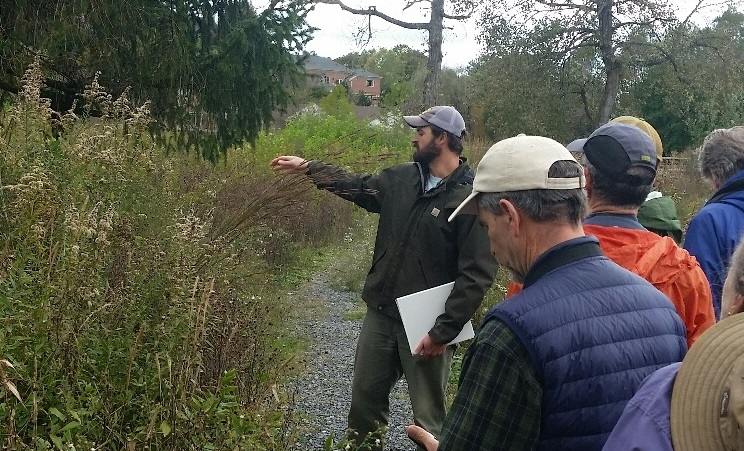
    On Saturday, October 20, members of the 2018 HMN Basic Training class explored three sites along the Lost Shoe Loop of the VDGIF Virginia Bird & Wildlife Trail. Class member Lisa Klein describes the morning at Lake Shenandoah below. Lunch and a walk followed at Grand Caverns. The trip concluded with a look at Madison Run.

    Twelve enthusiastic members of the current Master Naturalist class met with VDGIF Biologist, Jason Hallacher, to explore the pollinator path at Lake Shenandoah. Jason was instrumental in creating the path and he shared his knowledge and care of the area.

    We walked along Lake Shenandoah, starting with the pollinator meadow. Jason talked about the challenges of working with local neighbors, some of whom preferred a neat and tidy lawn. When preparing the land to create the meadow, it was necessary to kill the grass and then plant the seeds that would create a habitat for butterflies, hummingbirds, and other wildlife. There was some discussion of the use of herbicides and the pros and cons of its use in restoring an area to native plants. Grass roots are so difficult to remove that in order to create the meadow in a reasonable time frame, herbicide was necessary to expedite the process.  Jason said that it was possible to kill grass with large amounts of black plastic, but that would take up to two growing seasons to effectively prepare the ground for native plantings. The meadow’s plants were tall and full of seed heads. We did not see any hummingbirds (they had already flown south); there were a few Monarchs and goldfinches, mallards and a kingfisher.

    There were bird watchers in the group who spotted coots on the lake as well as a great blue heron who was fishing near a beaver lodge. Unfortunately we did not see any beavers, but Jason assured us that there were several. He said that beavers were not introduced, but had arrived on their own as young adult beavers that left their parents’ lodges and found new places to live.

    We did not walk as far as planned because there was so much to look at along the trail. Jason pointed out which plants were native and discussed invasive species.  Jason did an amazing job of explaining the area around Lake Shenandoah. Many of the participants plan to return to the lake.

    – Lisa Klein, Cohort VI, October 2018

    Top photo is by Sandy Greene. VDGIF biologist Jason Hallacher is leading the group along the pollinator trail at Lake Shenandoah.

    Photos below by Lisa Klein. Click on them for better viewing.


  • Stony Man Environs at Shenandoah National Park

    Stony Man Environs at Shenandoah National Park

    SNP.4.30.18.1

    HMN Jerry Hopkins has an affinity for the Shenandoah National Park. Spending time there since he was a kid, he currently makes frequent trips to his adopted stretch of trail in the Park to keep it welcoming by clearing brush and obstacles which might impede travelers.

    On a recent beautiful sunny spring day, he generously shared some of the history, ecology, geology, and general fun facts about the Park he has learned over the years, with members of the current basic training class and a few other HMNs. The group parked near Skyland and slowly made its way up the Stony Man Trail and back along the Passamaquoddy Trail, with frequent stops for readings and discussions. These ranged from the impacts of fuel needs of surrounding iron ore furnaces in the 1800s, chestnut blight in the early 1900s, the woolly adelgid hemlock parasite introduced in the mid-1900s, current emerald ash borer threats, and acid rain impacts, to George Washington’s army subsisting on rock tripe at Valley Forge and synchronized lightning bugs creating too much human attention in another part of the Park.

    As a bonus, the group was treated to the extensive wildflower expertise of HMN Betty Forrest who at 82 can still ably navigate 5 miles of trail. She spent three years as a Shenandoah National Park ranger and knows the local flora well. Golden ragwort abundantly lined the trails but was not yet in bloom. Wild phlox was in bloom at the Stony Man summit within view of a wind blown, icy, rock-lined puddle.

    George Freeman Pollock featured prominently in Jerry’s discussions along the Passamaquoddy Trail. Relying heavily on his wife Addie’s wealth, George Pollock created and financed much of Skyland before it became the cornerstone of Shenandoah National Park. He oversaw the establishment of the Passamaquoddy Trail including its name. The  Passamaquoddy Indians, who lived in northeastern North America, are named for the pollock fish important in their lives.

    Jerry’s work with trail maintenance for the Park is through its contract with the Potomac Appalachian Trail Club. The club provides volunteer service to help keep up all the Park’s trails. The Park also partners with the Shenandoah National Park Association, a membership driven nonprofit organization which helps fund educational opportunities throughout the Park. There are many member benefits to joining!

    Check out the website of the Shenandoah National Park for comprehensive coverage of everything it has to offer.

    – Adrie Voors, Cohort II, April 2018

    Top photo is of the group having lunch near Stony Man summit. Click on a photo below to see a slide show of the photos and find their captions. Photos taken by Adrie.