Category: Nature Notes

  • Hone Quarry Walk with Chris Bowlen

    Hone Quarry Walk with Chris Bowlen

    Two members of the 2015 basic training class were joined by a few other chapter members for a wildflower-focused walk around the Hone Quarry Recreation Area with Headwaters Master Naturalist and botanist Chris Bowlen on Friday morning, May 8, 2015. RoxAnna Theiss took some notes about what was presented. Elaine Smith kept a list of findings below.

    HoneQuarry.5.8.15.300Chris spoke to us about the Spring Ephemeral strategy and ecology:  producing early spring greenery before the canopy closes with heavy leafing – storing that energy for later blooming.  A staged blooming cycle allows for the continual cycle of life – migrating insects, food for birds, a balance dependent upon each component.

    Interruptions in that balance are often delivered by non-native invasives such as garlic mustard plants that have a mycorrhizal fungi suppressant.  The relationship between plants and mycorrhizal fungi is critical to the well-being and continuation of many plants due to the symbiotic relationship.   The plant performs photosynthesis and other above-ground functions, and the fungi handle underground nutrition-gathering and protect the roots.

    Chris told stories of how many invasives were introduced by early colonists such as Bedstraw (cleavers).  In Europe, the dried, matted foliage of the plant was once used to stuff mattresses. Several of the bedstraws were used for this purpose, due to the fact that the clinging hairs cause the branches to stick together, which enables the mattress filling to maintain a uniform thickness.

    Evidence of the changing balance at Hone Quarry came from the ever decreasing stands of Jewelweed.  The loss of large predators has allowed an increase in the deer population that feed on the Jewelweed shoots before they can go to seed resulting in a decline in a plant that once blanketed the area.

    It was noted that very few of the original natives remain and much of what is considered “normal plant populations” came from somewhere else.  Change happens.

    Plants found on the walk:

    •    lettuce (so many it’s hard to id until later)
    •    sugar maple, has leafed out already
    •    shagbark hickory, still getting leaves
    •    hemlock (both eastern and Carolina are susceptible to woolly adelgid (Adelges tsugae))
    •    hickory, leaf stem covering
    •    bluets
    •    heart leaved aster (leaves)
    •    wild strawberries
    •    spicebush (Lindera benzoin)
    •    wine berry (non native)
    •    anemone (wood?)
    •    miterwort, bishop’s cap
    •    kidney leaved buttercup (Ranunculus)
    •    long spurred violet (white and violet)
    •    cinquefoil (Indian strawberry)
    •    plantain, both common (large round leaf) and English (long pointed leaf)
    •    lyre leaved sage
    •    fleabane daisy
    •    blackberry
    •    Virginia creeper
    •    poison ivy (much discussed)
    •    striped maple (in flower)
    •    sycamore
    •    witch hazel
    •    sweet cicely (Myrrhis odorata)
    •    blood root (past bloom, but many leaves remain)
    •    impatiens (jewel weed family)
    •    goldenrod (will bloom in fall)
    •    ebony spleenwort
    •    rue anemone
    •    wild grape
    •    Christmas fern
    •    cutleaf toothwort (past bloom, but many leaves remain)
    •    yellow violet
    •    wild geranium
    •    bedstraw/cleavers
    •    stinging nettle (lots of wildlife value!)
    •    sphagnum moss
    •    common blue violet
    •    Solomon’s seal
    •    wild ginger
    •    black cohosh
    •    partridge berry
    •    honeysuckle
    •    greenbrier
    •    burdock
    •    dogwood
    •    Japanese barberry
    •    hepatica (past bloom, but many leaves remain)
    •    perfoliated bellwort
    •    golden ragwort
    •    jewelweed (deer will eat tops before it can go to seed)
    •    lousewort leaves (?)
    •    Microstegium vimineum, stilt grass (dominant invasive)
    •    pipevine, Dutchman’s pipe (Aristolochia)
    •    coltsfoot (some gone to seed, like dandelions)
    •    early dogbane
    •    beech tree
    •    fringed polygala

  • Botany with Eric Jones

    Botany with Eric Jones

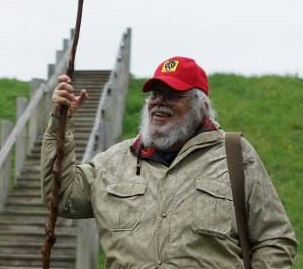
    Eric Jones from photo by Matt Meyers
    Eric Jones from photo by Matt Meyers

    We were truly fortunate to have Dr. Eric Jones address our class on April 16.  If enthusiasm is the hallmark of a great teacher, he is the best.

    Here are some things he taught us about exploring for wildflowers:

    There are clues about natural settings that will help us determine what we can expect to find in an area.  If we are looking for diverse and plentiful wildflowers for example, we are advised to turn away from shopping centers, plowed fields and building developments.  It is “disturbed land” that generally limits the diversity of our local flora.  We would want to cast our gaze elsewhere to quiet openings or very steep slopes that are “un-plowable.”  Certain kinds of trees being seen from a distance (cottonwood and sycamores) will tell us we will find water at their location, most likely.

    Being a naturalist consists largely of being a very curious and careful observer of what is before us; asking how it got there and why does it want to thrive there.  That characteristic of intense inquiry will lead to asking important questions such as what is the natural history and biology of the plant in question.  Does it have ingenious, “built in” defenses that have eliminated the competition?  Is the soil where it thrives crummy?, acidic?, loamy?, and finally, what is the geology of the area that has provided that kind of soil over the ages?  How does their location help them deal with challenges of life on land?

    Although taxonomy is a large part of the naturalist’s language, Dr. Jones tells us it’s the story behind the name that helps us care about the extent and specialness of plant diversity in Virginia.  Speaking the same language about our plants helps us to communicate clearly with one another.  If you ask your nurseryman for Lonicera sempervirens, you won’t get a lovely variety of Lonicera that poops out over the winter failing to shield your sight from that awful garbage heap next door.  Taxonomy also helps us organize what we see so that similar characteristics borne by other plants will help us locate their place on the “family tree.”  Family lineage makes identification easier and more likely to be accurate.  But if you really want to grasp and teach caring and concern for the special diversity of our Virginia plants, learn a story about them and pass it on.

    Time evaporated and class was over all too soon.  But the last thoughts that Dr. Jones left us with are that botany, like many of the sciences, has left long-practiced Linnaean methods of plant identification and related scientific detective work in the dust bin of history – as they say.  DNA discovery is “where it’s at.”  But for the people in this class, the visible beauty of nature will always be the appeal and challenge of knowing not only the name but the history of that plant we are just getting to know.

    – Sandi Rose, Cohort IV, April 2015

    Note from RoxAnna:  A regular class exercise for our 2015 trainees is to summarize the previous class experience for the next class date.  Sandi Rose wrote a light-hearted yet heartfelt summary for our April 16, 2015, class with Eric Jones.  She gave me permission to publish it in the May eNewsletter and I have taken the liberty to make some small editorial changes.  It is apropos to have this summary of Botany in our eNewsletter as it was Eric’s suggestion to use this learning technique in our classes.

    Editor’s note: Eric Jones is also a Cohort I Headwaters Master Naturalist. As a faculty member at Mary Baldwin College, he has developed and maintains a comprehensive website on Wildflowers of Augusta County.

  • Naturalist Book Nook

    Naturalist Book Nook

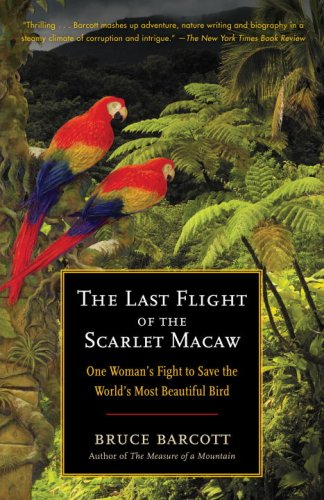
    Last Flight of the Scarlet Macaw: One Woman’s Fight to Save the World’s Most Beautiful Bird
    by Bruce Barcott

    lastflightI had this book in my possession for a good six months before picking it up to read, encouraged by a fellow birder who said it was a great story.  And although it was published in 2009, I have come to find out that many do not know of this book.

    Sharon Matola, an unlikely hero, former circus performer, and now an ‘expat’ zoo keeper in Belize and not one of the best with diplomatic skills to say the least, decides to try to stop a dam being built in Belize. The dam would flood the habitat where the last 200 Scarlet Macaws are residing in Belize.

    Under the skillful writing of Bruce Barcott, the book is a page-turner.  He creates a dramatic, suspenseful, quick pace portrayal of the blatant corruption, greed, conspiracy (e.g. a geologist hired by the government erases seismic fault lines on the survey where the dam is to be located) and the backroom politics of this tiny nation.  Barcott winds in and out of the regional geopolitics, history of dam building in the world and the destruction of free-flowing rivers, colonialism, environmental and globalization issues all the while highlighting the personal fervor and passion of one woman trying to save the macaws.  Her efforts ‘won’ her being named an “enemy of the state.”

    Matola’s website states that this book is now part of the required reading for environmental science courses in at least five universities in the US.

    A most engaging book!

    – Penny Warren, President, Augusta Bird Club, February 2015


    Copy of april's 30th 3Learn more about Sharon Matola’s current activities through The Belize Zoo Blog.

    Find out more about her and her love of Belize in this 2006 interview with BELIZEmagazine.com.

  • Naturalist Book Nook

    Naturalist Book Nook

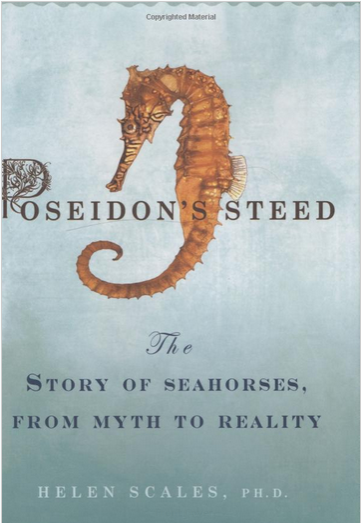
    Poseidon’s Steed: The Story of Seahorses, From Myth to Reality
    by Helen Scales, PhD

    poseidons.steedSeahorses, the modern day ‘poster child’ of healthy oceans, are fascinating creatures that have captured the human imagination for millennia.  Although they are not a keystone species, the author answers the question of why they matter because they “…..offer insights into life beneath the waves…. and … because they inspire us to care about the natural world.”  She goes on to quote Sir David Attenborough about the need of protecting any species because “’the overwhelming reason is man’s imaginative health.’”  How true…the need to be inspired!

    broochThe author begins with the tale of a 1966 discovery of many gold, silver and bronze items in Usak, Turkey, that had been lying hidden in a tomb for two-and-a-half thousand years including a tiny, inch-long gold brooch sculpted in the shape of a winged seahorse believed to belong to King Croesus of ancient Lydia.  Little did the seahorse brooch know that it would be part of what would become to be known as the Lydian Hoard, 336 pieces of ancient treasure, to be smuggled across the Atlantic and sold to the Metropolitan Museum of Art (MOMA) for one and half million dollars.  The museum was very secretive about these jewels and kept them hidden in a basement, never displaying the artifacts.  Several Turkish journalists interested in archaeology became aware of the Lydian Hoard and pursued this missing Turkish treasure.  As a result, there ended up being a multi-million dollar lawsuit against MOMA, and after admitting to the illegal purchase, all of the artifacts were returned to Turkey.  That was not the end of the story as it was brought to light that after eight years on display back in Turkey, the winged seahorse, and other artifacts, were 21st century fakes!  This was a result of an inside job of collusion and theft coordinated by the director of the Turkish state museum and staff.  Rumors say that the buyer who coordinated the theft with the museum employees and is now in possession of the brooch is a Japanese tycoon.

    220px-Black_Sea_fauna_SeahorseThis is only one of many interesting stories relating the ancient awareness of seahorses to modern day events.  Scales adeptly interweaves seahorse facts, history and wonder throughout the book, e.g., their inclusion on the Convention on International Trade in Endangered Species of Wild Fauna and Flora (CITES) protected species list, where they live, how they live, their camouflaging abilities, how they can move their eyes independently, the only fish with a neck, the male being the birth giver, etc.   When the male gives birth, there can be from three hundred and to upward of 2,000 babies.  Scales describes it as “… clouds of transparent specks like a swarm of apostrophes … ”  I thought that was a delightful description.

    This small book, 197 pages, is a pleasurable read.  Grab your trident and dive along with Poseidon below the ocean waves and be mesmerized by the enigmatic seahorse!

    – Penny Warren, January 2015

  • Naturalist Book Nook

    Naturalist Book Nook

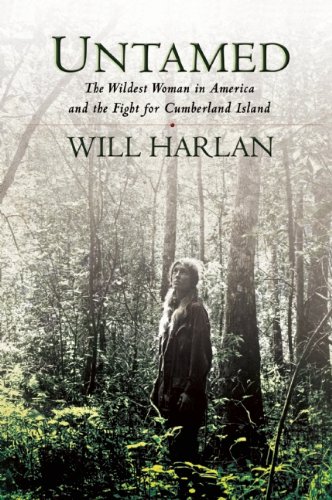
    Untamed: The Wildest Woman in America and the Fight for Cumberland Island
    by Will Harlan

    untamedcoverCarol Ruckdeschel grew up along the Chattahoochee River in Georgia and immersed herself in nature from a very early age.  She became the ultimate extreme naturalist, learning to eat D.O.R. (dead on the road) critters, constantly exploring and searching and learning from nature, even discovering a new species of salamander, and has remained a colorful, controversial character.  She is acquaintances with Jimmy Carter, has gone canoeing with him and enlisted his help to protect a long stretch of the Chattahoochee River.  The New Yorker wrote an article on Ms. Ruckdeschel, and shortly thereafter, Mademoiselle magazine named her one of its “Women of the Year” …. a designation and attention that she did not want in the least.

    Over the course of time, she ended up visiting Cumberland Island, one of the most bio-diverse barrier islands on the east coast, and they took hold of one another.  Cumberland Island (12,000 acres) was bought by the Carnegies in the 1880s. They built a handful of mansions, and it was a playground not only for the Carnegies but the Rockefellers, Coca Cola heirs, etc.  You may recall that John Kennedy Jr. and Carolyn Bessette pulled off their secret wedding on the island.

    It was many years later, many life experiences later, before Ruckdeschel returned to establish herself on the island.  She was always seen as an outsider by the island descendants, but somewhat accepted to a certain point, having a close friend or two, but she became a radical, visible presence and voice for nature and protection of Cumberland.  Ultimately, she was disliked, vilified, and shunned by the entrenched islanders because of her views on how to protect the island.  It didn’t help that she shot and killed in self-defense an ex-boyfriend (a descendent of one of the elite families) who had abused her and ultimately stalked and threatened her.

    Although she fought for all of nature and wilderness on the island, her main mission was to save sea turtles from the islanders, politicians, shrimp fisherman, US Navy and the National Park Service.  The turtles were her life’s work.  For 40 years, she compiled the most thorough sea turtle stranding data anywhere in the world.

    Carol Ruckdeschel next to a loggerhead turtle shell, 2007
    Carol Ruckdeschel next to a loggerhead turtle shell, 2007. More photos here.

    Ruckdeschel has given it her all, and then some, and has accomplished much to secure wilderness area for the northern end of the island.  Unfortunately, some of her major efforts were overturned by US Congressman Jack Kingston (R-GA, 1993-present).  The National Park Service, hardly ever an ally of hers, in the end revoked her licenses to continue her turtle research.

    Harlan, editor in chief of Blue Ridge Outdoors Magazine, spent nearly two decades off and on with Ruckdeschel and provides not only an intriguing story but also an overview of the devastating changes in wilderness areas, the oceans … our planet.  An extremely informative and well-written book but an emotionally difficult read about species at the edge of disappearance.  Upon turning the last page, I immediately joined wildcumberland.org.

    – Penny Warren, November 2014

    An excerpt from Untamed of an extraordinary experience …..

    “Driving back to her cabin, Carol passed the same dead armadillo in the road from a few days earlier.  A bed of leaves now surrounded the carcass.  Puzzled, Carol pulled over for a closer look.  The armadillo was wreathed by laurel leaves.  How did those get there? she wondered.  The carcass was in the middle of a pine forest, but the nearest laurel trees were a half-mile away.

    armadillo.resizedShe looked closer.  Within the wreath, twigs were neatly arranged in a pattern around the dead armadillo.  Then she heard a rustle.  Hiding in the palmetto, a female armadillo watched through the fronds.  She had been tending to her mate in something resembling a burial ritual.

    Carol hunkered down behind a tree and observed.  Eventually, the armadillo crept over to her partner, twigs and foliage in her mouth, and continued cloaking him in a leafy shroud.  Was this armadillo mourning like her?  Carol was awestruck.  ……”