Tuesday, March 24, 2015 was – for most people just another day. But I had been looking forward to it for months. It was the day when the Headwaters Chapter Trainees-in-Waiting (TiW) were taking a special field trip to the National Museum of Natural History in Washington DC. One of the TiW, Byron Hukee, had made arrangements with an old friend of his to get us behind the scenes in the Divisions of Mammals and Birds.
Crested or maned rat (Lophiomys imhausi) of Kenya
We (Brian, RoxAnna, Stephen, Lacey, Judy, Kathy, Peggy and me) left Bridgewater at 8:15am and stopped at Mauzy to pick up Byron, Anna Maria, Sandi, Selah and Bill). We met Byron’s friend Christina Gebhard at the entrance of the museum and she took us up to the areas not open to the public. There she introduced us to Darrin Lunde, who is the Collection Manager in the Division of Mammals. After giving us a little background, he took us into one of the storage areas where he showed us rodent specimens. A fascinating example was the crested or maned rat (Lophiomys imhausi) of Kenya. It is the only poisonous rodent in the world. He explained how these large rats chew up a poisonous root and then spread the paste on specials hairs along their backs. These hairs are hollow and absorbent and any unsuspecting predator, or pet dog, that tries to attack one of these rats will get a rude, and potentially deadly surprise.
In addition to taking us into a room with floor to ceiling rows of specimens preserved in liquid, Darrin showed us some of Dian Fossey’s mountain gorilla specimens.
Dian Fossey mountain gorilla specimenScarlet tanager color variations
After lunch in the cafeteria we rejoined Christina, who took us into the Division of Birds. There she had carefully laid out a display of interesting, historic, colorful and some not-so colorful specimens for us to examine. We saw color variations of flickers from west to east as well as color variations of scarlet tanagers due to age and sex.
Some of John J. Audubon’s collection
Christina also showed us specimens of the extinct Carolina Parakeet and the Ivory-Billed Woodpecker. It was very exciting to see these specimens, as well as several that were collected by John J. Audubon himself. We also saw specimens of Andean Condor.
She showed us various eggs, from tiny to huge, nests, taxidermy specimens, and examples of the research that is done using their specimens.
It was a marvelous day, filled with lots of delights. I enjoyed the trip not only for the sights, but also for the companions I was with: Headwater’s Class of 2015!
-Elaine Smith, Cohort IV, April 2015
All photos by Elaine Smith. See the rest of Elaine’s photos of this day behind the scenes of the National Museum of Natural History through Flickr here.
Always looking for something upbeat to write about for Headwaters Highlights and a true highlight of our many chapter activities is the Saw-whet Owl banding in November at the Highland Retreat in Bergton, Virginia – just a few miles shy of the West Virginia border. 2014 marked the fourth year Headwaters has made the trek to the foothills of the Appalachians to hike to the nets and return to the banding station with our bagged birds to learn what we may about this tiny, phlegmatic owl. See below for background on this banding station.
This year I was determined that the Trainees in Waiting not miss this opportunity just because we postponed their class until spring. To make sure everyone had a chance, we did two trips to Bergton, and I believe we got everyone but Stephan and he doesn’t do nighttime stuff very well – so that worked out ok after all. Maybe he will feel up to it in November 2015 … if Clair and Zig do, that is.
Lacey Dean and her husband Brian, Sandi Rose and I met Mary Jane May (a new potential trainee) and her son at the Retreat on the evening of Sunday, November 9th. On the following Saturday evening, Betty Gatewood and her husband Mark, Brian Lux and I met Kathy Byers and her friend Mary Jo, Elaine Smith and her friend Rinn and Janet James with her husband Tom and daughter Jenna to car pool to Highland. Already there were Byron Hukee and Anna Maria Johnson (along with her children and photographer husband, Steven). We were very fortunate to have several owls for each of our Headwaters trips. Everyone who desired to do so, got the chance to hold/touch these night time wonders. There was a bit more beak clicking compared to other years and no one knows the reason. Younger birds? Birds previously netted and irritated to have to go through it again? Nevertheless, there is no serious aggression in these tiny tufts of death on wings – unless you are a mouse. Some birds had been netted only a day or two previously, so they had been hanging out at the Retreat. Maybe the mouse population attracted them? If you touch the needle-point talon of a Saw-whet, you’ll know a mouse doesn’t have a chance once embraced.
Steven David Johnson got some amazing photographs, and we shared some hot spiced tea and various treats with our “banding masters” Clair Mellinger and Charles Ziegenfus. As always they did an amazing job of instructing us on the banding project and the actual procedure of weighing, measuring, sexing and banding/recording each owl. I got to see a bit more of the owl release this year and to watch but not hear the lift off is something to be experienced. Clair showed us the “toothed” primary-feather edge of the owl’s wing that allows for this silent ascent into the night.
It was another smash hit with all – original class members, mid-way class members and the newest and yet to be members of our Headwaters group. These newest are a raring to go – can’t wait for spring bunch! I guess I’m gonna have to do some more events to keep them fired up – but more on that when I figure out what it will be! Any ideas out there?
– RoxAnna Theiss, December 2014
A third evening of banding was attended by Headwaters Master Naturalists Ann Murray, Judy Tammi and Chip Brown, accompanied by the Augusta County Nature Nuts 4-H Club. Ann offered this report: The Nature Nuts attended Dr. Mellinger’s Saw-whet Owl banding Nov. 14th. We had eight children plus Judy, Ann, two parents and Chip helping out. Thank you, Chip. You never know when you might need extra help with kids. The kids all hiked to the top of the mountain after learning about the owls and holding them. Dr. Mellinger is patient with owls and children! The children will probably never forget these owls. We are molding future naturalists.
More of Byron Hukee’s photos from the November 15, 2014, Saw-whet Owl banding evening are below. Thanks to Byron for the photos and accompanying captions! Click on the photos to get the full captions. Rockingham Bird Club member Diane Lepkowski has more photos, and videos, from previous banding events on SmugMug here.
A research assistant removes a captured Northern Saw-whet Owl from a capture net.
Retired Eastern Mennonite University biology professor Clair Mellinger tells about the migration behavior of Northern Saw-whet Owls.
The different types of flight feathers of the Northern Saw-whet Owl are displayed.
Handling the Northern Saw-whet Owl is not without its hazards.
The capture data sheet is used to record specifics about captured owls. This female was previously banded about two weeks prior to its recapture. Body weight and size as determined by wing length are the manner by which sex is determined, the females being larger than the males.
The bioluminescence on the underside of the wing is revealed with ultraviolet lighting.
An admirer has a chance to interact with the Northern Saw-whet Owl following the formal part of the presentation.
For more background on the Highland Retreat Saw-whet Owl banding station, see the article below by Yulee Larner from 2007.
Northern Saw-whet Owls Arriving in Large Numbers
Yulee Larner, Reprinted from the Staunton News Leader
Northern Saw-whet Owls are rare fall transients and winter residents in Augusta County,VA; we have only seven records, of which four were road-kills or injured birds. To learn more about this rare species, Dr. Clair Mellinger, a biology professor at Eastern Mennonite University, initiated a Saw-whet Owl banding station in 2001, at the Highland Retreat Camp, near Bergton, less than 0.5 mile from the West Virginia Line.
The Bird Banding Lab at Patuxent, MD supplies the bands and the data are submitted to them. Dr. Charles Ziegenfus, professor at James Madison University, joined Mellinger in this effort in 2003.
Their goal is to open the banding station every night in November, weather permitting, beginning about 6 PM and continuing at least until midnight.
Along a wooded ridge, they erect a row of six 12-meter nets, strung end to end. In the middle of the net row are two speakers that run a tape deck playing the beep-beep-beep call of the male Saw-whet Owl. Migrating birds hearing the taped call fly into the net. They are removed from the nets, taken to a room in the house where they are measured for weight, wing length, tail length, and bill length. Then the birds are released to continue their migration, or possibly to remain in our mountains through the winter, especially at high elevations.
This year has been an irruption year for the tiny, robin-size Saw-whet Owls, at least in eastern United States. Since opening the Rockingham County banding station, the season totals range from 49 in 2002 to 157 in 2004. During the first five days this November, they banded almost 150 owls, a number comparable to a complete month in previous years. The banding records indicate that Saw-whet Owls are more common in fall in our region than we thought previously.
There are more than eighty banding sites throughout the United States and Canada, including five in Virginia’s Piedmont and Coastal Plain. This station is the first in our Mountains and Valleys Region. This year, Mellinger and Ziegenfus banded about 220 birds. In addition to newly banded birds, they trapped thirteen that were banded previously at other stations. An amazing fact is that one that was banded at Mellinger’s station on November 24, 2006 was recaptured on November 24, 2007! Just one of the wonders in the world of birds.
It’s been almost a year since our last outing with Seth Coffman of Trout Unlimited to the Mossy Creek restoration site. Last April our Basic Training class saw “before restoration” of the 2500 foot length of this unique and nationally known spring feed creek just south of the turn off from Route 42 onto Mossy Creek Road. The restoration process scheduled for that summer was outlined then. This year, on the last Saturday in February, Seth took several of the current class: Kelly Rourke, Sue Eckroth, Ginny Hoffman and Bob Forrest, in addition to a representative from last year’s class, Chip Brown, and our Charter class of 2011: Betty Forrest and RoxAnna Theiss, to the same site to see the amazing difference a year can make.
Click on the image to watch an informative 31/2 minute WSLS news report about the Mossy Creek restoration project.
In July of 2013, heavy equipment and funds from the National Fish and Wildlife Foundation restored this area to a more natural meander and flood plain form. We saw the results first hand on this unusually warm and sunny February weekend. Seth explained the differences between spring fed creeks such as Mossy Creek and free stone creeks fed by run off. He highlighted what colonial settlement and farming practices had done to dramatically change this local stream system over the past 100 years. After extensive archeological documentation of the site, the old dam that had served several different mill works was partially demolish to restore the natural flow of the stream. This year the project will work to stabilize the restored stream banks to prevent new erosion and reintroduction of sediment to the streambed.
Although Mossy Creek is on private land, the overall project called the North River Watershed Restoration Project under which Mossy Creek falls is partnered with local, state and federal government as well as with private agencies such as the Virginia Conservation Network and the Valley Conservation Council. The benefits of such stream restorations go far beyond the local level – all the way downstream to the Chesapeake Bay. Mossy Creek is well worth our volunteer efforts. After all, the old adage is indeed true: We all live downstream!
Patti doing her thing during the 2013 Buffalo Gap trip. photo credit: Tom Long
On a cold and raw Tuesday in late February a hardy band of eight met at the Virginia Department of Forestry (VDOF) Buffalo Gap Work station near Churchville. Six trainees: Kelly Rourke, Janet James, Malcolm Cameron, Sue Eckroth, Ginny Hoffman and Janet Joseph joined two chapter members from the 2011 Charter class Jerry Hopkins and RoxAnna Theiss to get instruction on identifying trees in the wintertime from VDOF’s Patti Nylander. Patti had given similar instruction just about a year ago to our last Basic Training class. Although it was raw and breezy this year – last year the conditions were considerably tougher. Patti took the improved conditions opportunity to prepare a more detailed and leisurely instruction this year.
We started with some roadside lessons about the basics of tree structure: opposite branching patterns (Maples, Ashes, and Dogwoods – or MAD) and alternate branching patterns (everything else) and how it starts us down the winter tree ID path. Patti showed us the distinguishing characteristics between the two main Oak families: Red Oak and White Oak using the fallen leaves on the ground. Leaves from trees of the Red Oak family such as the Scarlet Oak, the Black Oak and the Pin Oak all have sharp needle-like points at the end of each leaf lobe. Conversely, trees from the White Oak family such as the White Oak, Chestnut Oak and Post Oak all have rounded and smooth edged lobes. There are also consistent differences in the acorn each Oak family produces. This was not an easy lesson to give as this past fall was a very poor year for acorn production all across the oak trees.
We then moved into the woods where individual trees were discussed. Their value as timber, wildlife food and place in the forest canopy were outlined along with key bark attributes of texture, smell and taste. Yes, taste! The bark of those trees with high tannin content have a bitter sting on the tongue and often make livestock ill if they browse on the bark or branches. The Black Oak from the Red Oak family is one such tree with the added twist of having a bright orange cambium below the bark’s crust.
One of the reason’s Patti likes using this site is the variety of trees represented here. We visited her favorite tree: the Shagbark Hickory and learned of its value in sheltering bats and other small wildlife under its loose peeling bark. We experienced the wintergreen scent of the Black Birch and saw first hand the unusual 90 degree branching pattern of the Black Gum. Patti frequently quizzed us to see if the information was “sticking”.
At the end of the lesson, Patti shared some history of the Virginia Department of Forestry that is celebrating its 100th year in 2014. Back in 1914 the infant agency had one full time employee and its sole mission was fire suppression. She tracked the agency’s growth through the twentieth century and outlined its expansion into forest management and work with private landowners. VDOF is currently partnering with the United States Forestry Service to manage and conserve Virginia’s diverse and significant woodlands.
It was a grand day and a perfect cap to the field trip offerings for the fall session. Onto the Spring session with lots of exciting and unusual trips planned for the 2013-14 Basic Training class.
by Gretchen Achenbach November 15, 2014 … from the Annual Meeting Minutes
photos by Tom Long unless otherwise credited
Date Meeting Held: November 2, 2013 2:30pm to 8:00pm
Program Coordinator: Penny Warren.
Venue: Buck Hill Farm, in Mt. Solon, has a wonderful big fireplace, warm meeting room and bathrooms, and a giant kitchen with plenty of space to heat up or cool down food for the potluck.
Advanced Education: Hike or Salve-Making: Chip Brown and Sandy Greene led a hike on interpretive hikes. Chip had us testing our powers of observation as we searched through the fallen leaves for a hidden pencil and looked for signs of winter, and Sandy taught some “pocket tricks” that can be used to create interest. Sandy brought hazelnuts and persimmon for tasting, and a sprig of witch hazel shrub with its winter blooming flowers and witch’s hat galls.
fall blooming Witch-hazel, photo credit: Wikimedia CommonsWitch-hazel aphid gall cones, photo credit: Wikimedia Commons
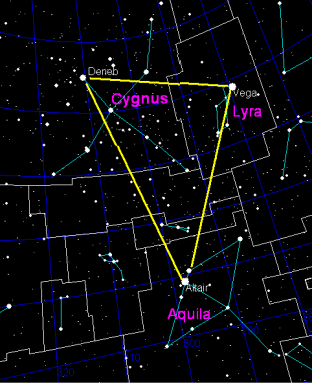
Advanced Education: Stokesville Observatory and Starry, Starry Night program: Due to impending clouds, the planned trip to the Stokesville observatory was cancelled. Instead, Chip Brown gave an introduction to astronomy and star viewing techniques, after which we went outside and located the Summer Triangle and its associated constellations of Cygnus, Lyra, and Aquila, as well as several other constellations.
Raffle: Tom Long led the 50/50 raffle. Tickets were $1 each (or 6 for $5.00),where the winner gets 50% of the pot and the rest of the money goes to the 2013 Focus Project. The winner was Ann Murray, who generously donated her winnings back to the Focus Project, for a total of $101. Tickets were also drawn to award several wildlife calendars brought by Paul Bugas.
Environmental Book Sale: Books donated by members were sold to raise money for the chapter. Judy Tammi supervised the sale, which raised $47.
Socializing: Members socialized in front of the fire while dining on many wonderful hot dishes and stews, salad, breads, and desserts.
The Summer Triangle is defined by the bright stars Altair, Deneb, and Vega in the three constellations of Aquila, Cygnus, and Lyra, respectively.
Business Meeting: President Sophia Cliffe conducted a business meeting between the two educational programs which included:
Sandy Greene’s presentation of Kate Guenther’s power point report on our 2013-2014 focus project to create a certified wildlife garden at the Wildlife Center of Virginia in Waynesboro.
Presentation of certificates to those members recently achieving Certified Master Naturalist status.