Category: Uncategorized

  • Trail Maintenance

    Trail Maintenance

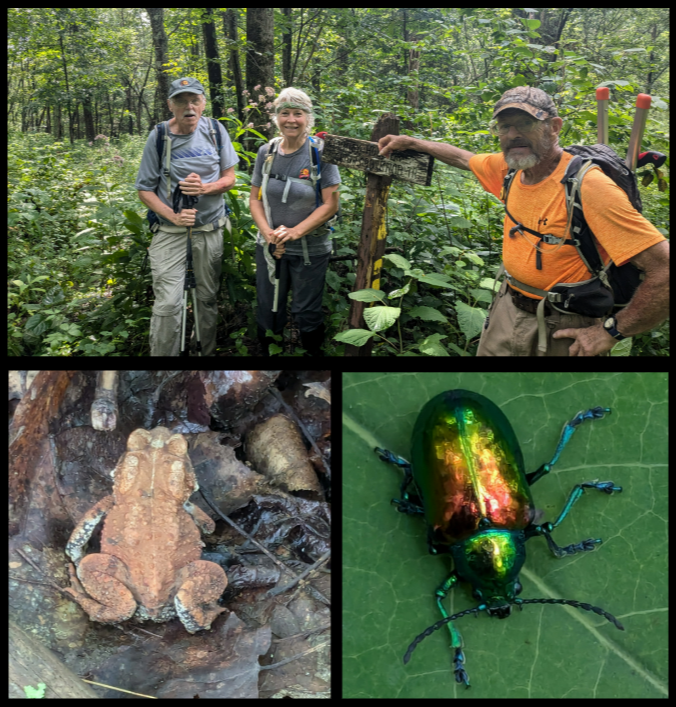
    Photos by Judy Barlett. Top from left to right, Michael Seth, Jean Stephens, and Jim Fye. Bottom left: American toad. Bottom right: Dogbane leaf beetle.

    On July 25, two Master Naturalists, Jean Stephens and Judy Bartlett, joined three other volunteers to clear a half-mile stretch of briars from the Crawford Knob Trail in the George Washington National Forest (GWNF). Under the direction of Lynn and Malcolm Cameron (another HMN!), about 40 maintainers tend to over 100 miles of trails in GWNF’s North River Ranger District; Lynn and Malcolm serve as North River’s District Managers for the Potomac Appalachian Trail Club (PATC).

    PATC member, Jim Fye, is the trail maintainer for Crawford Knob (#487, see map below), a lovely 2.5-mile trail north of Buffalo Gap. He, and many others, have spent countless hours making this tucked-away trail more accessible and enjoyable. On this recent work trip, we saw lots (and lots) of bear scat, several native flowers (e.g., tall bellflower, southern harebell, wild columbine, nodding onion, Joe-pye-weed), an American toad, and a dogbane leaf beetle.

    Segment of National Geographic Trails Illustrated map “791 Staunton, Shenandoah Mountain”

    We hiked in (and mostly up) about 3.5 miles from SR 688 (Old Parkersburg Turnpike), enjoying the sites, sounds, and each other’s company and then got to work on the briar patch that was blocking the trail. Jim and Jean shared some of the secrets of the trail, including two springs and two hidden outlooks. We had a blast! If you’re interested in doing trail maintenance, which counts towards your HMN hours, reach out to Lynn (slynncameron@gmail.com).

    Judy Barlett, Projects Committee Chair

  • Monarch Tagging and Release at Edith J. Carrier Arboretum

    Monarch Tagging and Release at Edith J. Carrier Arboretum

    Saturday, August 31, 2024
    11:00 AM – 12:00 PM
    Free

    Join us for an enchanting event at the Edith J. Carrier Arboretum as we host a monarch butterfly tagging and release. Witness the beauty of these delicate creatures up close as we contribute to vital research and conservation efforts.

    We invite participants of all ages! Join butterfly enthusiast and Virginia Master Naturalist Gail Napora for our Monarch Tagging and Release. Gail will journey with you through the life cycle of the butterfly with images, trace the route of migration from all points north to Mexico, then share the details of tagging as attendees help hold the butterflies and then release them. 

    Don’t miss this chance to be part of an inspiring moment in nature!

    Meet on the Ernst Tree Terrace beside the Frances Plecker Education Center.

    Register Here

    Please call 540.568.3194 or email Katie Rankin  at rankinkt@jmu.edu with any questions or concerns

    Additional information about monarch tagging HERE

  • Conservation Photography

    Conservation Photography

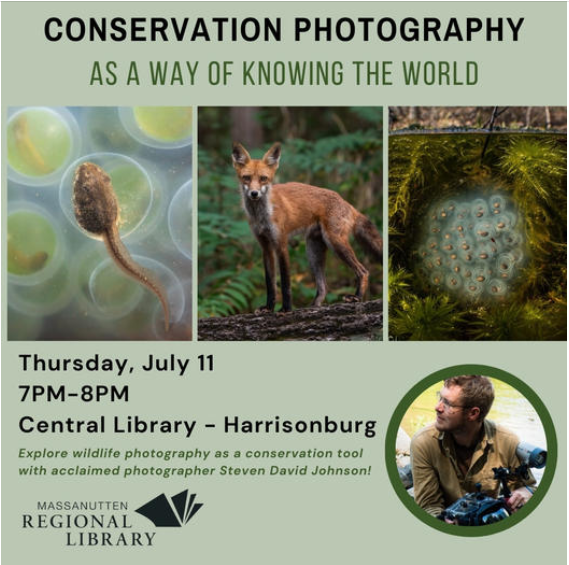
    Join us at the Harrisonburg Central Library, 174 S Main St, Harrisonburg, on July 11, from 7 to 8 pm, for an engaging event on conservation photography as a way of knowing the world. This event will feature stunning visuals and insightful discussions on how photography can highlight environmental issues and inspire conservation efforts. Don’t miss this opportunity to learn from acclaimed photographer Steven David Johnson and explore the power of photography in preserving our planet.

    Elaine Smith, CE Committee Chair

  • The Spongy Moth

    The Spongy Moth

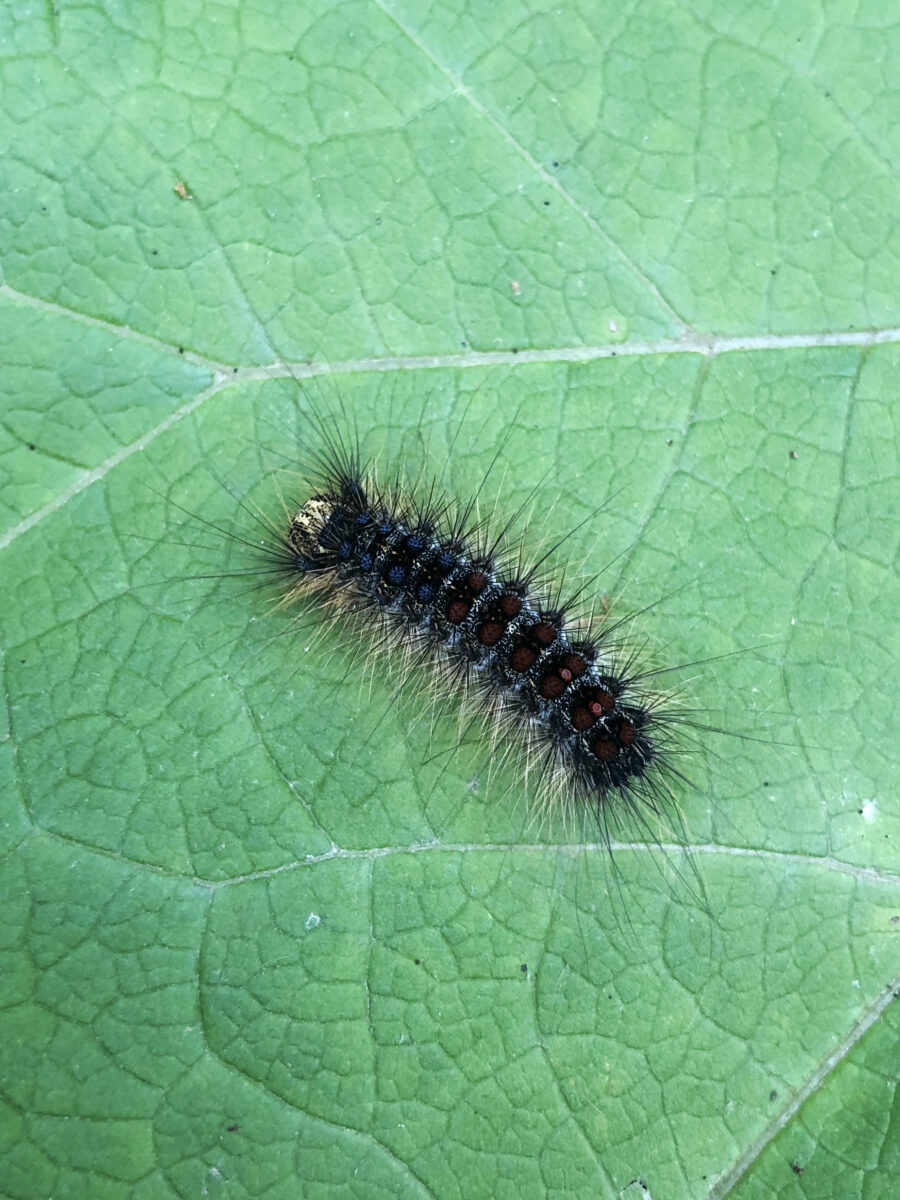
    Spongy Moth caterpillar.  Photo by Virginia Department of Forestry.

    The spongy moth, previously known as the gypsy moth, is an invasive species causing significant ecological and economic damage in Virginia. Originating from Europe, it was accidentally introduced to North America in the late 19th century. The larvae of this moth are voracious feeders, primarily targeting oak trees but also consuming over 300 other species of trees and shrubs. Their defoliation can weaken trees, making them more susceptible to diseases and other pests, and can lead to long-term forest health issues. Virginia’s forests, which are a critical part of its ecosystem and economy, are particularly vulnerable. Efforts to manage and mitigate the spread of the spongy moth include monitoring, the use of biological control agents, and public education to prevent further dissemination.

    The Department of Forestry monitors spongy moth populations and impacts to address outbreaks on state lands and help inform suppression efforts on other lands in cooperation with Virginia Department of Agriculture and Consumer Services, U.S. Forest Service – George Washington and Jefferson National Forest and localities. You can also help us track spongy moth populations by reporting sightings on iNaturalist.org.

    Most trees can withstand a year or two of defoliation from spongy moth caterpillar feeding, but there are additional measures landowners can take to protect their trees.

    Learn more on DOF’s website: https://ow.ly/hsOe50RK0Ne

    Virginia Department of Forestry’s Post

  • “Rattlesnake Granny” Update!

    “Rattlesnake Granny” Update!

    Thank you to those who reached out after reading February’s Headwaters Highlights article about the upcoming release of my first book, “Rattlesnake Granny”. Here are some updates.

    The short historical fiction book has been out since February 14, 2024. Being a self-published author has been fun. The full title of the book is “Rattlesnake Granny:  Nancy Remembers Life in Old Thornton Gap, Inspired by True Stories”.

    Incorporating natural elements in the narrative was one of my favorite parts of storytelling. There are characters’ interactions with wildlife and also with the Blue Ridge/ Shenandoah Valley land where they were living in the 1800s. Thornton Gap is now part of Shenandoah National Park.

    Land use by these historical characters was largely consumptive. The story is voiced by my fictional version of Nancy Pullum. She is based on a mountaineer rattlesnake catcher as remembered by Herbert Barbee (1848 – 1936) and told to Virginia historian Dr. John W. Wayland (1872 – 1962) when Wayland visited Barbee in 1932. Herbert Barbee knew Nancy when he was a boy growing up in Thornton Gap. He said that Nancy was catching rattlesnakes to fry them and render their oil into ointment to treat arthritis. Apparently, she made a good living at this trade.

    Readers often ask me about the effectiveness of Nancy’s rattlesnake oil, if it would really help ease inflammation. I found out that rattlesnake oil does have some omega-3 fatty acids that might have been somewhat effective as an ointment though not as effective of an anti-inflammatory as the high concentration of omega-3 fatty acids found in the Chinese water snake, which is also made into medicine. Later in American history, charlatans began to manufacture and hawk fake rattlesnake oil. Of course, this was a scam and is where we get our term “snake oil” for dubious panaceas, or cure-alls.

    After talking with Herbert Barbee, Dr. Wayland noted in his diary that the people of the surrounding area believed in Nancy’s snake oil medicine and that she was also confident in it. That reflection inspired me to write a scene in which the fictional Nancy is confronted by University of Virginia medical students. I read some writings by historic Virginia doctors while researching the narrative, and as you can imagine, they were less than favorable toward frontier medicine such as Nancy’s snake oil or the alternative Thomsonian Medicine practiced by another historic person in the book, Brethren Elder John Kline.

    The Barbee family of Thornton Gap are also characters in “Rattlesnake Granny” who are based on historic people. The family operated a tannery during the Civil War.  Herbert Barbee told John Wayland that they were tanning ox hides for the Confederacy when he was a young teen. This would have involved labor forces, including enslaved laborers, cutting bark from the chestnut oaks of the area. Such practices lead to erosion and some terrible odors as the hides were prepared. The ox hides were supplied by a man across the mountain.

    Characters in the book are also farming. Fictional Nancy raises hogs and has a milk cow. She mentions the practice of moving animals to higher ground to graze due to pasture loss in her area. A drover comes and takes her hogs out along the Great Road for sale.

    One of Nancy’s friends, in real life and in the book, was William Randolph Barbee (1818 – 1868). He was born into the big Barbee family of Thornton Gap and showed a natural talent for carving since his boyhood. As a young man, he studied law and worked as an attorney to raise funds to finance studying in Italy for his real passion, marble carving. I was delighted to see a book about Virginia marble on Michelle Prysby’s recent list of books by Virginia Master Naturalists in the Spring 2024 VMN newsletter, “The Pollinator”. A copy of “Potomac Marble – History of the Search for the Ideal Stone” by Paul Kreingold (VMN Banshee Reeks Chapter) is on the way to me and I look forward to learning where Barbee may have acquired his marble as well as reading about the natural history of this rock.

    There are numerous other incidents of human characters interacting with the natural world in the book. Characters face the elements as we do today. Like today, they are fascinated, and sometimes afraid of our native black bears. They cure and crack black walnuts, pick wild blueberries, and garden. They are annoyed by emerging cicadas, which Nancy calls by the old mountain name of “locusts;” and they face the snow and ice that still covers the area in the winter today. They interact with the environment in benign ways such as planting daffodils to make a homesite more welcoming and in destructive ways, such as setting fire to the mountainside to destroy rural industry during the Civil War.

    Summer book talks are scheduled where I will be talking about how the Rattlesnake Granny story was created and about the real people who inspired the book. Book talks are scheduled on the evening of July 17th for the Augusta Military Academy, from 11am to 12:30 pm on July 20th at the North River Public Library in Bridgewater, and starting at 10:30 am on August 3rd at Rocktown History in Dayton, Va. More information can be found HERE.

    “Rattlesnake Granny” is found at the North River Public Library in Bridgewater and the John Kenny Forrer Learning Commons at Bridgewater College.

    It can be ordered online through the Bridgewater College Campus Store HERE and OASIS Fine Arts of Harrisonburg, Virginia. Rattlesnake Granny | OASIS (oasisfineartandcraft.org). It can also be ordered and shipped from the Dayton Welcome Center of Dayton, Virginia, and Turner Hams & Fulks Run Grocery. Other places that carry the book are Rocky Cedars Enterprises of Dayton, Cottage Crafts at the Bridgewater Retirement Community, and the Edinburg Mill Museum.


    A sequel is underway with more history and local folklore! I’m looking forward to exploring the ongoing friendship of Nancy and the character John, who was based on a historic man who was enslaved and later emancipated by the Barbee family. Herbert Barbee said that “John” and Nancy were neighbors and that John was a prolific gardener. I want to write more about the rural industry in historic Thornton Gap. And there is a fun new fictional character to whom Nancy can tell many big tales of life in this area of Virginia.

    Stephanie Gardner