Chapter happenings

  • State Program Review Nearing Completion

    by RoxAnna Theiss

    State program coordinator Alycia Crall with HMN leaders Sandy Greene, RoxAnna Theiss and Barb Frew, July 2013
    State program coordinator Alycia Crall with HMN leaders Sandy Greene, RoxAnna Theiss and Barb Frew, July 2013

    As you may know the Virginia Master Naturalist Program acquired a new coordinator, Alycia Crall, in January of 2013.  She comes to the Program from Rutgers University where she was serving as a postdoctoral scholar on a National Science Foundation funded grant to initiate citizen science projects with several of the VMN chapters.  Alycia got her bachelor’s degrees in Environmental Health Science and Ecology at the University of Georgia, her master’s degree in Ecology at Colorado State University, and her PhD in Environmental Studies at the University of Wisconsin-Madison.   You may be familiar with the needs assessment she initiated over the summer of 2013.  The results of that assessment informed her Strategic Planning sessions held during November in four Virginia locations.

    Headwaters members Tom Long and RoxAnna Theiss accompanied our Advisor, Paul Bugas, to the November 22nd session in Charlottesville.  There were at least fifty other Chapter representatives present for the all day session and it was packed with information and future planning.  There were nine topic breakouts and the three Headwaters representatives did a good job of covering most of them.

    The bottom line of all sessions was the concern at both local and state levels that running a Chapter not be overly burdensome at either level and that successes be supported and modeled.   Alycia is considering several upgrades and improvements to function and form of the Program:

    • There are on-line Advanced Training sessions starting in January.  Keep and eye on the VMN-VMS calendar for each month’s presentation.
    • There is a Financial Manual and the establishment of a state controlled Foundation account in process to make handling Chapter finances easier and less prone to stress.
    • There is under consideration the development of a pool of presenters from which Chapters can draw for Basic Training classes.
    • Addressing concerns about the implications of calling all graduates of the Basic Training Program “master” naturalists, the state program is considering implementing a tiered approach from “amateur” to “master” category.
    • The long awaited Manual for Basic Training is nearing completion and should be available in various formats from paper to digital.
    • Leadership training and a leadership manual will be part of the state program initiative.
    • There will be an increasing focus on the needs of Chapter members from more social connection via face to face and social media to matching interest with projects in an effort to build and solidify chapter and program cohesion.
    • And finally, the all important need to build awareness within the local and wider communities of the VMN Program is being addressed.

    It was a rewarding and worthwhile day – beyond expectations on many levels.  It created a hopeful energy for the future and an appreciation for the growth and commitment to the Program by so many capable and dedicated people.

    ___________________________________________________________________

    strategic planning topicsState program coordinator Alycia Crall has recorded her 48 minute presentation to the four statewide strategic planning sessions held in November, 2013, and made it available for viewing online here.

    _____________________________________________________________________

    The final step in our year-long strategic planning process is for all of you to help us prioritize the activities proposed for the statewide program during our needs assessment and strategic planning sessions through an online survey.  Please note the following:

    Some of the activities listed and/or policy changes in the survey may be perceived as radical by some, but we wanted to include all the ideas presented during the sessions.  Therefore, your feedback is very important to ensure that only those activities and policy changes deemed important or popular by all of you will be considered for implementation by the statewide program. …

    The final survey responses, along with findings from the needs assessment and strategic planning sessions, will be presented to our program’s steering and executive committees and several additional volunteer representatives at a meeting on January 23.  At this meeting, decisions will be made on how we plan to move the program forward over the next few years in light of available resources and feedback from all of you.

    To take the survey, click here: http://tinyurl.com/VMN-SPS-FinalVote

    Many thanks to all of you for participating in this process.  This is your program, and we wanted to ensure that you had multiple opportunities for input into this process.  As always, please feel free to email (acrall@vt.edu) or call me (434-872-4587) with any questions or concerns that you may have.

    Cheers, Alycia

  • When Continents Collide – Rocks Get Messed Up:

    Rodinia, Pangaea, and the rise of the Appalachian Mountains

    Story and pictures by: Tom Long, Fort Valley Community Center, December 19, 2013

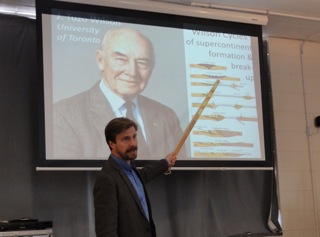
     Callan Bentley begins his description of the Wilson Cycle.

    Callan Bentley begins his description of the Wilson Cycle.

    A full morning of exciting geology activities awaited about a dozen members of Headwaters Chapter of Virginia Master Naturalists who made the trek to Fort Valley Community Center. But before the learning began there was time for a bit of socializing over coffee, juice, and pastries between members from each of the chapter’s three classes.

    First up was Callan Bentley’s high energy presentation on the Wilson Cycle, the process by which continents collide to form supercontintents and then rift to form small and more continents. Using layman’s terms and stunning graphics, Bentley, an assistant professor of geology at Northern Virginia Community College in Annandale, described how the collisions and rifts of supercontinents of Rodinia (between 1.1 billion and 750 million years ago) and Pangaea (between 300 million and 200 million years ago) reformed rocks while creating folds in the Earth’s crust that formed Virginia’s mountains. Saying “the present is key to the past,” Bentley explained how current geological processes along with fossil evidence, the continuity of mountain chains, and paleomagnetic studies support the theories of continental drift.

    After a short break, Dr. Eric Pyle, a geology professor at JMU, lead a hands-on presentation called “Sticky Rocks.” Not having millions of years and the tremendous heat and pressure of continents crashing into each other to “make and remake rocks,” we used a toaster oven, hard candy, and rock samples to recreate some of the common, and commercially valuable, rocks found across the Commonwealth. A specialist in geoscience education, Dr. Pyle used his demonstration to not only teach Headwaters Master Naturalists, but to demonstrate how science education can be fun and assessable to all ages.

    Wrapping up the day, Callan Bentley made a brief presentation on “Snowball Earth” explaining how some 650 million years ago the Earth’s surface was believed to be almost totally frozen. The theory offers answers on how glacially formed sedimentary deposits are found in tropical regions.

    Headwaters Chapter shouts out a big Thank You to Callan Bentley and Eric Pyle for enlightening and entertaining us. Thanks also to RoxAnna Theiss for organizing the symposium and to Fort Valley Community Center for the generous use of their facility.

  • Star Volunteer

    Dwayne at JMU arboretum
    photo credit: EJC Arboretum

    Certified Master Naturalist Dwayne Martin (class of 2013/2nd class) devotes hundreds of volunteer hours a year to the Headwaters Chapter partner organization Edith J. Carrier Arboretum on the campus of James Madison University in Harrisonburg. Dwayne’s dedication to the arboretum has earned him the title of “EJC Arboretum Volunteer of the Year” 2013!

    The arboretum welcomes all master naturalists to engage in a wide variety of volunteer opportunities there including as “Trail Stewards,” a position created exclusively for certified Master Naturalists and Master Gardeners.

    The 125 acres of gardens and forests that comprise the arboretum are “open free to the public, dawn to dusk, 365 days a year.” The many ecosystems represented and many trails provide a convenient place to study nature.

    You can find Dwayne on the arboretum grounds most Tuesdays. He offers this background on his work there:

    It all started back when I was working as a computer programmer at JMU. The university had “Employee Appreciation” days when the employees took off work and went to movies or played games or tried out segways or something similar.  One of the options was “Working at the Arboretum.”  That sort of “work” sounded like more fun than any of the planned activities, so I tried it, and sure enuf, it was!  So, when I retired from my job at JMU the first thing I did was call up the Arboretum and ask if they would like a volunteer, and they did, and it was just as much fun as I remembered it!

    winged burning bush
    winged burning bush, Euonymus alatus | click on the image to learn more about this VA invasive

    Basically, I go to the Arboretum every Tuesday morning and do whatever they ask me to. I do a LOT of weeding and removing of invasive species. Right now I am waging a war of extermination against “burning bush.”  I THINK I’m winning.

    Sometimes I help set up for plant sales or other miscellaneous work. I mainly go because I love the place, and it feels good just to be there and know that I am contributing to it. And it seems to be mutual. They invented the “Volunteer of the Year” award just for me! “Trail Steward” basically means walking along a trail and digging up plants that are leaving the woods and venturing out into the trails. In reality, that is only a small portion of what I do on a typical day.

    click on this map image for a better view
    click on this map image for a better view and to find more maps of the arboretum

    To learn more about volunteer opportunities at the Edith J. Carrier Arboretum and Botanical Gardens click here. Attending a short orientation session is required; these are offered twice monthly.

    Besides his many volunteer hours as a Master Naturalist, Dwayne’s involvement with our chapter extends to being the 2013-15 co-chair of the HMN Membership Committee with his wife Pat Martin and to being our “resident entomologist.” His early training in, and enthusiasm for entomology qualified him to present this topic to the 2012/13 HMN training class in the spring of 2013.

  • Audubon’s Christmas Bird Count

    “One hundred and fourteen years and still counting ……”

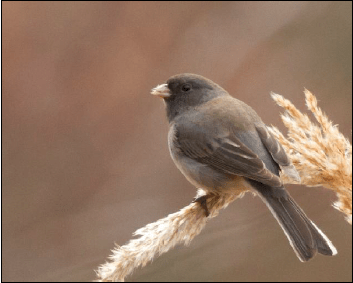
    Junco
    Dark-eyed Junco in western Rockingham County | photo by Diane Lepkowski

    As some of you may know, Frank Chapman, an officer in the early stages of the formation of the Audubon Society, suggested changing the Christmas ‘Side Hunt’ (a competition of choosing sides and who could shoot the most game…feather and fur) to a ‘Christmas Bird Census’ that would count birds versus shoot birds.  Twenty seven birders in 25 different areas tallied 90 species on December 25th, 1900.  Thus began the annual Christmas Bird Count and what is now the longest running citizen scientist wildlife survey!

    According to the Audubon website for last year, there were 2,248 CBC circles and approximately 63,000 participants tallying over 60 million birds.  All 50 states, all Canadian provinces, plus 99 count circles in Latin American, the Caribbean and the Pacific Islands participated. The Audubon website states “Each of the citizen scientists who annually braves snow, wind, or rain, to take part in the Christmas Bird Count makes an enormous contribution to conservation. Audubon and other organizations use data collected in this longest-running wildlife census to assess the health of bird populations – and to help guide conservation action.”

    Please check the December/January VMN-VMS calendars for details of the three circles active in the Rockingham/Augusta area for this year.

    This is a great opportunity to round up some approved project volunteer hours before the end of the calendar year.  And it’s full of fun and camaraderie.

    Hope to see you at one!                     –  RoxAnna Theiss, November 27, 2013

    _____________________________________________________________________________

    This year’s Christmas Bird Count (CBC) will be held from December 14, 2013 – January 5, 2014. The Audubon website tells us:

    There is a specific methodology to the CBC, and you must make arrangements to participate in advance with the circle compiler, but anyone can participate.

    Each count takes place in an established 15-mile wide diameter circle, and is organized by a count compiler.

    If you are a beginning birder, you will be able to join a group that includes at least one experienced birdwatcher.

    If your home is within the boundaries of a CBC circle, then you can stay at home and report the birds that visit your feeder on count day as long as you have made prior arrangement with the count compiler.

    To participate in this project, please contact one or more of the compilers for our three local circles:

    • A mostly Rockingham County circle is centered at Ottobine Rd. and Clover Hill Rd. (257 and 613). Its count will be on Saturday, December 14. Contact Bill Benish, 540-908-7336, wcbenish[at]comcast.net  If at all possible, he needs to hear from you by December 7 for you to participate.
    • An entirely Augusta County circle is centered at Verona. This count will be on Sunday, December 15. Contact Allen Larner, birdergonewild[at]yahoo.com
    • A third counting circle in our area straddles the Augusta and Nelson County lines incorporating Stuarts Draft and parts of Waynesboro. It will be held on Saturday, January 4, 2014. Contact Crista Cabe, ccabe[at]mbc.edu no later than December 14.

    More from the pages of the Audubon Christmas Bird Count website:

    Ten Things We Learned from Audubon’s Christmas Bird Count

    1. Birds are not Climate Skeptics, having spoken with their wings.
    2. The Bald Eagle is back; the Endangered Species Act Works
    3. Many of America’s most familiar and beloved birds are in serious decline.
    4. Eurasian Collared-Doves invaded America
    5. Peregrine Falcons are no longer in trouble
    6. Sage-grouse are in deep trouble WatchList
    7. More and more hummingbirds are staying in the USA and Canada for winter
    8. “Eastern” House Finches having been moving west for 60 years
    9. How fast and how far West Nile virus spread
    10. Birds are early indicators of environmental problems that can affect people

    See more here http://birds.audubon.org/how-christmas-bird-count-helps-birds

  • Monarch Madness

    by Frank Deckert  November 19, 2013  … as written to HMN facebook administrator Kate Guenther

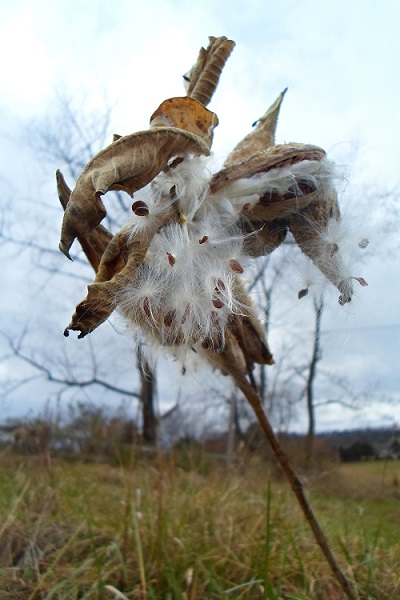
    monarchmilkweed gone to seedOn November 7, my wife Gloria and I went to Berkeley Glenn Elementary School in Waynesboro to participate with 60 third graders in a milkweed seed “planting”.  …

    The day was beautiful, the kids were enthusiastic and many thousands of seeds were distributed by the kids and the wind in a natural area on school property.  PE teacher, Mr. Freeman, coordinated the project at the school.  Gloria is president of the Waynesboro Woman’s Club which co-sponsored a Monarch Butterfly Art Contest at the school with the Waynesboro Public Works Department. Gloria passed out award certificates to the contest winners (and did a great job of displaying the sign that warned mower operators not to mow the milkweed).

    In Waynesboro, Coyner Springs Park, Berkeley Glenn Elementary School and the new hilltop park will all be designated as official monarch migration sites.