Category: Member Spotlight

  • Member Spotlight: Gail Napora

    Member Spotlight: Gail Napora

    gailandpictureIn an effort to get to know our members better, we are featuring an occasional post spotlighting one of our Headwaters Master Naturalists. Over forty Master Naturalists strong, our chapter draws strength from a wide variety of diverse talents and personalities, each deserving of their own spotlight!

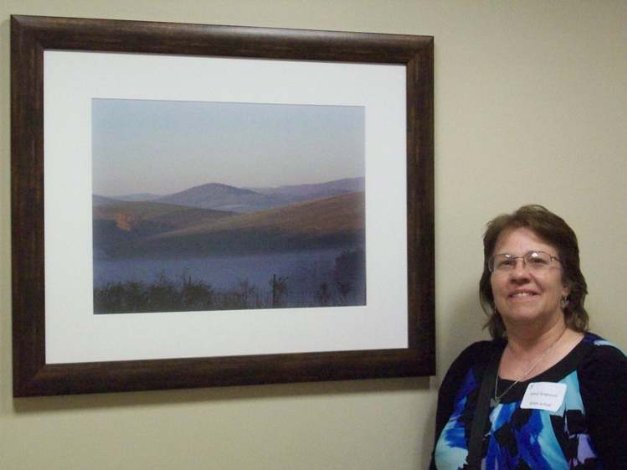
    With her upcoming public presentation on Monarchs and Milkweeds as part of the James Madison University’s Edith J. Carrier Arboretum’s Summer 2014 Brown Bag Lecture Series, our chapter historian, Stephanie Gardner, interviews HMN Gail Napora (Cohort I) for this Member Spotlight.

    bickyI have been exploring your author’s page at Amazon.com and reading about you through your teaching with the Lifelong Learning Institute at JMU. Wow, you stay busy!  Please tell us a little about yourself and your work.
    I am a creative person who loves creatures. In most things I have done, there is a natural element to reflect nature. For example, I am a scroll saw artist who does a special kind of wind chime featuring birds, elephants, and other creatures, and I have an entire line of arks with animals. In my photography, I focus on nature and taught photography in the community and through JMU’s LLI for many years before assembling images into books. As a full time employee, doing technology/software training for adults, I take my lunch time to explore nature sights, courses, and outdoor events. If I were to summarize my attitude, I would say that I strive to respect all creatures, all of the time.

    I saw that you like to read.  Me too!  What is on your reading list this summer?
    This summer I am reading research about bees, and anything by Malcolm Gladwell (right now that is Blink!).

    What about butterflies most fascinates you?
    Someone said that ‘butterflies are flying flowers’ and I like that they are so colorful and complex.

    Will you tell us about your upcoming program at the Edith J Carrier Arboretum and Botanical Gardens at JMU?
    At the EJC Arboretum I will tell the story of a lone butterfly weed plant and weave into the tale everything about the M’s: milkweed, mating, munching, metamorphosis, monarchs, mimics, and migration. In celebration of the 25th anniversary of the EJC Arboretum, we will also release monarchs.

    I know people that are interested in Monarchs and want to help them but don’t know where to start.  What are some ways that everyone can help increase the Monarch population?
    To me it has always been simple. For there to be monarch butterflies, we must provide food for monarch caterpillars. If every person plants and protects one plant, the monarchs will have what they need to survive and thrive.

    What other projects are you working on this summer?
    This summer I am doing a lot of family activities. Our squad of 4 (ages 14-22) each are exploring square foot gardening. Part of each box is devoted to butterfly weed as I am working to establish our 7 acres as GailwithDisplaya Monarch Waystation.
    What have you enjoyed most about being a member of Headwaters Master Naturalists?
    Headwaters Master Naturalists are genuinely nice people who ardently take care of, and protect, nature. Being a part of such a group is soul-nourishing.

  • The Value of Making a Difference

    The Value of Making a Difference

    So, What Did I Get? And What Am I Getting?

    RoxAnna Theiss


    RoxAnna at 3in1.croppedjpgIn the fall of 2011 I took my Master Naturalist Training.  There were 22 ish in the class and we spent nine weeks learning whatever could be crammed into nine weeks about the natural world and the conservation and preservation of Virginia’s natural resources.  I went through the coursework and came away from the class knowing much more about the natural world but very little about my classmates.  I did not engage.  I barely interacted.

    Then for some totally unknown reason (although, now that I think about it – that take home assessment and my decision to focus on the Geology question which cost me several sleepless nights had something to do with it), when our Chapter Advisor sent out an e-mail asking for volunteers for positions in Chapter development, I felt the need to respond positively.  I honestly thought the Chair-ship of the Training Committee would be a cake-walk of sorts.  I mean, how hard could it be?  Talk about simpleminded!  It all seemed so very doable!

    When it happened, I do not know.  But in the process of creating and implementing the curriculum, analyzing my training experience and how I thought we could go beyond that experience, pouring over the policy manual, forming the Training Committee and getting to know the other six souls who also raised their hands to make the Headwaters Chapter a real live entity, I went from disengaged to totally immersed.  And I mean totally!

    Now, it’s almost three years later and what did I get?

    I got a community.   Headwaters is fast becoming a community of like-minded people who care about and are willing to work toward the betterment of our region of the Shenandoah Valley.  We are becoming teams.  Our chapter is becoming a unit.  We are known and respected not only as a by-product of our association with the Virginia Master Naturalist Program but because we are making ourselves useful and exceeding the minimum at every turn.  And for me that means our community reaches beyond, well beyond any of the minimums set in policy.  When I learned that most chapters experience a 40% drop off after the training program was completed – I promised myself: not this chapter!  It has come to my attention that we are coming to be regarded as “promising” . . . a community that can make a difference.  With this understanding, I get a strong sense of pride to be associated with Headwaters.

    I got a big self-respect boost.  It happened gradually.  I might make a “cold call” trying to recruit a speaker or a field trip leader and these people I called responded so positively and so immediately for the most part that I could not help but associate it with the VMN Program and its mission.  I was calling people who believed in the same work and mission.  It bolstered my determination and drive.

    I got to know some awesome people.  My classmates, for instance, turned out to be real movers and shakers in the environmental and natural resource management world locally.  And now that they knew me, that original disengagement fell away.  The real magic occurred with the first Basic Training class I coordinated.  Talk about a special group of people!   They showed me what a difference a group can make when they team up to work together to “make something happen”.  That’s when I understood the key to avoiding the dreaded 40% rule: the development of a cohesive unit of people who care about the same thing can overcome obstacles and make their own destiny.

    I got to learn more than I ever expected.  I get free Advanced Training.  I get to meet and converse with our speakers and field trip leaders.  I get to provide others the same opportunity and see all their light bulbs going off and the joy of learning and giving back in their faces as they make connections and increase their understanding beyond their expectations.  I get to see the trainees turn into movers and shakers in the chapter and loving the work.  I get to help.  I got to grow.  I get to make a difference.

    But all this did not come free.  Because you get back only what you are willing to invest, I came to understand that for Headwaters to be the best it could be we would need more resources than the training fee and more than volunteer time for approved projects.  We would need more than tangible resource investment; we would need both an instrumental and intrinsic value philosophy.  We would need to understand that although the main purpose of the VMN Program and its Chapters is to be instrumental in the preservation and conservation of Virginia’s Natural Resources there is also an intrinsic value to be discovered.  The experience of Headwaters is more than a means to an end.  It has value in and of itself.

    Even though all the feedback I get tells me the trainees and the chapter gets a big bang for their training fee buck and Virginia gets an extraordinary corps of volunteers for her natural resources – I understand that to move forward and to build a strong and lasting foundation allowing us to multiply our effect many fold – we need more than the minimum of both time on natural resource management and more than money from the training fee or any other source.  Attitude can be as valuable a resource as either of these more tangible constructs.  The resources of time and money from people who care spread evenly and fairly across the whole membership, help us build a chapter that can be far more than the sum of its parts.  The resource of attitude broadens the value of making a difference and helps make us immune to the deadly 40% rule.

    So what have I gotten, and what do I continue to get?   As if all the above were not enough, I have gotten and continue to get a better me, a better Shenandoah Valley, a better Virginia, a better America and a better world.  Pretty good deal, to my way of thinking!

    piggy_bankd4517aThanks to RoxAnna for this contribution to our chapter discussion about the need for membership dues! More about this here.


  • Journalist in Our Midst

    Journalist in Our Midst

    Headwaters Chapter certified master naturalist Stephanie Gardner penned a monthly naturalist column for our area’s Daily News-Record’s North Fork Journal and Shenandoah Journal in 2012.

    In her words, here’s how Stephanie got started as a columnist:

    Stephanie
    Stephanie

    In autumn of 2011, Lauren Jefferson, then editor of the Daily News-Record’s North Fork Journal and Shenandoah Journal, was looking for a nature writer as a 2012 monthly guest columnist.  She had recently written an article on the Virginia Master Naturalists training course and thought a Master Naturalist might make a good potential guest nature author and photographer.  She also wanted the columnist to be from one of the areas served by her publications.

    Rivanna Master Naturalist, Jim Lawson, passed along my name to her as a Virginia Master Naturalist who had recently moved to Bridgewater, Virginia.  I had recently completed Master Naturalist training in Blacksburg, Virginia through the New River Valley chapter and was in Bridgewater as the new Special Collections Librarian at Bridgewater College.  I started writing the column and later was happy to connect with the Headwaters Chapter.  I declined payment for the column and used it toward fulfilling my Virginia Master Naturalist volunteer hours in 2012.

    It was great fun to write and research the columns.  Although I am certainly not the most qualified person to write on many of these subjects, I learned a lot and hope the columns sparked interest in citizen science among their readers.

    Find links to many of Stephanie’s Adventures of a Citizen Scientist columns in the image captions below.


  • Star Volunteer

    Star Volunteer

    Dwayne at JMU arboretum
    photo credit: EJC Arboretum

    Certified Master Naturalist Dwayne Martin (class of 2013/2nd class) devotes hundreds of volunteer hours a year to the Headwaters Chapter partner organization Edith J. Carrier Arboretum on the campus of James Madison University in Harrisonburg. Dwayne’s dedication to the arboretum has earned him the title of “EJC Arboretum Volunteer of the Year” 2013!

    The arboretum welcomes all master naturalists to engage in a wide variety of volunteer opportunities there including as “Trail Stewards,” a position created exclusively for certified Master Naturalists and Master Gardeners.

    The 125 acres of gardens and forests that comprise the arboretum are “open free to the public, dawn to dusk, 365 days a year.” The many ecosystems represented and many trails provide a convenient place to study nature.

    You can find Dwayne on the arboretum grounds most Tuesdays. He offers this background on his work there:

    It all started back when I was working as a computer programmer at JMU. The university had “Employee Appreciation” days when the employees took off work and went to movies or played games or tried out segways or something similar.  One of the options was “Working at the Arboretum.”  That sort of “work” sounded like more fun than any of the planned activities, so I tried it, and sure enuf, it was!  So, when I retired from my job at JMU the first thing I did was call up the Arboretum and ask if they would like a volunteer, and they did, and it was just as much fun as I remembered it!

    winged burning bush
    winged burning bush, Euonymus alatus | click on the image to learn more about this VA invasive

    Basically, I go to the Arboretum every Tuesday morning and do whatever they ask me to. I do a LOT of weeding and removing of invasive species. Right now I am waging a war of extermination against “burning bush.”  I THINK I’m winning.

    Sometimes I help set up for plant sales or other miscellaneous work. I mainly go because I love the place, and it feels good just to be there and know that I am contributing to it. And it seems to be mutual. They invented the “Volunteer of the Year” award just for me! “Trail Steward” basically means walking along a trail and digging up plants that are leaving the woods and venturing out into the trails. In reality, that is only a small portion of what I do on a typical day.

    click on this map image for a better view
    click on this map image for a better view and to find more maps of the arboretum

    To learn more about volunteer opportunities at the Edith J. Carrier Arboretum and Botanical Gardens click here. Attending a short orientation session is required; these are offered twice monthly.

    Besides his many volunteer hours as a Master Naturalist, Dwayne’s involvement with our chapter extends to being the 2013-15 co-chair of the HMN Membership Committee with his wife Pat Martin and to being our “resident entomologist.” His early training in, and enthusiasm for entomology qualified him to present this topic to the 2012/13 HMN training class in the spring of 2013.

  • The National Wildlife Federation Honors Sandy Greene with a Special Achievement Award

    The National Wildlife Federation Honors Sandy Greene with a Special Achievement Award

    Sandy GreeneSandy was among “six National Wildlife Federation volunteers … recognized for their outstanding contributions to the organization’s conservation efforts at NWF’s annual meeting in Albuquerque, New Mexico on Saturday, March 16th, 2013,” described here.

    For decades, Sandy Greene has taught adults and children the importance of environmental stewardship with imagination and joy.

    For the twelve years she has served as Education Specialist at the Headwaters Soil and Water Conservation District in Verona, VA , Sandy has partnered with local, state and federal agencies, and the school systems themselves, to provide over 200 field trips for 22,000 students, in addition to over 300 classroom presentations, 50 teacher workshops and tours and 78 civic programs.

    For many years she worked at The Wildlife Center of Virginia, coordinating field trips.

    Recognizing the watershed connections between their farm and the Shenandoah River, Sandy and her husband walk the talk, with riparian buffers, wildlife plantings and solar power. Sandy has served on a variety of Boards, including the Shenandoah Valley Pure Water Forum and the Virginia Association of Soil and Water Conservation Districts Education Committee, taught summer courses and teacher workshops, and often coordinated outdoors experiences for students, teachers and the general public.  Sandy was appointed by two governors to The Foundation for Virginia’s Natural Resources, and is a certified Virginia Master Naturalist.

    She was named National Outstanding Environmental Educator of the year in 2006 by Project Learning Tree, and received the National Education Award in 2007 from the Daughters of the American Revolution.  Now retired, Sandy is busier than ever, volunteering with partners and agencies on behalf of the natural and wild areas around us.

    Partially reprinted from the National Wildlife Federation March 16, 2013, Awards Winners Bulletin

    Sandy Greene is currently the Membership and Projects Chairperson for the Headwaters Chapter of the Virginia Master Naturalists