Category: Member Spotlight

  • Meet our board: Brian Lux

    Meet our board: Brian Lux


    The first in a series to learn more about who’s doing the work behind the scenes to keep our Chapter running along

    Stephanie Gardner, HMN Board Historian and Parliamentarian, is conducting a series of online interviews with the members of our 2021 Board of Directors, starting with:

    Brian Lux, President of the Board

    Brian Lux, HMN President, April 2021

    How long have you been a Virginia Master Naturalist?  Of which Headwaters Master Naturalist cohort are you a member?

    Since 2015, Cohort IV

    What is your position on the HMN Board?  How long have you been serving?

    Currently in the second year of my two year term as President

    Have you held other positions on the HMN Board?

    Basic Training Director

    What is your favorite thing about your role in the chapter?

    I enjoy helping people with different personal and professional circles make connections with each other through nature. 

    What have been some of your most memorable activities/projects as a VMN?

    I’ve enjoyed doing outreach events, especially in the local schools via in class or field excursions. One of my favorite programs was a collaboration with Sandy Greene at her house with gifted students from Rockingham County.

    What are your future hopes for our chapter?

    I’ve seen our chapter double in size since I first became a member and look forward to seeing us continue to grow and expand partnerships with other organizations to help connect people with nature as inquisitive citizen scientists.

    Where in the Valley do you live? 

    I live in the Dayton area.

    Are you originally from Virginia?

    I originally am from Pennsylvania, but have been in Virginia for most of my adult life. 

    Please tell us a little about your past or present career(s).

    Currently, I am the owner and director of Sequoia Programs, a residential summer program serving gifted and twice-exceptional young men in Pennsylvania. Previously, I founded the Hawaii Volcanoes National Park Institute in Hawaii and have been an educator in Hanover, Warren, Rockingham, Augusta and Frederick counties in Virginia.

    What do you do enjoy doing when not volunteering for VMN?  

     I am an avid traveler and am planning on visiting my 7th continent within the next year. 

    If you were an animal, plant or fungus; what kind would you be?

    I’d like to consider myself a Banyan tree. I loved these trees when I was in Hawaii and the connections that they would make with each other through shared and intertwined root systems. 

    What are you most looking forward to in 2021?

    I’m looking forward to getting out in nature more than in 2020 and the promise of being able to get together in groups again.

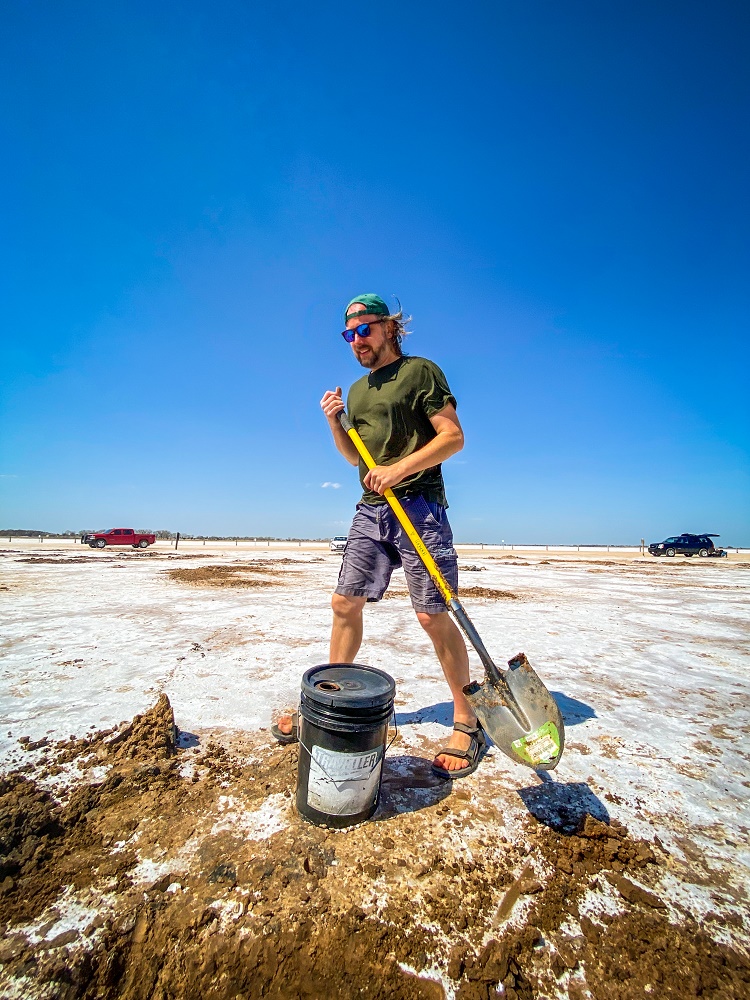
    Brian digging for crystals at Salt Plains State Park in northern Oklahoma.
  • Meet Our New Transfer, Chelsea Trice!

    Meet Our New Transfer, Chelsea Trice!

    chelsea600

    Photo: from our new transfer Chelsea Trice


    Interview by Stephanie Gardner
    How long have you been involved in the Virginia Master Naturalists program? 
    Since spring 2015!

    What were some of your favorite past volunteer and leadership projects with VMN?
    Favorite volunteer project: volunteering at Camp Albemarle under the watchful eye of Lauriston DaMitz, TJSWCD, who was also an RMN and several other AMAZING RMN volunteers (Marilyn Smith and Ida Swensen)…where I spent most of my time in the stream with kids and bugs!! That kind of trailed into spending more time in the streams doing some citizen science. This amazing experience at Camp Albemarle turned into a seasonal job!

    In what areas will you continue to volunteer or are looking forward to exploring?
    Anything to do with plants, nature, education, water and macros, and maybe art!!

    Do you have any favorite memories of amazing, odd or funny moments in your VMN training and volunteer work thus far?
    I honestly think that I owe my mom a big one–she told me that I needed to keep myself busy as I was finishing school, but the last thing that I wanted to do was go to these late training classes after dinner all the way in town…fast forward to the present day where all of my jobs have spun out of those experiences at Camp Albemarle. I now work at the Conservation District in Harrisonburg, try to keep in touch with Lauriston as much as I can, and even try to catch up with her at VASWCD training events!!

    Please tell us about other interests and hobbies that you enjoy.
    I enjoy getting outside–hiking, camping, hammock-ing, and gardening! Bonus points if I can do these things with friends and family. I also love to bake and cook and do just about every artistic thing you can come up with. I definitely don’t do it enough, but I also like to read and do puzzles (before my cat knocks all the pieces off the table!). All said and done, my true love lies with a boat on the water.

  • Betty Rosson Forrest May 6, 1935 – March 16, 2020

    Betty Rosson Forrest May 6, 1935 – March 16, 2020

    BettyArbot600

    Photo: by Edith J. Carrier Arboretum


    Beloved volunteer and supporter of the Arboretum

    Betty was remembered in last month’s newsletter, but the Edith J. Carrier Arboretum also wrote of her and her contributions to the Arboretum so I’d like you to see the lovely remembrance of her.

    Betty lived life to the fullest! She was still hiking and enjoying nature at the age of 81. She taught me so much about nature and Virginia wildflowers. I will always cherish my memories of her and the adventures we shared.” -Ginger

    Betty Rosson Forrest was one of the Arboretum’s dedicated and long-standing volunteers. The Arboretum plans to plant Blue Wild Woodland Phlox in her memory this spring. We are so thankful for Betty’s contributions over the years and her enthusiasm for Virginia native plants. On behalf of our staff, we send our dearest condolences to her family and friends.

    From Kyger Funeral Home’s Obituary for Betty:
    Betty loved nature and spent much of her life working as a guide for the Shenandoah National Park and was a lifelong volunteer at the Edith J. Carrier Arboretum. Betty traveled the world feeding her desire for knowledge of birds, plants, and flowers. She was a Girl Scout leader for 16 years and developed many friendships and impacted many young lives. She also played the organ at Brown Memorial United Church of Christ in McGaheysville, VA, for 25 years.

    Memorial contributions may be made to the Edith J. Carrier Arboretum.
    A celebration of life will be held at a later date.

    Full Obituary Here

  • Welcome Jean!

    Welcome Jean!

    jean.shalebarrens

    As a means of introducing her to our Chapter, HMN Stephanie Gardner recently corresponded with our newest member, Jean Stephens, to see if she’d be willing to let us know a little about her. Jean transferred to the Headwaters Chapter from the Richmond area’s Riverine Chapter last January. She brings our “transferee cohort” up to seven members.

    Stephanie suggested some questions for Jean which she addressed below. Thanks to Stephanie and Jean for this introduction!

    • How long have you been involved in the Virginia Master Naturalists program?
    • What were some of your favorite past volunteer and leadership projects with VMN?
    • In what areas will you continue to volunteer or are looking forward to exploring?
    • Do you have any favorite memories of amazing, odd or funny moments in your VMN training and volunteer work thus far?
    • Please tell us about other interests and hobbies that you enjoy.

    From Jean:

    I am transferring to the Headwaters Chapter from the Riverine Chapter in Richmond. I have recently retired and moved to Staunton. I was a member of the Riverine Chapter’s Class of 2015, so have been a master naturalist for four years. I was active on the Board of the Riverines as Treasurer for two years and as Chairperson of the Projects Committee for one year. The project I have been most active on during the past four years is pulling invasive plants in Shenandoah National Park (SNP). I have been assigned a trail on Loft Mountain where I have been pulling invasive plants for the past seven years, even before I was a master naturalist. I am hoping to continue this work in SNP, as well as any other projects of this type with the Headwaters Chapter. I have already been active on some trail work projects in both SNP and the George Washington National Forest this year.

    One of my favorite memories with the Riverine Chapter was our 10 year Anniversary Celebration. The Chapter celebrated the ten years it has been in existence with a picnic at the Rice Center off the James River in Charles County, Virginia. We gathered in the morning and everyone had the choice of working on one of two service projects for the Rice Center or attending a nature journaling class. We also held an informal photo contest. Afterwards we had a great lunch. Everyone enjoyed the opportunity to give back to the Rice Center where we often had continuing education classes on frogs, toads, salamanders and vernal pools, as well as having the opportunity to spend the day with Chapter members.

    In addition to my work as a master naturalist, I enjoy hiking, camping, gardening (especially with native plants), and looking for spring wildflowers. I am looking forward to meeting everyone in the Headwaters Chapter at various events soon.

    Welcome to the Headwaters Chapter Jean!

    That’s her in the photo at top with the camera. She took some great photos on the Wildflowers of Virginia Shale Barrens trip on April 22, 2019. Photo credit: Malcolm Cameron, Cohort III.


  • Headwaters Welcomes Leslie

    Headwaters Welcomes Leslie

    leslie.ashman.600

    Leslie Ashman recently transferred to the Headwaters Chapter from the Banshee Reeks Chapter in northern Virginia. To help introduce her to Chapter members, HMN Stephanie Gardner corresponded with Leslie to find out a bit about her and her work with the Master Naturalists program:

    How long have you been involved in the Virginia Master Naturalists program?

    Let’s see… My VMN participation began when I started classes at Banshee Reeks in September, 2015.

    Please tell us the story behind the name of Banshee Reeks, the chapter from which you transferred!

    Taken directly from the Friends of Banshee Reeks website (a not-for-profit organization supporting the Nature Preserve that’s home to the chapter). Being of Celtic descent myself, I personally love referring to hills and dales as ‘reeks’.

    “In the early part of the 19th century, the owner of the farm now known as ‘Banshee Reeks’ was said to be of Irish/Scottish descent. In the Gaelic language, ‘banshee’ is a female spirit and ‘reeks’ refers to hills and dales.

    According to the story, one night the farmer went into the town of Leesburg to attend to personal business and also paid a visit to the local saloon. While traveling back to the farm, the wind howled and the animals of the night made much noise. Upon arriving home, the farmer was in such a state of mind that he claimed that he heard a banshee on the reeks. The phrase was altered over the years and the area became known as ‘Banshee Reeks’.”

    What were some of your favorite past volunteer and leadership projects with VMN?

    Working with a group of committed volunteers to re-invigorate the Communications Committee was very rewarding. Over time, production of the newsletter had unfortunately fallen to just one or two volunteers who kept it chugging along. We enhanced the content and structure of the newsletter, created a robust website and grew followers and coverage on our Facebook page. As a result, I was invited to assume the role of committee chair.

    The project that held the most meaning for me was the planting of nearly 100 trees at the Preserve in cooperation with the Journey Through Hallowed Ground (JTHG) Living Legacy Project, whose mission is to plant a (native) tree for every soldier who fell during the Civil War. A new trail was cut for the planting and members of the community came out to plant, after which we had a lovely dedication ceremony. I like to think of the beautiful allée of Redbud, Sassafras, Black Gum, Dogwood and White Oak that will mature there in years to come.

    I remember that you mentioned an interest in trees.  In what areas will you continue to volunteer or are looking forward to exploring?

    In addition to trees’ contribution to surrounding flora and fauna in the organisms that they support, I’m in awe of our CO2/O2 symbiosis with them; along with how effectively they mitigate erosion, and filter groundwater and runoff before it hits our waterways. I’d love to do more JTHG plantings, and perhaps some riparian buffer plantings. I know that the landscape and needs here are different from the suburban community I came from in Northern Virginia (where the majority of land in the county is owned by HOAs), but I’m excited to learn more about this area. I’d also like to find ways to work with children and families.

    Do you have any favorite memories of amazing, odd or funny moments in your VMN training and volunteer work thus far?

    While amazing to me, this anecdote falls more within the realm of the sentimental. It’s definitely one of my most memorable. In training, our last class was on Botany and it was held in April, which meant that our field work included a wildflower walk along the trails of Banshee Reeks. I was enthralled when I saw my first Dutchman’s Breeches (Dicentra cucullaria). I thought that they were just so prim — modest in their beauty — and yet, somehow resplendent and altogether adorable. That’s a lot of anthropomorphism to attribute to one small flower!!  I wondered about that, and it wasn’t until a few weeks later that I realized that they provoked such a feeling of joy because they reminded me of a pair of Dutch dolls that my mother had given me when I was very young, and of the wonder I had experienced whenever she and I were planting flowers around our house – or strolling in the Nature Preserve behind our property over half a century ago. The flowers evoked a powerful happy childhood memory. This is probably why the Stewardship pillar of the VMN program is so meaningful to me – preserving the landscape so that others can create connective and meaningful memories of their own – all intertwined with the larger environment.

    Please tell us about other interests and hobbies that you enjoy.

    I enjoy beading – making jewelry – with a variety of beads. Mostly, I work with semi-precious stones. It’s a wonderful creative outlet and I get to wear beautiful pieces of the Earth when I’m done. My reading interests tend toward New Age metaphysics – kind of challenging to explain, but am happy to share with anyone intrepid &/or curious enough to inquire! J  I love travelling, and did just subscribe to Babble to improve my French.

    Are you enjoying the Shenandoah Valley?

    It’s really beautiful here, which is one of the reasons that I extended my job search into this area. I’m enjoying meeting the people and getting out to festivals that offer and promote all the homegrown, local products – including the food, music, history and culture – of the Valley!

    Leslie says the photo with her above is “… taken at the Isle of Staffa, a fascinating basalt pillar of an island off the coast of Scotland, near storied Iona Abbey and where, it is alleged, Druid initiations were once held.”